

Shorebird Working Group
Under the former Asia-Pacific Migratory Waterbird Conservation Strategies (1996 – 2000; 2001 – 2006), the Shorebird Working Group was established to implement the Shorebird Action Plans. This was effective in facilitating the collaboration of researchers, site managers and governments within the Flyway. A Shorebird Site Network of 48 sites was established and coordinated by a Flyway Officer. These Network sites now form a key component of the Partnership Flyway Site Network.
The Goal of the group is to promote, facilitate and coordinate shorebird conservation, management, education and research activities within the EAAF and to improve communication between shorebird specialists and managers in the flyway.
Taxonomic groups that occur in the Flyway include:
• Jacanas | • Painted-snipes | • Oystercatchers | • Avocets & Stilts | • Pratincoles | • Plovers | • Sandpipers |
Goals & Objectives
To promote, facilitate and coordinate shorebird conservation, management, education and research activities within the EAAF and to improve communication between shorebird specialists and managers in the flyway.
• To assist EAAF countries develop flyway network sites for shorebirds (Partnership Objective 1).
• To promote a network of shorebird expertise with a capacity to offer sound advice relating to management, education and research activities for the conservation of shorebirds and their habitats (Partnership Objective 3).
• To provide a forum for exchanging information on shorebirds between scientists and managers in the EAAF (Partnership Objective 3).
• To support and advise the Partnership in the development of collaborative activities, including research, education and public awareness plans, that promote shorebird conservation (Partnership Objectives 2, 3 and 4).
• To identify current and emerging shorebird conservation, management, research and public outreach issues and opportunities in the EAAF (Partnership Objective 2).
• To promote the collaboration and dissemination of information on shorebird related activities with national and regional shorebird groups including other flyways. (Partnership Objectives 2
and 3).
• To identify priority shorebird species and populations of conservation concern and propose response options for consideration of the Flyway Partnership. (Partnership Objective 5).
• To identify priority areas for shorebirds in the EAAF and propose strategies for the conservation and sustainable management of the sites. (Partnership Objectives 1, 3 ad 5)
• To report to the Flyway Partnership on the activities of the Shorebird Working Group (Partnership Objective 3).
• To develop an integrated plan of cooperative shorebird activities or initiatives for the EAAF Partnership Annual Work Plan. (Partnership Objectives 3 and 5).
Working Group documentation
All files are in pdf format. Download the Adobe Acrobat reader.
Working Group Chair
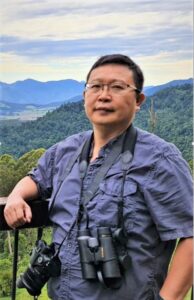 David Li
Sungei Buloh Wetland Reserve, National Parks Board, Singapore
Sungei Buloh Wetland Reserve, 301, Neo Tiew Crescent, 718925
E-mail: davidlizuowei@gmail.com
Bio: David became involved in wetland conservation in 1994-1996 when he worked for the Ministry of Forestry in Beijing. In 1997, David joined the Wetlands International (WI)-China Office in Beijing as a project officer. David then became dedicated to conserving shorebirds in the East Asian-Australasian Flyway through his work with the shorebird conservationist, the late Mr. Mark Barter, on the first comprehensive shorebird surveys in the China part of the Yellow Sea. He joined WI-Asia Pacific Office in Kuala Lumpur in 2001 as the International Coordinator for the Asian Waterbird Census, conducted surveys, published scientific reports, organised meetings for the national coordinators, and facilitated waterbird monitoring training courses. David also contributed to the development of the shorebird site network in the EAAF, particularly in Malaysia and Thailand. David joined the National Parks Board Singapore at Sungei Buloh Wetland Reserve in 2008, focusing on shorebird habitat conservation, management, population monitoring, and research. David led shorebird studies using radio and satellite tracking to identify important sites in Singapore for conservation, and migration routes of shorebirds wintering in Singapore. David also provided technical support for the development of the ASEAN Flyway Network. David became the Monitoring Coordinator for the Shorebird Working Group in December 2018, and then as the Chair in March 2023; he helped in the organization of the first EAAF Shorebird Science meeting in Nov 2020.
Core Team
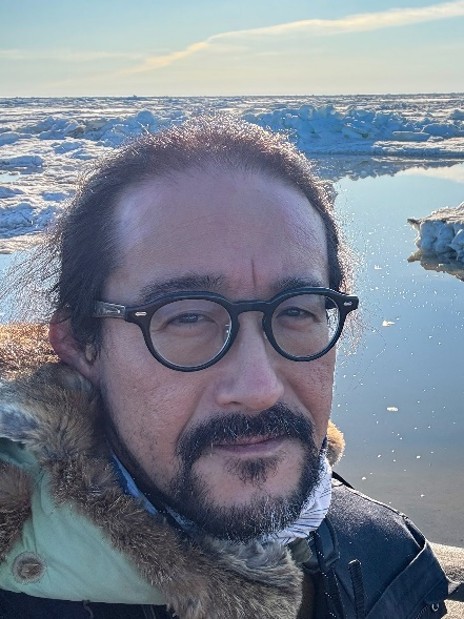 Jun Hosoya
Hosoya is a shorebird researcher in Japan and a member of the Japan Bird Banding Association. He is focusing on the migration ecology and conservation of migratory shorebirds, such as the Dunlin, Whimbrel, and Solitary Snipe. His research integrates long-term monitoring, banding, and tracking studies to understand migratory connectivity, site fidelity, and survival across East Asia.
Hosoya has conducted shorebird surveys and banding at the Torinoumi tidal mudflat in Miyagi Prefecture since 2005, one of the most important stopover sites on the Pacific coast of northern Japan. In 2021, he expanded his fieldwork to Daijugarami on the Ariake Sea, a key wintering site supporting the largest concentrations of shorebirds in Japan.
He currently leading long-term research on the Dunlin at Daijugarami, Torinoumi, and Sanbanze (Tokyo Bay), using GNSS loggers to reveal migratory routes and estimate survival rates. He also independently conduct tracking studies on the Whimbrel and the Solitary Snipe to understand their migration strategies and habitat use.
He also collaborate with local governments, educators, and birdwatchers to promote awareness of tidal flat ecosystems. By bridging scientific research and community engagement, he aims to contribute to the effective conservation of migratory shorebirds and their habitats throughout East Asia.
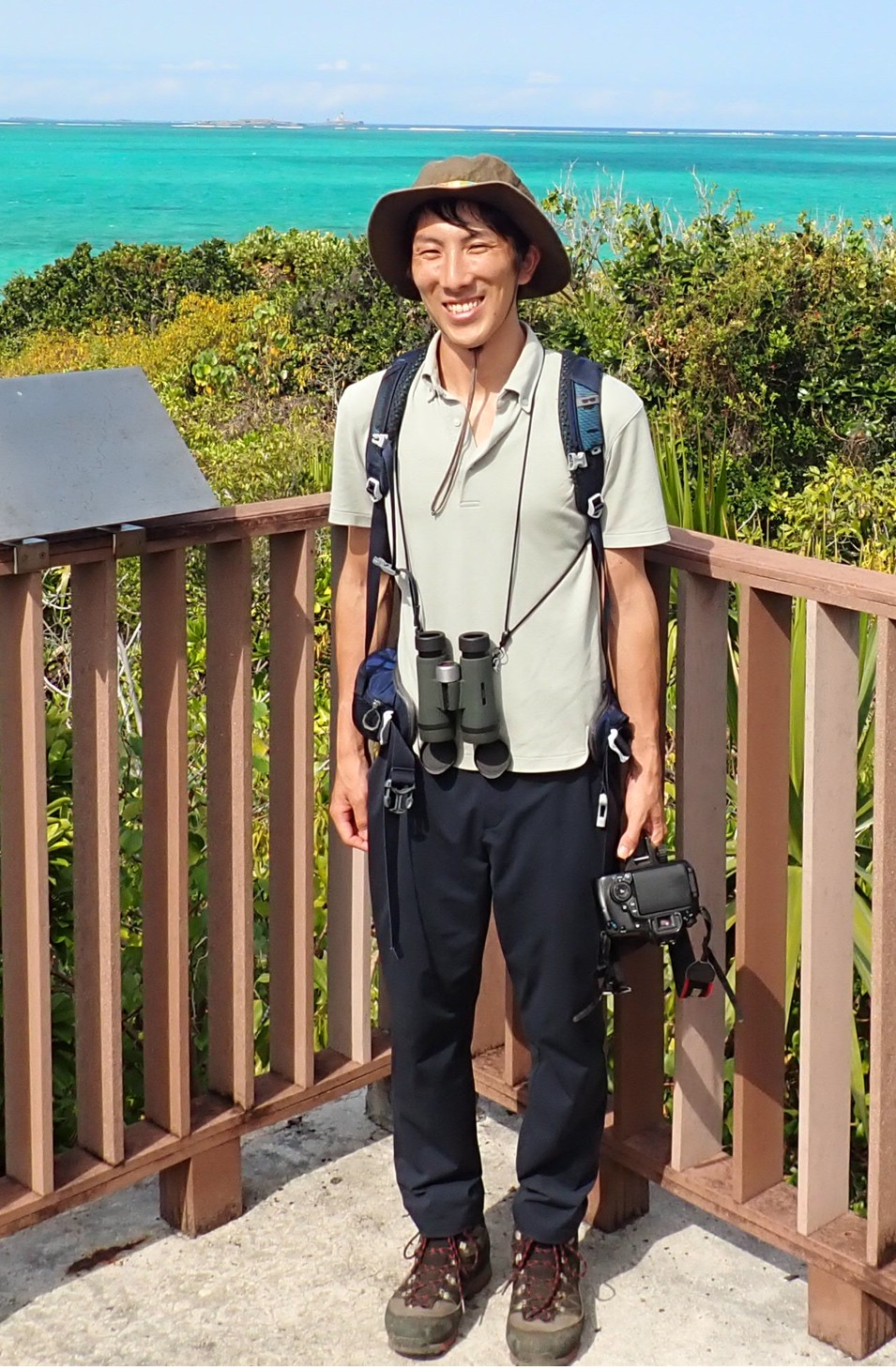
Mr. Tohki Inoue
Inoue studied conservation ecology of forest bird species in the small island for his degree. He used acoustic monitoring to examine the distribution and breeding ecology of forest birds.
After obtaining his degree, he started to work in BirdLife International Tokyo and was involved in projects of migratory bird conservation with the Ministry of the Environment, private companies and foreign partner organizations.
He attended EAAFP MOP11 at Brisbane, Australia and bilateral meetings with USA, China, Korea and Australia. He currently work in a private publishing company and he is a special researcher at Japan Bird Research Association.
He is especially interested in the long-term monitoring. Japan has many long and good monitoring programs, including bird count and bird banding programs. However, in Japan, many tidal flats have disappeared and many shorebirds have decreased significantly. To stop the decline of shorebirds and their habitats, he wants to analyze the bird data to examine the population trends, the factors affecting them, and their relationships with habitat change and climate change. He wishes to collaborate with SWG members to achieve the conservation of migratory shorebirds and their habitats.
 Ms. Khwankhao Sinhaseni
Ms. Khwankhao Sinhaseni or Kimmim, work as the Executive Director of the Bird Conservation Society of Thailand (BCST). Her work is driven by a deep passion for wildlife conservation, habitat restoration, and sustainable management—particularly in finding ways for people and wildlife to coexist harmoniously.
At BCST, she led multiple conservation initiatives focusing on migratory and threatened shorebirds, including the Spoon-billed Sandpiper and Spotted Greenshank. She also worked to strengthen public engagement and awareness in biodiversity conservation. One of her current key efforts is the development of Pak Thale Nature Reserve, Thailand’s first privately owned nature reserve managed by an NGO for bird conservation.
Alongside her conservation work, she is finalizing her PhD at Griffith University, Brisbane, Australia. Her research examines the value of insect-mediated ecosystem services in tropical fruit production, bridging her interests in sustainable agriculture, ecology, and rural livelihoods.
Teaching and science communication are also integral to her career. As a sessional lecturer, she teaches Thai and international students on topics related to wildlife conservation and political ecology. In 2021, she was honored to win the FrameLab Science Communication Competition organized by the British Council.
 Ying-Chi (Ginny) Chan
E-mail: chan.yingchi@gmail.com
Website: https://chanyingchi.github.io
Photo: https://jappliedecologyblog.files.wordpress.com/2022/01/ying-chi-ginny-chan.png
Ying-Chi (Ginny) is an ecologist whose research focuses on animal movement and wildlife conservation. Her interest in shorebirds began in 2012, when she conducted her Master’s degree project involving fieldwork in Australia and China. Deeply concerned with the fate of the many threatened shorebird species in the East Asian-Australasian Flyway, she conducted her PhD research on migration ecology of Great Knots, Red Knots and Bar-tailed Godwits in this flyway. Through this project, she has developed expertise in satellite tracking of shorebirds and applying the knowledge gained in conservation. She has founded the EAAF Shorebird Tracking Group to foster information exchange and collaborations on tracking shorebirds in this flyway. Currently she is expanding her horizons by venturing into research on natal dispersal movements, and developing new analytical skills in analysing movement data, population trends and demographic data on survival and reproduction.

Chris Hassell
E-mail: turnstone@wn.com.au
Chris migrated to Australia from the UK in January 1996. He has worked in the ornithological field in Australia and the United Kingdom, in both a professional and voluntary capacity for the last 30 years. His lifelong passion for bird life has taken him into Asia, the Indian sub-continent, north America, and Africa. He has a strong background in catching, counting, scanning, and training and joined research activities in India, Taiwan, and the USA and coordinated extensive studies in northern China with Chinese and Honk Kong colleagues, he has also undertaken professional guiding in Western Australia, Northern Territory, New South Wales, Queensland, and Sri Lanka and been contracted to overseas and Australian agencies as a specialist trainer.
His main role is as the coordinator for the Global flyway Network’s migratory shorebird studies in the EAAF. The focus species are bar and Black-tailed Godwits, Red and Great Knots with colour-marking and tracking devices as the main study tools.

Micha Jackson
E-mail: micha.v.jackson@gmail.com
Commonwealth Scientific and Industrial Research Organisation, Australia
Micha Jackson has been involved with shorebird research and conservation in Australia and abroad since 2010. She first started monitoring shorebirds in the Top End of Australia and supported Indigenous Ranger groups in remote northern Queensland (Australia) to establish shorebird monitoring programs in collaboration with BirdLife Australia. Micha completed a PhD on shorebird conservation in human-dominated coastal landscapes at the University of Queensland in 2020 after conducting fieldwork in Jiangsu province, China, a critical hotspot for shorebirds on migration. She has been a member of the EAAFP Shorebird Working Group since 2017, is a member of the editorial board of Stilt (journal of the Australasian Wader Study Group), and a co-lead for the Task Team on Science and Evidence of the recently established World Coastal Forum. Micha is currently an ecological researcher with Australia’s Commonwealth Scientific and Industrial Research Organisation studying the movements and management of inland waterbirds.
Yifei Jia
E-mail: jiayifei@bjfu.edu.cn
Associate Professor, Center for EAAF Studies/School of Ecology and Nature Conservation, Beijing Forestry University; East Asian-Australasian Flyway Partnership Science Unit Officer
Yifei’s main research interests focus on wetland ecology and migratory waterbird ecology. He focuses his research on biodiversity conservation as well as wetland conservation and management. He has a strong interest in shorebirds, cranes and storks. Now, Yifei has been working on the conservation of the Yellow Sea wetlands and the conservation biology of shorebirds such as the Spoon-billed Sandpiper and the Nordmann’s Greenshank.

Richard Lanctot
U.S. Fish and Wildlife Service
USFWS, Migratory Bird Management, 1011 East Tudor Road, MS 201, Anchorage, AK 99503
Tel: +1 907-786-3609
E-mail: richard_lanctot@fws.gov
Bio: Rick’s interest in shorebirds began in 1982 when he volunteered on a behavioral ecology study of Spotted Sandpipers in Minnesota. He has been involved in many other shorebird studies since then, switching his focus from the breeding ecology and behavior of individual species in the 1990s and early 2000s to population demography and conservation in more recent times. His PhD investigated the breeding ecology of the Buff-breasted Sandpiper – a species he has studied throughout the Western Hemisphere since 1991. He became the Shorebird Coordinator for the Alaska Region of the U.S. Fish and Wildlife Service in 2002, where he conducts shorebird research and conservation within Alaska and the five flyways that emanate from it. He serves as the U.S. representative on the Steering group that coordinates the Arctic Migratory Bird Initiative (part of the Conservation of Arctic Flora and Fauna work group of the Arctic Council), and is the long-term staff member for the Alaska Shorebird Group and the Western Hemisphere Shorebird Group. Rick was chair of the EAAF Partnership’s Shorebird Working Group from 2015 – 2023.
Kath erine Leung
E-mail: kalidris_kl@yahoo.com
Bio: Katherine regards herself as “almost a migratory shorebird along the EAAF”. Her migration journey started from Mai Po in Hong Kong, a renowned Ramsar Site for waterbirds where she started her wetland conservation career in 2005 and first experienced shorebird ringing in 2007. Her desire to follow the migratory shorebirds eventually lead her to leave her full-time job.
Nowadays, she is self-employed and helps with GFN’s field work at Bohai Bay to record colour bands and flags on Red Knot during spring migration. At other time of the year, she migrates up and down the EAAF for shorebird survey, ringing or flag resighting projects, particularly in Shanghai Chongming Dongtan Nature Reserve and several important shorebird sites in Jiangsu (Lianyungang, Dongtai, Rudong).
As a volunteer, she is heavily involved with field work on the Spoon-billed Sandpiper, as well as conveying shorebird flag resightings between observers and ringers on the EAAF.
 Yuzhu Yin
E-mail: yinyuzhu@mcf.org.cn
Bio: Yuzhu has engaged in mangrove wetlands restoration and urban biodiversity conservation since 2013. He worked as the monitoring team leader of Shenzhen Wildlife Rescue Center from 2013 to 2016. From 2016, he worked as the Conservation Program Director of Shenzhen Mangrove Wetlands Conservation Foundation. During this period, he participated in a wetland restoration project that created 30 ha of habitat for migratory waterbirds. He has also served as the Executive Director of Excellence of Shenzhen Futian Mangrove Ecological Park for the past 5 years.
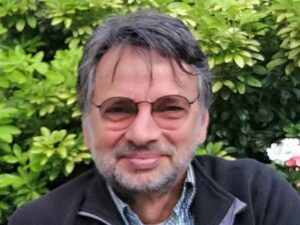
Christoph ZÖckler
Manfred Hermsen Foundation
E-mail: christoph.zoeckler@m-h-s.org
Bio: Christoph studied biology in Kiel, Germany and Aberdeen, UK. His over 35 years work experience includes WWF, the University in Bremen, UNEP-WCMC in Cambridge and freelancing as tour guide, for ADB and the World Bank as well as for his own conservation projects in Russia and on wetlands and bird conservation on the EAA flyway. With the Conservation of Arctic Flora and Fauna (CAFF) he developed the Circumpolar Biodiversity Monitoring Programme. In the past ten years his Arctic work increasingly encompassed climate change related issues and since 2007 advising the Manfred-Hermsen Foundation on coastal wetland conservation. In 2000 he initiated the conservation of the globally threatened Spoon-billed Sandpiper and organised the compilation of the International Species Action Plan in 2005. He has been coordinating the Spoon-billed Sandpiper Task Force and became the Chair in 2024. In 2008 his work focus included coastal wetlands in Myanmar and developing protected areas and Ramsar sites in this country. Over 120 research publications to date, and a number of DVDs and booklets.
SWG Nordmann’s Greenshank Sub-group (NGSG)
 Jonathan Slaght
E-mail: jSlaght@wcs.org
Bio: Jonathan has been involved in conservation in northeast Asia since 1999, and employed by the Wildlife Conservation Society (WCS) since 2011. As the Regional Director for the WCS Temperate Asia Program, he oversees WCS programs in Mongolia, China, and Afghanistan, and support projects in Russia and Central Asia. He currently represents WCS at international migratory bird partnerships such as the East Asian-Australasian Flyway Partnership (EAAFP) and the Arctic Council’s Arctic Migratory Birds Initiative (AMBI). He is also an author: his 2020 “Owls of the Eastern Ice” was longlisted for a 2020 National Book Award in the United States, and has been translated into nine languages, including Chinese, Korean, Russian, and Spanish. His next book, about Amur tiger conservation in Russia, will be published in autumn 2025.

Philipp N. Maleko
E-mail: malekoph1@gmail.com
Bio: Philipp is a Ph.D. student in the SILVIS Lab at the University of Wisconsin, Madison. He became passionate wildlife conservation when he moved as a young boy from the lush boreal of western Russia to the concrete jungle of Los Angeles. He earned a B.S. in Wildlife, Fish and Conservation Biology from the University of California, Davis, where he acquired an affinity towards avian conservation. Philipp then earned his M.S. at the University of Florida, studying the breeding ecology of Endangered Nordmann’s Greenshank at a remote coastal bay in the Russian Far East. Philipp’s Ph.D. research interests center on endangered shorebirds (particularly Nordmann’s Greenshank) of the East Asian-Australasian Flyway and how we can use movement data in concert with remote sensing and geospatial analysis to improve their conservation outlook. Besides bird watching, berry picking, and mushroom foraging, Philipp enjoys riding his bicycle, running, backpacking, and playing badminton.
