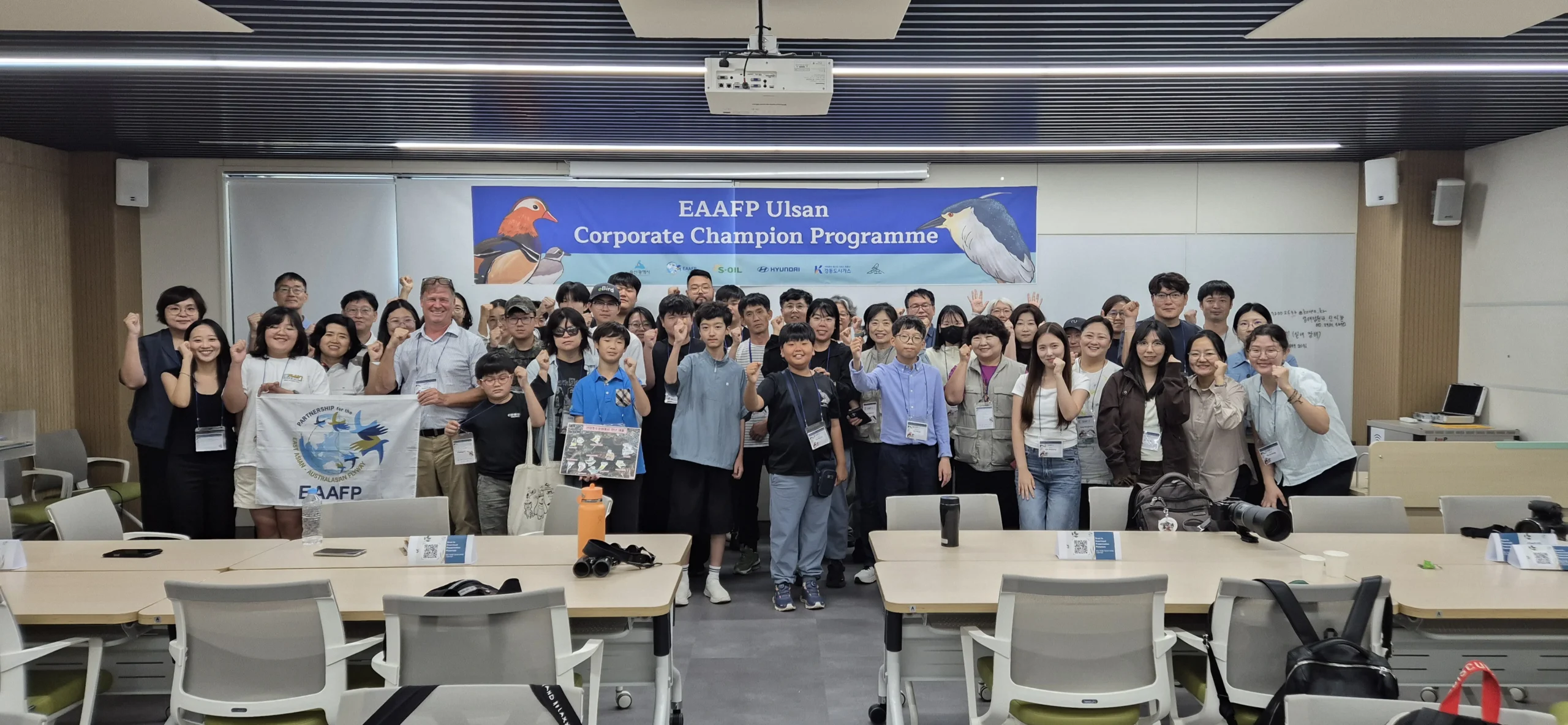
Day 1 group photo
The East Asian-Australasian Flyway Partnership (EAAFP) Secretariat and Foundation successfully hosted the 5th EAAFP Ulsan Corporate Champion Programme (UCCP) on 20-21 September in Ulsan, Republic of Korea. The two-day event was held at the Ulsan Garden Support Centre near Ulsan Taehwa River [EAAF150] on the first day and the On & Off Workation Centre in the Daewangam Park area on the second day.
The first day focused on raising public awareness of the role and importance of citizen science in conservation, attracting approximately 70 participants. The programme featured engaging activities designed to encourage public involvement and highlight how citizen science contributes to biodiversity conservation efforts.
The second day centred on scientific and policy discussions, bringing together around 30 participants to explore conservation challenges and opportunities. Discussions highlighted how citizen science can inform research, support evidence-based decision-making, and contribute to tangible conservation actions and policy development.



3Ulsan Corporate Champions (Hyundai Motor Company, Kyungdong City Gas, S-OIL)
With nearly 100 participants over the two days, the event demonstrated the strength of Ulsan’s conservation initiatives and the growing citizen science community. The programme’s success was made possible through the close collaboration of the Ulsan Metropolitan Government and the three Corporate Champions: Hyundai Motor Company, S-OIL, and Kyungdong City Gas.
History of the UCCP
Following the designation of the Ulsan Taehwa River [EAAF150] as a Flyway Network Site (FNS) in 2021, the East Asian-Australasian Flyway Partnership (EAAFP) Secretariat established the EAAFP Ulsan Corporate Champion Programme (UCCP) to promote the site’s international significance and showcase collaborative conservation efforts involving local corporations, government agencies, and communities.
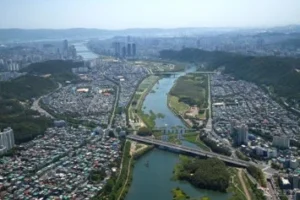
Ulsan Taehwa River © Ulsan Metropolitan City
The Ulsan Taehwa River [EAAF150] was the first Flyway Network Site designated among the Republic of Korea’s east coast cities and the country’s first urban river wetland to join the Flyway Site Network. The site encompasses the Taehwa River, Ulsan Bay, the Ulsan North Coast, Oehwang River, Hoeya Lake, and Seonam Lake, providing important habitats for migratory waterbirds along the East Asian-Australasian Flyway.
To support conservation in the region, four Ulsan-based companies joined the initiative, each adopting a flagship species as a symbol of its commitment to protecting migratory waterbirds and their habitats. Hyundai Motor Company became the Corporate Champion for the Long-billed Plover, S-OIL for the Mandarin Duck, Korea Petrochemical Ind. Co., Ltd. for the Eastern Great Egret, and Kyungdong City Gas Co., Ltd. for the Black-crowned Night Heron.
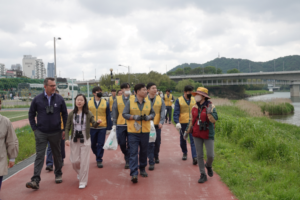
Ulsan corporate champion staff’s birdwatching with EAAFP, international delegation, and Ulsan Nature guide
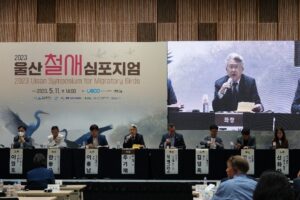
The 2nd EAAFP Ulsan Corporate Champion Programme: Ulsan Symposium for Migratory Birds 2023
The 3rd EAAFP Ulsan Corporate Champion Programme: Species Champion Leadership Programme
The 4th EAAFP Ulsan Corporate Champion Programme: Travelers with Wings in Ulsan
The UCCP Showcase is held annually to celebrate the achievements of participating companies and reinforce Ulsan’s contribution to flyway conservation. The event brings together corporate and government representatives, citizen scientists, researchers, conservation practitioners, and local communities to share knowledge, highlight conservation outcomes, and strengthen partnerships for future action.
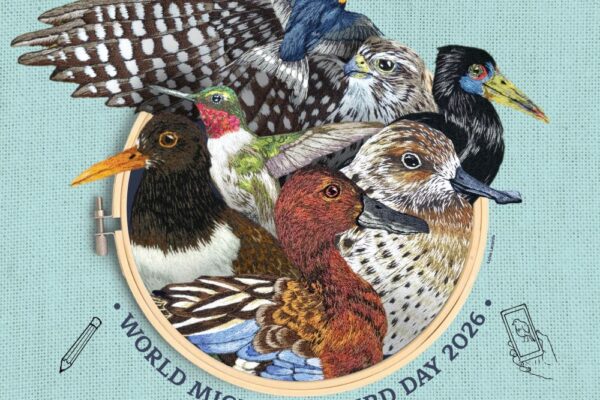
Aligned with the theme of World Migratory Bird Day 2026, ‘Every Bird Counts: Your Observations Matter!’, the 5th EAAFP Ulsan Corporate Champion Programme (UCCP) focused on the vital role of citizen science in biodiversity conservation and was organised in collaboration with Tweet Tweet, a citizen science bird monitoring group based in Ulsan. The programme featured Mr. Marshall Iliff of the Cornell Lab of Ornithology as a special international guest and speaker. As the Project Leader of eBird, one of the world’s largest citizen science platforms for bird monitoring, Mr. Iliff shared how the platform has empowered people around the globe to record and contribute bird observation data, generating more than two billion observations worldwide. Through his presentation, the programme highlighted how citizen-generated data can support scientific research, inform conservation planning, and strengthen evidence-based policy development, while demonstrating the significant contribution that citizen scientists can make to protecting migratory waterbirds and their habitats.
The event emphasised the importance of multi-stakeholder collaboration among governments, corporations, citizen scientists, researchers, and international organisations, highlighting how these partnerships can drive more effective conservation action and improve outcomes for migratory birds and their habitats across the East Asian-Australasian Flyway.
Day 1: from citizen monitoring to impactful conservation practice
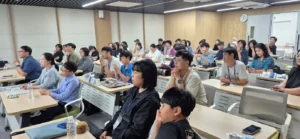
Day 1 participants
The Day 1 programme focused on raising public awareness of the importance of citizen science in supporting real-world conservation efforts within both governmental and corporate sectors. The event featured presentations by Ms. Minjae Baek, Communications Officer at the EAAFP Secretariat, who introduced the work of the EAAFP and highlighted the importance of Communication, Education, Participation, and Awareness (CEPA) activities in promoting flyway conservation. Ms. Eunmi Yu of the Ulsan Biodiversity Centre presented Ulsan’s biodiversity strategies and demonstrated how citizen science has become an integral component of the city’s conservation approach. The programme also featured Mr. Marshall Iliff, Project Leader of eBird at the Cornell Lab of Ornithology, who introduced the global citizen science platform and shared insights from his work, including his personal experiences living in and monitoring birds in Ulsan.
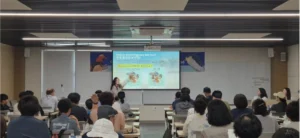
Ms. Minjae Baek, Communication Officer at EAAFP Secretariat
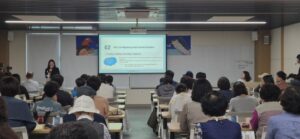
Ms. Eunmi Yu, Ulsan Biodiversity Centre
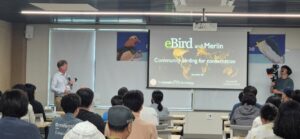
Mr. Marshall Iliff, Cornell Lab of Ornithology
Collectively, these presentations highlighted the growing role of citizen-generated data in biodiversity monitoring, conservation planning, and policy development. They also demonstrated how collaboration between scientists, governments, local communities, and citizen scientists can strengthen conservation outcomes and contribute to the protection of migratory waterbirds and their habitats.
A key highlight of the day was a series of presentations by young citizen scientists from Tweet Tweet. The participants shared their monitoring experiences, research findings, and conservation initiatives, demonstrating how citizen science can lead to meaningful conservation outcomes through examples such as the Namchang Fields and the conservation of the Greater Painted Snipe. Their presentations highlighted how bird monitoring data collected by local youth has contributed to stronger collaboration among communities, experts, and stakeholders in Ulsan, supporting efforts to safeguard migratory waterbirds and their habitats. This inspiring session showcased the power of citizen science in action, illustrating how dedicated young people can play a vital role in generating knowledge, fostering partnerships, and driving tangible conservation efforts at the local level.
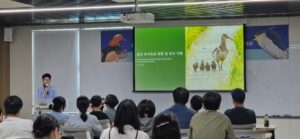
Woojin Cho – Observation and Breeding Records of the Greater Painted-snipe in Ulsan
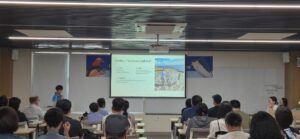
Geonyul Go – The Amazing Journey of the Birds Visiting Seonam Lake Park
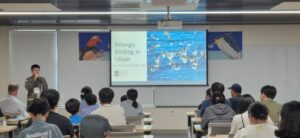
Jaemin Park – Pelagic Birding in Ulsan
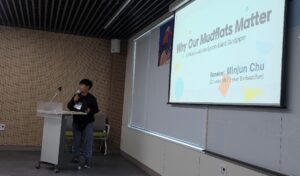
Minjun Chu – Why Our Tidal Flats Matter: The Miracle of the Spoon-billed Sandpiper
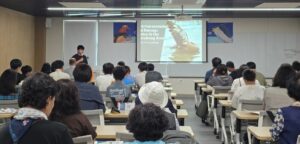
Yeonho Chu – Addressing Bird-Related Crop Damage in the Namchang Farmlands and Water Parsley Fields
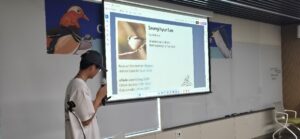
Seunghyun Lee – Birds of the Yeongnam Alps
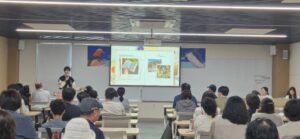
Yunhyeok Jeon – demonstrating Shorebird Guidebook
Furthermore, Mr. Yunhyeok Jeon shared his experience of developing a shorebird identification guidebook through support from the World Migratory Bird Day Small Grant Fund provided by the EAAFP Secretariat. He recounted his inspiring journey from concept development to publication, highlighting how the grant enabled him to transform his passion for migratory waterbird conservation into a practical educational resource for the public. Through his presentation, Mr. Jeon encouraged fellow young citizen scientists to pursue their own conservation initiatives and demonstrated the value of leveraging opportunities and resources provided by organisations such as the EAAFP Secretariat. His story served as a powerful example of how youth engagement, supported by the right resources and mentorship, can contribute meaningfully to conservation awareness and action.]
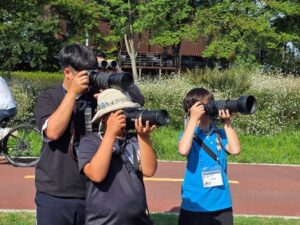
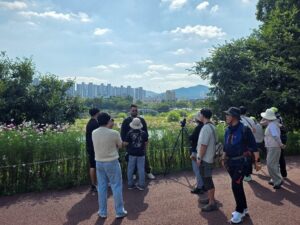
Birdwatching at the Taehwa River
The event then was followed by birdwatching activity with Mr. Iliff, where participants took their learning and insights from the presentations to the field at the Taehwa River area. By bringing the knowledge back to the event venue, participants had a chance to discuss about how such observations and monitoring could practically strengthen conservation in Ulsan.
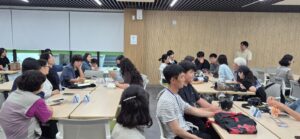
Group Discussion Session
The group discussions generated valuable insights from participants representing a wide range of ages, backgrounds, and experiences. Participants shared local conservation case studies and explored how bird monitoring efforts could contribute to conservation initiatives in Namchang Fields, particularly for the Greater Painted snipe. Discussions also focused on improving the quality, consistency, and credibility of citizen science data to strengthen its application in government policy and corporate decision-making processes.
Participants acknowledged that citizen science and biodiversity monitoring are still emerging fields in the Republic of Korea, highlighting the challenges birdwatchers and citizen scientists often face in establishing credibility and broader acceptance of their data among policymakers, researchers, and other stakeholders. Despite these challenges, discussions concluded on a positive and forward-looking note. Participants recognised the UCCP as an important platform for promoting the value of citizen science within corporate and government sectors, while also fostering greater youth engagement and public participation in conservation. The session ended with optimism for the continued growth of citizen science and its contribution to conservation efforts in Ulsan and beyond.
Day 2: values of citizen science in wider flyway conservation efforts
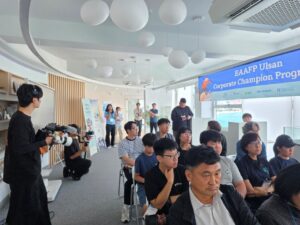
Day 2
The Day 2 programme focused on in-depth discussions on how citizen science can enhance the conservation impact of Ulsan’s Flyway Network Site (FNS) and contribute to the protection of migratory waterbirds across the wider flyway. As a more technical and discussion-oriented session, the programme brought together a smaller group of participants with expertise and experience in bird monitoring, conservation, and citizen science. Through presentations and interactive discussions, participants explored how citizen-generated data can strengthen Ulsan’s flyway conservation strategies, while identifying existing gaps and opportunities for improvement in current bird monitoring and conservation practices. The programme featured presentations by bird monitoring experts, including Mr. Hanbyeol Woo and Mr. Seungmin Hong of Tweet Tweet, as well as Ms. Eunmi Yu of the Ulsan Biodiversity Centre. Drawing on their field experience and research, the speakers shared insights into local bird monitoring initiatives, data collection methodologies, and the practical application of monitoring data in conservation planning.
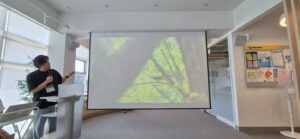
Mr. Hanbyeol Woo, Tweet Tweet
Mr. Hanbyeol Woo stressed the importance of monitoring not only birds but also insects to achieve meaningful conservation outcomes, noting that insects provide valuable insights into the distribution patterns and status of migratory waterbirds.
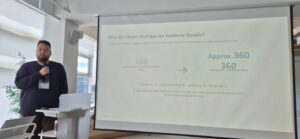
Mr. Seungmin Hong, Tweet Tweet
Mr. Seungmin Hong introduced the history and development of bird monitoring in Ulsan, emphasising that the city’s conservation policies must evolve alongside its monitoring efforts. He also highlighted that the 360 bird species recorded in Ulsan represent 360 unique stories that deserve protection.
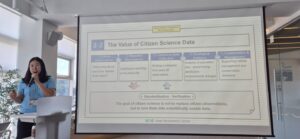
Ms. Eunmi Yu, Ulsan Biodiversity Centre
Ms. Eunmi Yu reiterated the importance of citizen science and its significant contribution to Ulsan’s biodiversity initiatives. She encouraged greater public participation in citizen science to better understand and monitor local biodiversity challenges, while also noting that the Ulsan Metropolitan Government has actively incorporated citizen science data into its conservation efforts. Their presentations provided valuable perspectives on how citizen science can generate robust datasets, support evidence-based conservation actions, and foster stronger collaboration among local communities, researchers, governments, and other stakeholders working to protect migratory waterbirds and their habitats.
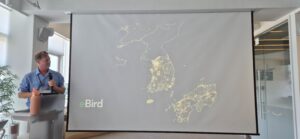
Mr. Marshall Iliff, Cornell Lab of Ornithology
Following that, Mr. Iliff delivered a presentation on Merlin Bird ID and eBird, highlighting their value as tools for bird monitoring and citizen science. He also explained why Daewangam is an important site for collecting migratory bird data and stressed the importance of completing eBird checklists thoroughly to ensure data accuracy and credibility. Furthermore, he demonstrated how citizen science data can be transformed into visual outputs that reveal trends and movement patterns of migratory waterbirds. Mr. Iliff emphasised the role of accessible data in advancing science-based conservation and encouraged greater public participation in and use of the eBird platform.
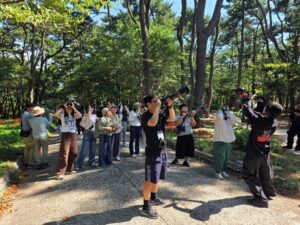
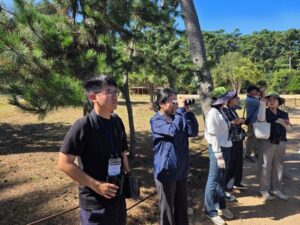
Birdwatching Session
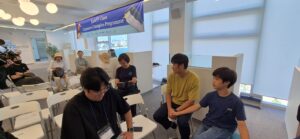
On Day 2, participants took part in a bird monitoring field activity at Daewangam Park. The group observed birds across a variety of habitats, from wooded areas to coastal shorelines, providing opportunities to encounter seabirds, including the Streaked Shearwater. Building on the participants’ existing birdwatching experience, the field session focused on refining observation and recording practices, with guidance from Marshall Iliff on how field observations can be systematically documented and uploaded to platforms such as eBird. The activity also highlighted the value of standardised data collection in generating reliable information for research and conservation. With its diverse landscapes supporting both terrestrial and marine bird species, Daewangam Park served as an ideal site for participants to strengthen their monitoring skills while deepening their appreciation of Ulsan’s rich biodiversity and the importance of long-term conservation efforts.
Group Discussions
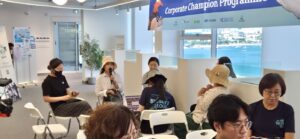
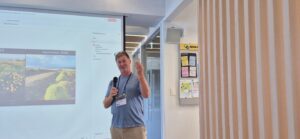
Like Day 1, Day 2’s field activity was followed by a group discussion. The group discussions highlighted growing concerns about habitat loss and disturbance to birds in Ulsan, including development pressures on biodiverse areas and irresponsible wildlife photography. Participants emphasised the need for stronger responses to habitat changes and noted that citizen science can play an important role in documenting environmental changes, raising public awareness, and supporting conservation actions. Mr. Iliff reinforced these points by stressing that citizen science extends beyond bird monitoring to include insects and habitats and reflected on how some former bird habitats at Daewangam Park have been altered by increased recreational use. While acknowledging these challenges, he emphasised that habitat restoration remains possible through continued advocacy, collaboration, and engagement with local authorities.
Mr. Marshall Iliff in Group Discussion
The discussion also explored how Ulsan’s conservation efforts could be developed into an international model. Participants highlighted the importance of promoting local conservation success stories, such as habitat protection efforts for species around Samho Bamboo Grove and the delayed rice planting that supported Greater Painted-snipe breeding. They also emphasised the need for stronger networking opportunities to facilitate the exchange of conservation experiences and best practices. Building on these ideas, participants were encouraged to utilise international platforms such as EAAFP’s Flyway Network Site and Sister Site programmes, while sharing local conservation stories and experiences to inspire wider participation and conservation action across the Flyway.
Day 2 group photo
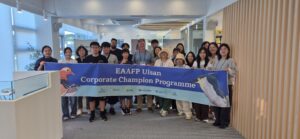
Day 2 concluded on a highly positive and forward-looking note, with participants expressing a shared commitment to further expanding citizen science initiatives in Ulsan. Throughout the discussions and field activities, participants recognised that effective conservation requires the collective efforts of various stakeholders, including citizens, researchers, local organisations, government agencies, and the private sector. The programme demonstrated how citizen-generated data can contribute to a better understanding of biodiversity, support conservation decision-making, and foster greater public engagement in environmental stewardship.
Multi-stakeholder cooperation and flyway conservation
The UCCP Showcasing Event emphasised that effective conservation of Ulsan’s Flyway Network Sites depends on strong collaboration among government agencies, local communities, researchers, citizens, NGOs, and the private sector. The programme demonstrated how citizen science can connect these stakeholders through biodiversity monitoring, shared learning, and public participation. Survey results showed that 100% of respondents were very satisfied with the overall programme and willing to participate in similar events again. Respondents also gained a greater understanding of the international cooperation needed to conserve migratory waterbirds. Feedback highlighted the student birdwatchers’ presentations, the opportunity to meet an international bird expert, and increased awareness of Ulsan’s importance as a stopover for migratory waterbirds. Suggestions for further community education and practical support for bird-recording tools offered useful directions for strengthening public participation in flyway conservation.
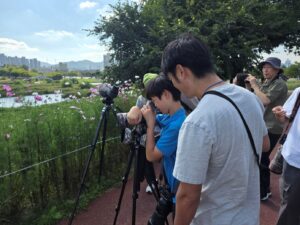
Bird Watching Activity in Day 1
In addition, 100% of participants reported that they gained a better understanding of the global nature of migratory waterbird conservation and the importance of international cooperation across the East Asian-Australasian Flyway, while 67% responded that they now better understand how data collected through citizen science can contribute to scientific research, conservation planning, and policymaking. The survey also reflected a stronger appreciation for the role of corporate partners in biodiversity conservation, reporting an improved perception of participating companies’ contributions to migratory waterbird and habitat conservation, and indicated a more positive view of these companies’ commitment to social and environmental responsibility. These findings demonstrate the programme’s effectiveness in strengthening awareness of the shared responsibility for conservation and fostering greater support for collaborative conservation action.
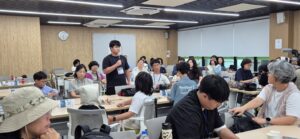
Group Discussion Session in Day 1
Importantly, the event translated these lessons into a shared vision for future action. Throughout the discussions, participants repeatedly emphasised that protecting migratory waterbirds and their habitats cannot be achieved by a single stakeholder alone but requires sustained cooperation across sectors and communities. The exchanges highlighted the value of strengthening local and international networks, sharing successful conservation case studies, and creating more opportunities for public engagement in monitoring and habitat conservation. By bringing together diverse stakeholders around a common purpose, the programme strengthened mutual understanding and reinforced a collective commitment to safeguarding Ulsan’s biodiversity. The event concluded on a positive and forward-looking note, with participants expressing optimism about expanding citizen science initiatives and promoting greater collaboration in the future. Ultimately, the UCCP Showcasing Event demonstrated how multi-stakeholder partnerships and citizen participation can contribute to stronger conservation outcomes, supporting not only Ulsan’s biodiversity but also the long-term conservation of migratory waterbirds throughout the East Asian-Australasian Flyway.