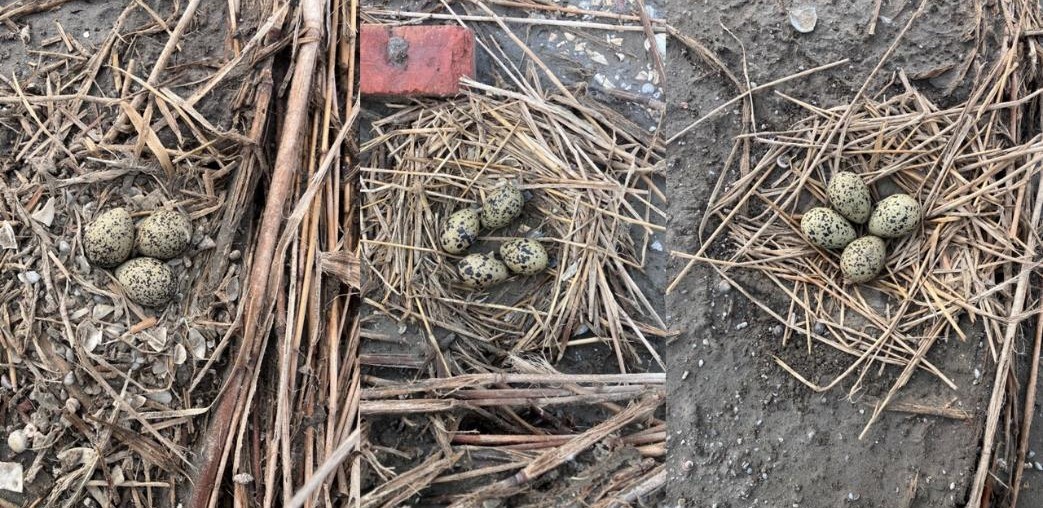
Kentish Plover, Pied Avocet and Black-winged Stilt nest and eggs 02 06 2026 © Chris Hassell
Chris Hassell and Katherine Leung, we hope to return in 2027. 4 June 2026
And already it is the end of the month’s work at Nanpu. I feel these Updates are all rather similar but that is one of the strengths of our work here. The repeated visits over 20 years. While not all the visits have been of the same duration or with an identical team, it is still a great data set we have accumulated. We have forged strong bonds with universities and our local colleagues. Xiao Liu is now an integral part of the monitoring effort, and the work would be far less efficient and productive without his contribution.
While our work focuses on migrant shorebirds as they pass through the area some migrants come here to breed. We make opportunistic observations of the breeding species. As we walk around the ponds to scan the Red Knots, we are often assailed by alarmed Pied Avocets and Black-winged Stilts trying to distract us from their nests or chicks. Kentish Plovers also breed on the bunds, but they tend to just slink quietly off their nests and only do a broken-wing display if we get very close to chicks.
3 species of terns also breed, Little, Gull-billed and Common. We see mostly small, scattered colonies of Common Terns. They are not fussy about their breeding sites. Any patch of bare ground surrounded by water will do. One of these colonies is literally 10 meters from the edge of a six-lane highway, and it is a busy highway! The breeding birds are nesting on tiny islands of rubble. There are about 100 nests. It’s not beautiful, but the terns have successfully hatched chicks, which is the point of flying to Nanpu!
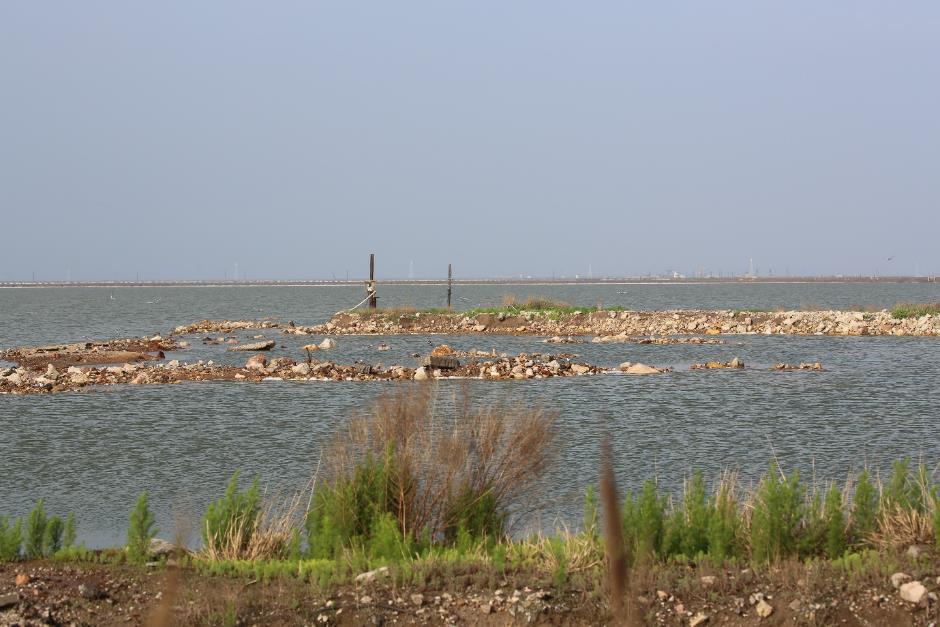 Common Terns beside the highway 26 05 2026 © C Hassell
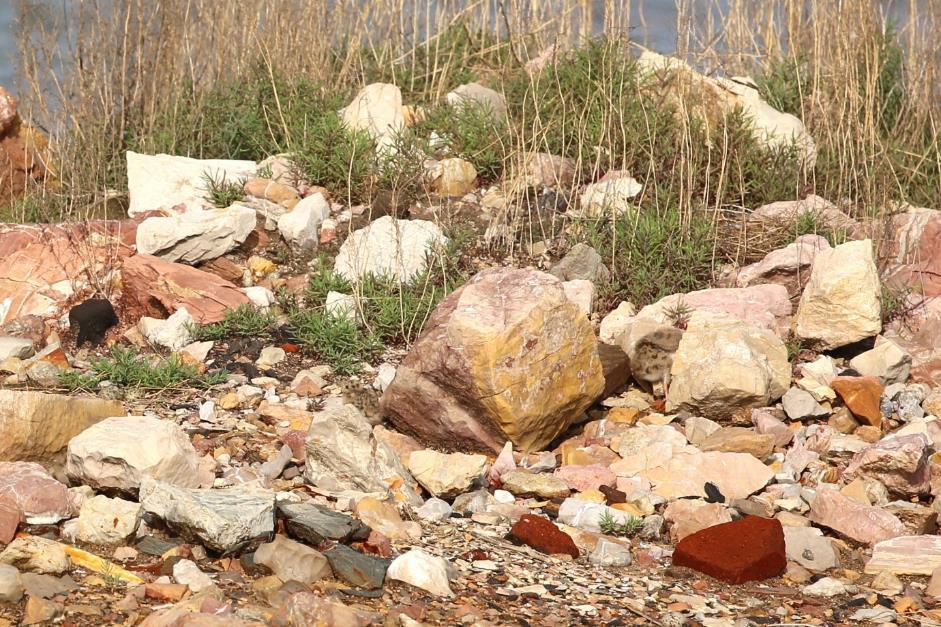 Spot the chicks 26 05 2026 © C Hassell
There has been a change in the habitat immediately behind the first 2.5 km of the Nanpu seawall, where we spend most of our time. In our first years here, it was salt ponds (it was open tidal flats prior to that), then it was a site under dramatic change. But as no industry was built here and then the area became The Hebei Luannan Nanpu Zuidong Provincial Wetland Park, gradually the grey mud has turned to green reeds, shrubs and tall willows. This area is now a breeding site for Eastern Spot-billed Ducks, Common Pheasants, and we presume Vinous-throated and Reed Parrotbills, Oriental Reed Warbler, Thick-billed Warbler, probably Common Cuckoo parasitizing those 2 species? Resident Oriental Magpies and Eurasian Tree Sparrows are breeding birds. And it would be no surprise if there were more breeding species that arrive after we have left. As mentioned in a previous update, the area now has Tolai Hare, Hedgehog, Siberian Weasel. And at least two reptiles, Black-spotted Frog and we have seen our first snake on the seawall, a Steppe Rat Snake.
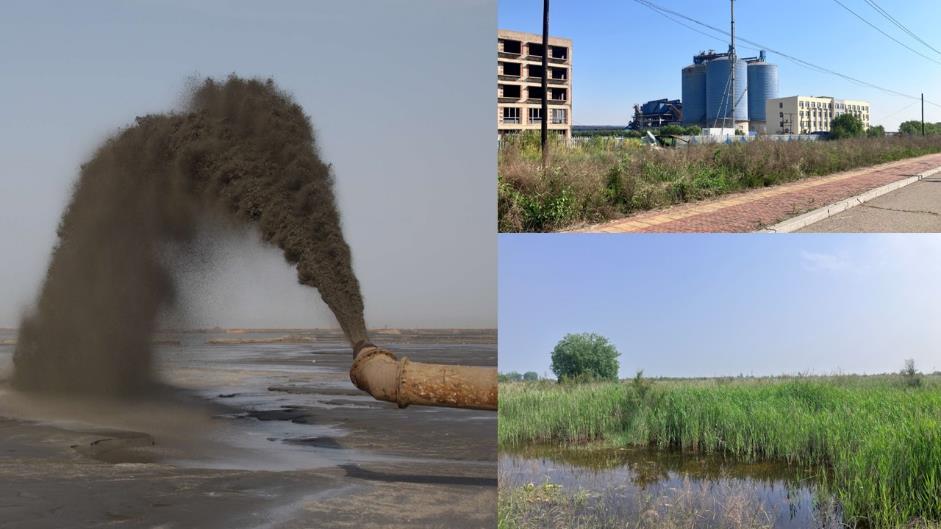 2010 was a time of rapid change © A Boyle; Zuidong and Nanpu 01 06 2026 © C Hassell
The two images on the right, Zuidong above and Nanpu below, are 8 km apart. Both images are adjacent to the seawall and tidal flats.
 Oriental Reed Warbler, singing on a territory, Nanpu 31 05 2026 © C Hassell
There is still some development going on, but not on any mudflats and we see it as we travel to and from the Nanpu seawall. This new infrastructure is almost exclusively solar panels. They are usually built over ponds. In some sites the ponds remain as aquaculture ponds and double as solar farms. New pylons are being erected as well. There are a lot of pylons here!
 New panels sacked and ready to go on to concrete posts to harness the sun
Despite these changes there are still a lot of ponds available to shorebirds. And as is usual at this time of the season, we have to do more scanning in the ponds.
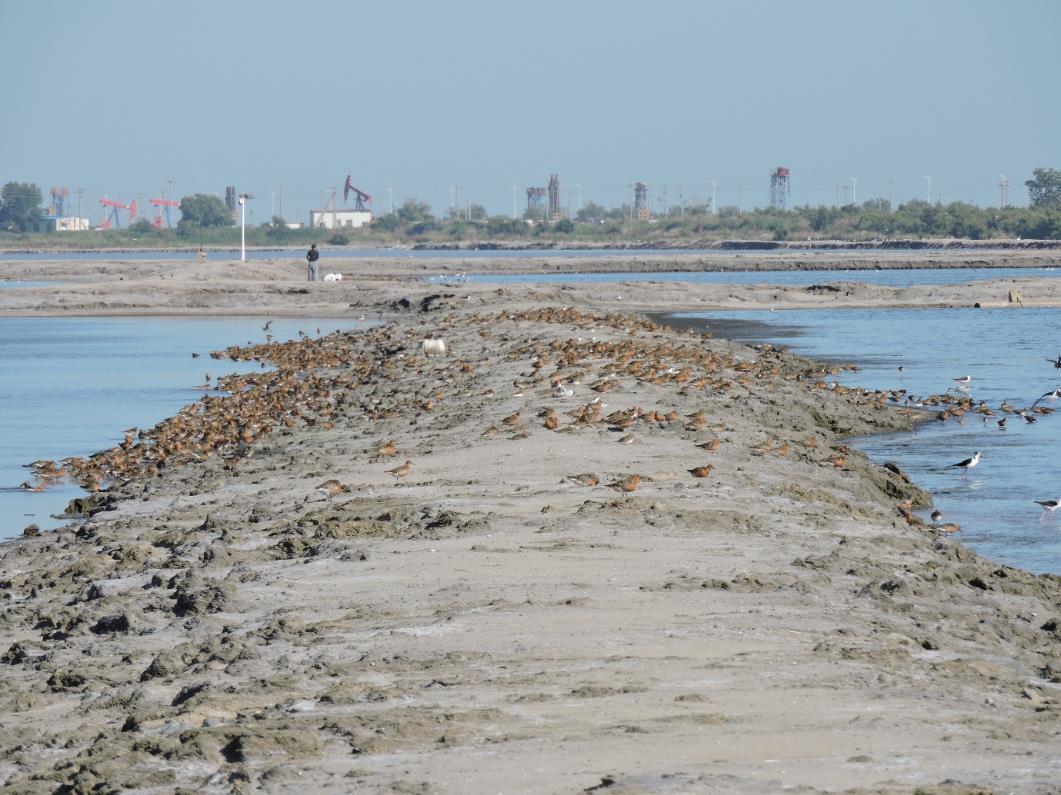 Red Knots feeding and roosting in the Nanpu ponds 2026 05 31 © K Leung
And for the birders who are not just obsessed with migratory shorebirds we saw a rarity, right here in the apartment complex where we live at Nanpu Industrial City. We sit beside the ‘pond’ for breakfast, if work allows, and a Lesser Coucal flew directly in front of us, quite the rarity here. The first time any of our GFN team members has seen one in 19 years.
And for those of you who are not quite as interested in that sighting, here’s something cute.
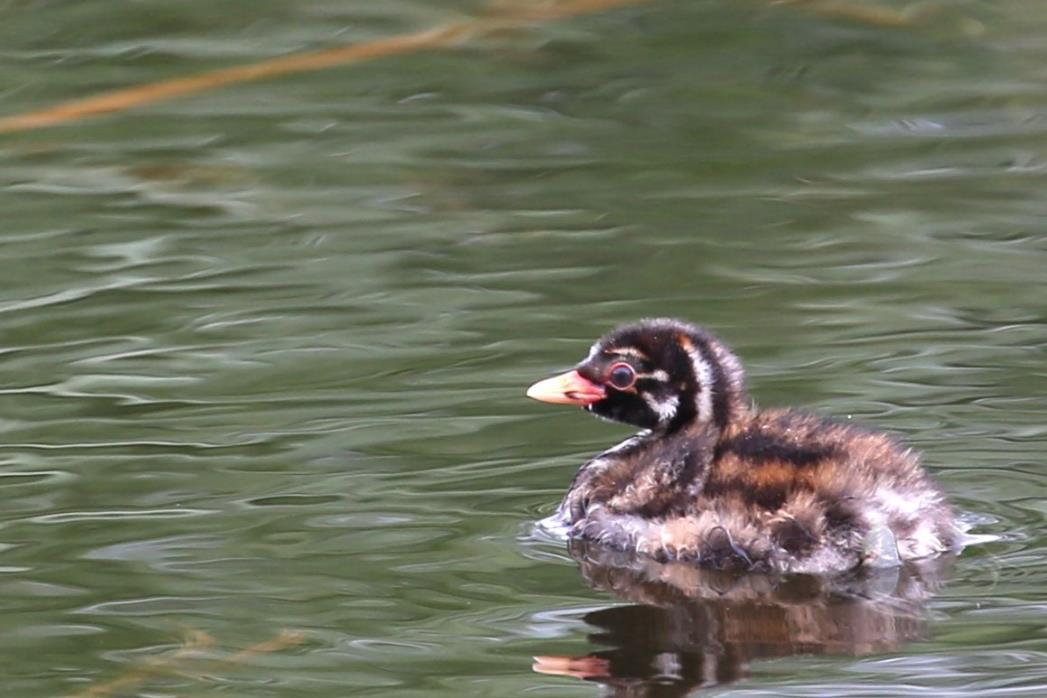 Little Grebe chick 2026 06 03 © C Hassell
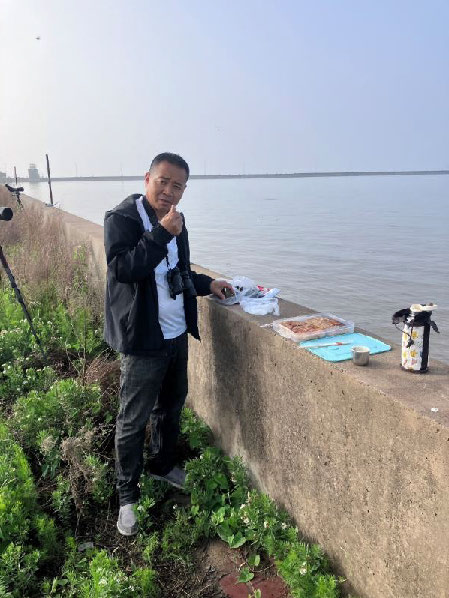 A quick picnic breakfast with Mr. Liu (thanks to Mrs. Liu) while we wait for the tide to drop.
 An evening out. Left to right Dr Lei Weipan, Xiao Liu, Chris, and Katherine
While these updates are deliberately ‘chatty’ we do get some work done. And here is a snapshot of the marked birds we have recorded.

Once more we thank three private donors and the UK-based shorebird conservation charity Wader Quest, via the auspices of Rick Simpson, for their generous donations to our efforts for 2026. And, as ever, Professor Zhang and Dr Lei Weipan of Beijing Normal University, who facilitated our trip.
And, at the risk of over doing it, we are thrilled to still be working with Liu Yang and Mr. Liu as our local colleagues. They are a joy to have on the team and have been with us since 2016.