ⓒ EAAFP
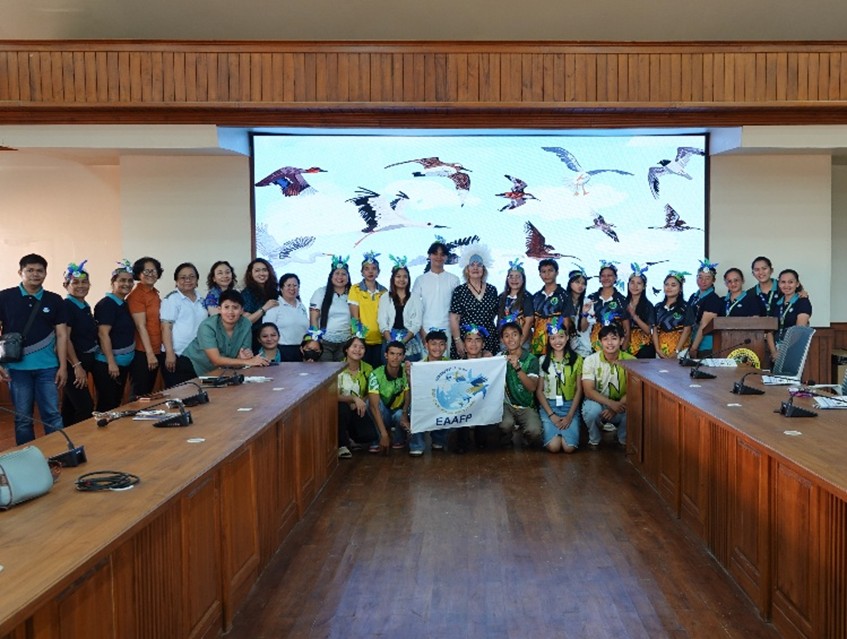
Following the unveiling of the Sibugay Wetland Nature Reserve (SWNR) [EAAF160] Flyway Network Site and Ramsar Site markers in Zamboanga Sibugay, Philippines, on 24 February 2026, high school students joined a storytelling session featuring FLYWAY FRIENDS: A Long Journey Home. The activity invited young people to look beyond the markers and reflect on what they represent: the urgent need to safeguard critical habitats for migratory waterbirds along the East Asian–Australasian Flyway (EAAF), and the important role that communities, including youth, can play in protecting them.
Written and illustrated by Mary Queen Agdalipe of the East Asian–Australasian Flyway Partnership (EAAFP) Youth Task Force, FLYWAY FRIENDS: A Long Journey Home follows two migratory waterbird sisters, Ruby and Stork, as they set out in search of their “missing” father. Along their journey, they encounter other migratory waterbird species across the flyway and learn about the growing challenges threatening the wetland habitats these birds depend on for survival.
Through its heartfelt storytelling, vivid illustrations, and relatable characters, the book brings complex conservation issues closer to young readers. Themes such as migration, habitat threats, and shared responsibility are presented in a way that is accessible, memorable, and emotionally engaging. The storybook serves as a bridge between science and imagination, helping students understand that the survival of migratory waterbirds depends not only on healthy wetlands, but also on meaningful local action and coordinated conservation efforts across the flyway.

ⓒ PENRO Zamboanga Sibugay

ⓒ EAAFP
During the session, EAAFP Chief Executive Jennifer George read the story to the students, while Ana Michelle Talitod and Divina Alejandra of the Department of Environment and Natural Resources–Provincial Environment and Natural Resources Office (DENR-PENRO) Zamboanga Sibugay helped bring its messages closer to the students by connecting key moments in the book with relatable life experiences. Students were invited to share their reflections on selected parts of the story, transforming the activity into an interactive exchange on the shared journeys of people and migratory waterbirds.

© PENRO Zamboanga Sibugay

© PENRO Zamboanga Sibugay
These showed why storytelling sessions are such a valuable part of communication, education, participation, and awareness (CEPA) on migratory waterbirds. They encourage deeper conversations on how the challenges faced by migratory waterbirds can reflect those experienced by students and their communities, while creating space for young people not only to learn facts, but also to feel connected to the species and habitats being protected.
The session concluded with a lively Q&A moderated by DENR-PENRO officials and EAAFP Programme Officer Kyle Esperanza Zuleta, during which students connected the story’s messages to the newly recognised importance of the Sibugay Wetland Nature Reserve [EAAF160] as both a Flyway Network Site and a Ramsar Site.

ⓒ EAAFP
The storytelling session in Zamboanga Sibugay was built on the success of the book’s first storytelling activity, held during its launch at the 12th Meeting of Partners (MOP12) of the EAAFP. Both events demonstrate the power of storytelling as an accessible and meaningful way to engage communities, reach diverse audiences, and communicate conservation messages that resonate beyond formal presentations or technical discussions. The activity brings the whole-of-flyway approach closer to communities and inspires young people to see themselves as part of a much larger conservation journey.
As an educational resource, the book can support site-based activities, school outreach, and celebrations of key environmental events such as World Migratory Bird Day and World Wetlands Day. Most importantly, it shows that when stories are shared with care and purpose, they can spark curiosity, empathy, and action, helping nurture the next generation of wetland and migratory waterbird champions.