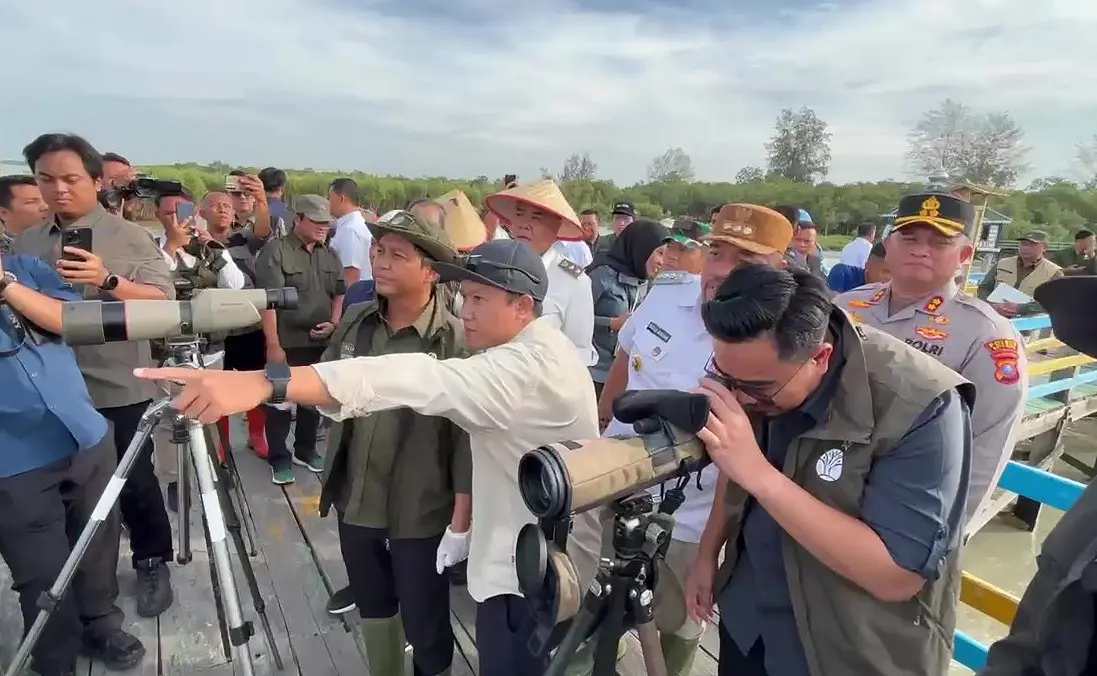
The Minister of Forestry of the Republic of Indonesia, Mr. Raja Juli Antoni, together with the Regent of Batu Bara, Mr. Baharuddin Siagian, observing migratory shorebirds during a birdwatching activity at Sejarah Beach, a proposed Flyway Network Site (FNS) under the East Asian–Australasian Flyway Partnership. 10 September 2025 (©WHIS Indonesia)
Author: Chairunas Adha Putra
Report: Link
Every year, millions of migratory shorebirds undertake one of the world’s greatest wildlife journeys along the East Asian–Australasian Flyway (EAAF), travelling thousands of kilometres between their breeding and non-breeding grounds. Their survival depends on a network of healthy coastal wetlands where they can rest and replenish their energy during migration. One of these vital sites is Sejarah Beach, part of the Batu Bara Intertidal Landscape in North Sumatra, Indonesia. Recognising its international importance, the Wild Heritage of Sumatra (WHIS) Foundation, with support from the East Asian–Australasian Flyway Partnership (EAAFP) Small Grant Fund 2025, worked closely with local communities, universities, and government agencies to strengthen the conservation of this remarkable coastal ecosystem through scientific research, stakeholder collaboration, capacity building, and environmental education.
Over seven months of monitoring, from September 2025 to March 2026, the project confirmed the exceptional importance of Sejarah Beach for migratory shorebirds. Researchers recorded 41 species of waterbirds, including 25 migratory shorebird species, with the highest monthly count reaching 8,759 shorebirds in December. The surveys documented internationally important populations of globally threatened species, including the Endangered Nordmann’s Greenshank, Great Knot, and Far Eastern Curlew, as well as the Vulnerable Grey Plover, Curlew Sandpiper, and Broad-billed Sandpiper. Most notably, the monitoring recorded 272 Nordmann’s Greenshanks, representing one of the largest known wintering concentrations of this globally Endangered species in Indonesia. These findings provide compelling evidence that Sejarah Beach is one of the country’s most important non-breeding habitats for migratory shorebirds.
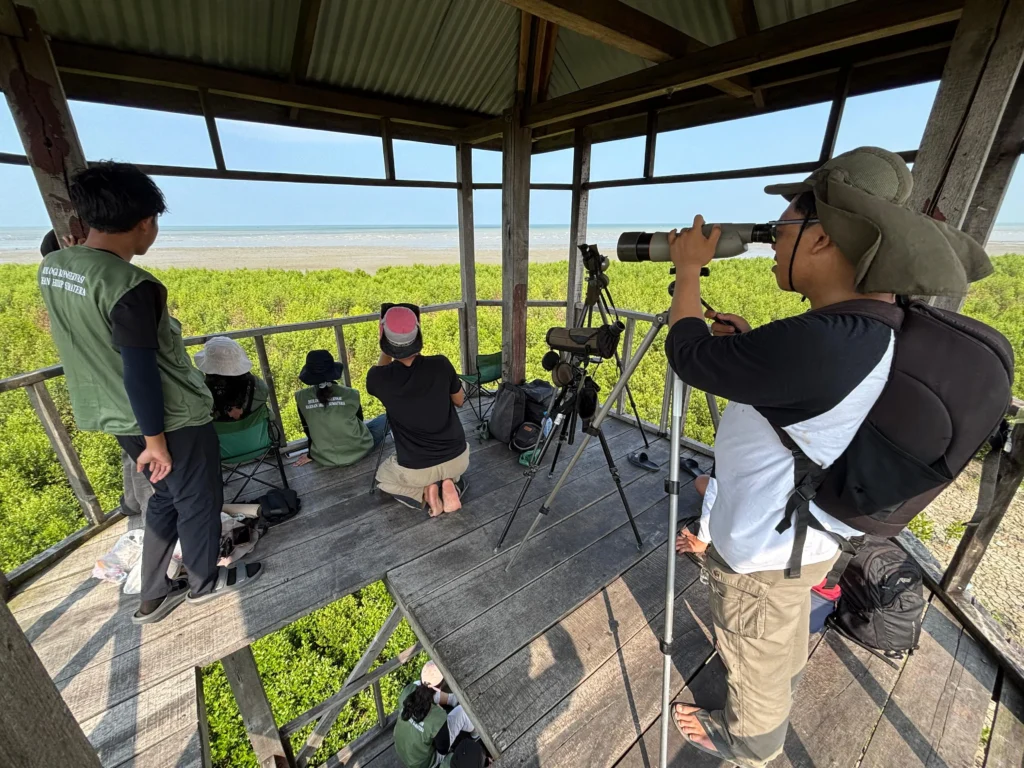 The monitoring team conducting shorebird surveys at Sejarah Beach as part of the 2025–
2026 monitoring programme © WHIS Indonesia
The project also revealed the extraordinary journeys made by these birds. During the surveys, researchers resighted five individually leg-flagged Nordmann’s Greenshanks that had previously been marked in Sakhalin, Russia, and Tiaozini, China. These remarkable birds travelled thousands of kilometres before arriving at Sejarah Beach, demonstrating the ecological connectivity that links coastal wetlands across the East Asian–Australasian Flyway. Beyond improving scientific understanding of migration, the monitoring data provide robust evidence supporting the nomination of Sejarah Beach as a Flyway Network Site (FNS) under the EAAFP, helping to secure long-term international recognition and protection for this critical habitat.
 Nordmann’s Greenshank previously been marked in Sakhalin, Russia © WHIS Indonesia
Conservation, however, is about far more than collecting scientific data, it is ultimately about inspiring people to care for nature. Throughout the project, university students gained practical experience through a Shorebird Identification and Counting Workshop and field-based monitoring training, equipping them with the skills needed to become the next generation of conservation practitioners. At the same time, elementary school students celebrated World Migratory Bird Day 2025 through birdwatching, mangrove education, educational films, and interactive learning activities. These experiences encouraged young people to appreciate migratory birds, understand the importance of healthy coastal ecosystems, and recognise that local communities have an essential role in protecting habitats that are shared by wildlife across many countries.
Strong partnerships became one of the project’s greatest achievements. Through a series of consultations with government agencies, conservation authorities, universities, and local communities, broad institutional support was secured for the preparation of the Site Information Sheet (SIS) and the ongoing nomination of Sejarah Beach as a Flyway Network Site. These collaborations have laid the foundation for long-term, collaborative management of the Batu Bara Intertidal Landscape, demonstrating that effective conservation can only succeed when science, policy, and community participation work together.
Although the project has officially concluded, its impact is only beginning. The monitoring results now provide an important scientific baseline for future research, long-term monitoring, and adaptive management of Sejarah Beach. The partnerships established through the project will continue to support the Flyway Network Site nomination and the development of a comprehensive management plan, while trained students and local communities will remain actively engaged in conservation activities. By bringing together science, education, and community stewardship, this project demonstrates how local conservation actions can contribute to protecting migratory shorebirds across the entire East Asian–Australasian Flyway, ensuring that these extraordinary travellers continue to find safe places to rest and thrive for generations to come.
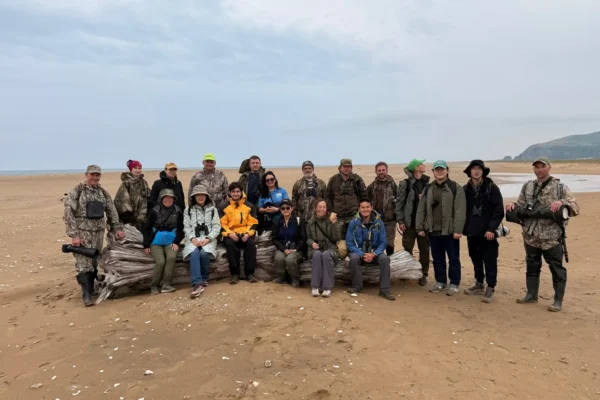
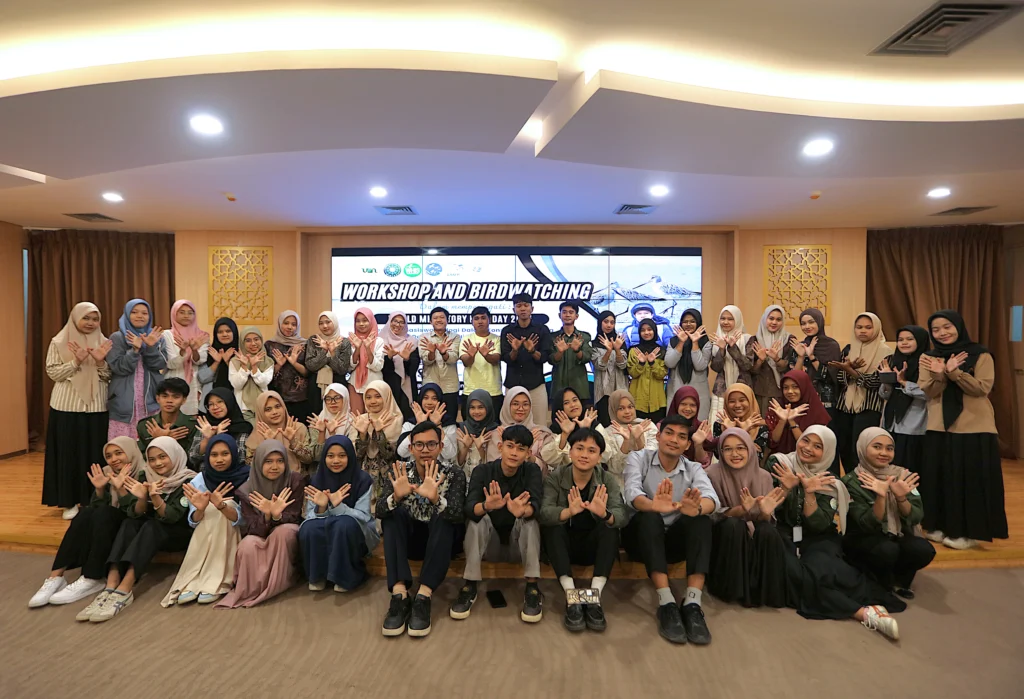 Shorebird Identification and Counting Workshop © WHIS Indonesia