Author: Dr Sonia Rozenfeld
Report: Link
The impact of a rapidly growing human population of billions on the Earth’s natural environment is leading to a decline in the numbers of most animal species and a reduction of available habitat. Waterfowl are no exception. Even in a country like Russia, where some of the last large tracts of virtually untouched nature remain on Earth, waterfowl face many problems, primarily due to non-compliance with environmental legislation and poorly executed environmental management practices. Of all birds, waterfowl have played and continue to play an important role in human life, primarily as a valuable food resource. For millennia, ducks, geese, and brants have been hunted. Seasonal hunting of geese, swans and ducks has sometimes determined the survival of entire tribes and peoples. For many Indigenous Peoples of the Russian North, waterfowl continues to be an important source of food, with local populations engaging in mass egg collection or hunting of moulting birds.
To conserve migratory waterfowl, we need to understand their population dynamics, breeding success, migration routes and timing, key moulting sites, and migratory stopovers. Information on the flyways, use of various habitats and numbers of waterfowl in Russia was highly generalised and not systematised. Unfortunately, migratory bird population monitoring is currently not conducted at the state level in Russia. Currently, the regulation of migratory bird use in Russia is not based on scientific evidence or annual monitoring data. The lack of large-scale waterbird data in northern Eurasia represents a broader conservation and knowledge deficit: it impedes species-specific conservation, hampers the assessment of ecosystem change, and limits both flyway-scale coordination and recognition of the societal benefits associated with migratory waterbirds.
However, the development of light aviation has opened up new opportunities.
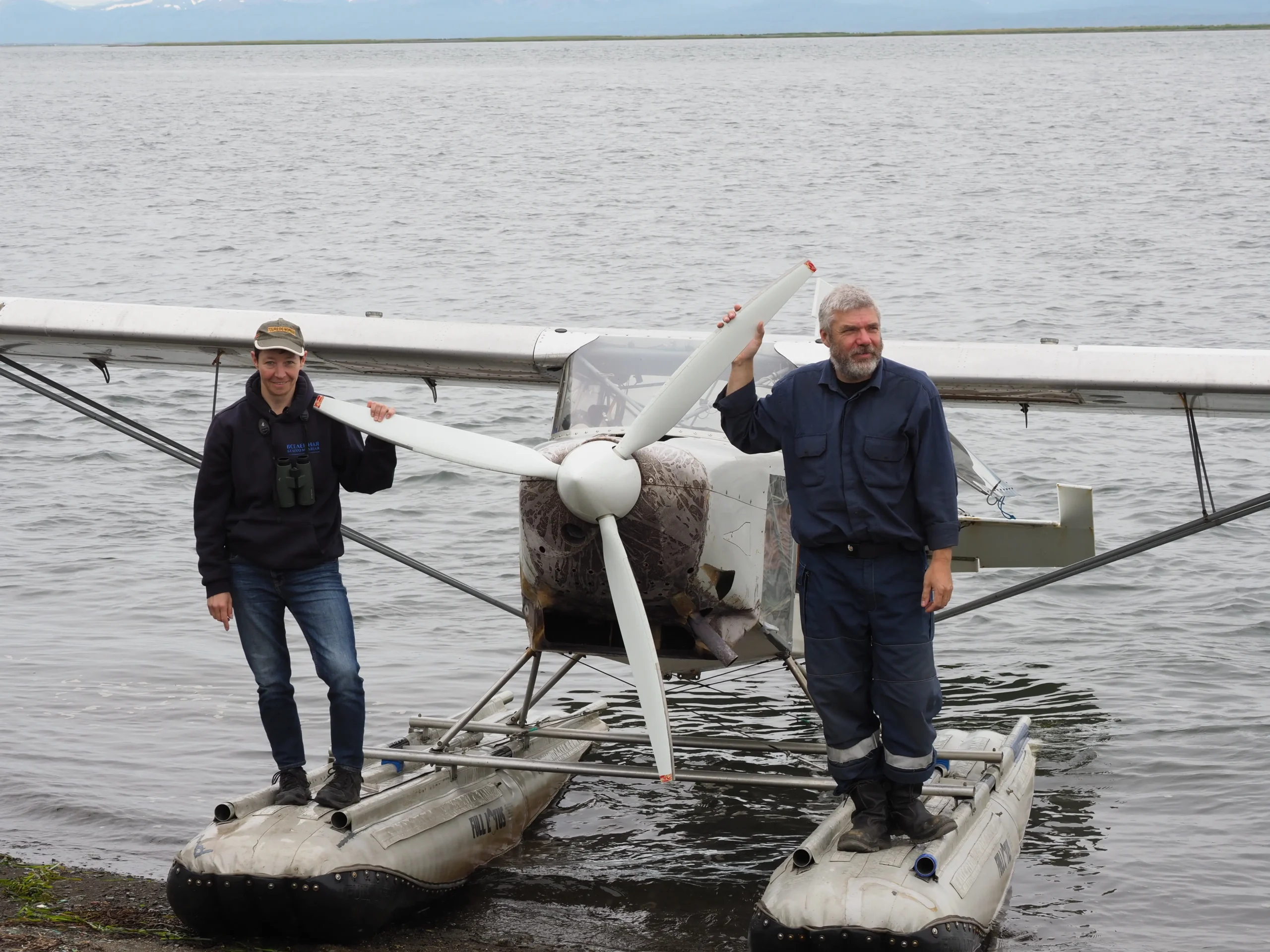
To delineate summer ranges (breeding and moulting); to discover concentrations and to estimate population sizes of primary geese and ducks in the East Asian tundra and forest-tundra in the frame of our project, we collected a vast amount of data about waterfowl and waterbirds from the light seaplane from the Ural Mountains to the border with Alaska.
The survey of the Bean Goose and Greater White-fronted Goose allowed us to make a modern estimation of the number and distribution of their populations. The total population size of Greater White-fronted Geese on wintering grounds was estimated at 231,000–283,000 between 1999 and 2011. More recent estimates are 375,500, with an increasing trend observed for the West Pacific Flyway population and a stable East Asian–Australasian Flyway (EAAF) population.
Our study is the first attempt to estimate the summer abundance of the Greater White-fronted Geese in the EAAF and to demonstrate the current summer distribution of this species based on aerial survey data from a light floatplane. The extrapolated population, excluding unidentified geese, is approximately 700,000 birds according to our data. The same study is planned for the Tundra Bean Goose.
The surveys of rare species like Lesser White-fronted Goose, eiders and others have been done and allow us to receive new data regarding the condition of their populations.
Building upon this long-term survey programme, we present a comprehensive, decade-long (2014–2024) aerial survey dataset of northern Eurasian waterbirds, covering a broad northern Eurasian study area and centred on the Russian Arctic and Subarctic.
The dataset is formatted to Global Biodiversity Information Facility (GBIF) standards, ensuring interoperability and broad accessibility for the research community. This foundational resource comprises 97,638 georeferenced records from aerial surveys of 67 administrative districts. It represents one of the most extensive standardised aerial survey compilations currently available for waterbirds in northern Eurasia. Our study provides the first standardised public release of the broader survey dataset as a harmonised sampling-event resource. By providing broad-scale spatial coverage together with record-level data information, this resource can support analyses of occurrence, broad distribution patterns, and survey coverage across northern Eurasia. It also provides an important baseline for conservation planning, species distribution modelling, and region- or taxon-specific seasonal analyses.
We also used the survey as an opportunity to share the stories of the researchers working at the Chaun Scientific Station (Northern Chukotka). Young hot heads and senior colleagues are doing science in Chukotka. Who are these northern nature researchers? Please, see at: https://youtu.be/X04VyZZgvRI


 Light seaplane STERKH C1 © Dr Sonia Rozenfeld
 Eastern Tundra Bean Goose © Arthur Riabitsev
 Eastern Greater White-fronted Goose and Lesser White-fronted Goose © Arthur Riabitsev