Eaaflyway

Category: Related News

  • SPG’s Commitment to Biodiversity Conservation with EAAFP

    SPG’s Commitment to Biodiversity Conservation with EAAFP

    © EAAFP

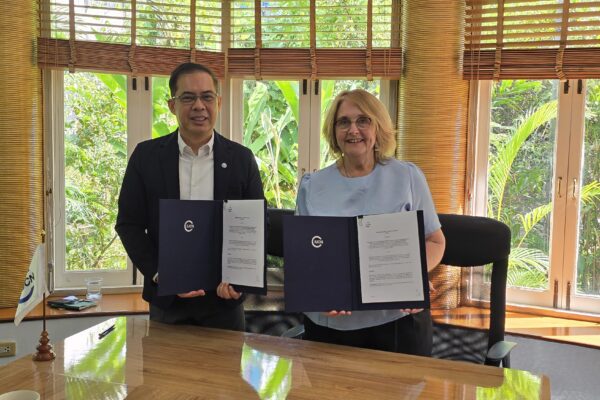
    On 13th February 2025, SPG Co., Ltd. and the East Asian-Australasian Flyway Partnership (EAAFP) held a pivotal meeting at the EAAFP Secretariat Office. This meeting marked the beginning of an exciting collaboration focused on supporting the mitigation of biodiversity loss through the conservation of migratory waterbirds and their habitats.

    The meeting represented a significant step towards establishing a long-term partnership between the two organisations, with SPG’s increased commitment as a corporate sponsor taking centre stage. As part of this partnership, SPG will contribute 8 million Korean won annually from 2025 to support EAAFP’s vital conservation efforts.

    During the meeting, EAAFP emphasised the critical importance of conserving the East Asian-Australasian Flyway and wetlands, highlighting the organisation’s role in safeguarding these ecosystems. EAAFP shared its key sponsorship programmes, including the EAAFP Corporate Champion Programme, which encourages corporate participation in the conservation of migratory waterbirds. EAAFP also underscored the alignment of bird conservation with broader environmental sustainability goals, an approach that closely mirrors SPG’s own commitment to ESG (environmental, social, and governance) strategies.

    © EAAFP


    © EAAFP

    SPG, known for its high-efficiency precision motors and gearheads, is headquartered in the Republic of Korea and has global operations in China, Vietnam, and the USA. The company focuses on providing energy-efficient products across various industries, including national defense, robotics and automation. As part of its growing ESG initiatives, SPG has committed to making a more substantial impact in the field of biodiversity conservation.

    In this regard, Juho Jung, Director of the Management Support Division of SPG, expressed their strong support for EAAFP’s conservation efforts, particularly in relation to migratory waterbirds. Their support will help further EAAFP’s mission to conserve migratory waterbirds and the wetlands and flyways that are crucial to their survival and biodiversity, which links with sustainable life of people.

    Beyond the financial commitment, SPG’s participation will also play a key role in raising awareness of migratory waterbird conservation within the company and its global network. SPG sees this sponsorship as an important step towards integrating biodiversity conservation into its corporate values and extending its commitment to environmental protection on a global scale.

    The partnership with EAAFP represents an opportunity for private sectors to contribute significantly to the preservation of critical migratory waterbird habitats along the East Asian-Australasian Flyway. This collaboration is a testament to SPG’s commitment to making a positive, long-lasting impact on the environment, ensuring that future generations can continue to benefit from the beauty and biodiversity of migratory waterbird populations.


    For more information
    EAAFP Corporate Engagement: Corporate Engagement – Eaaflyway
    EAAFP Corporate Champion Programme: EAAFP Corporate Champion Programme – Eaaflyway
  • EAAFP Secretariat Renews MoU with the Secretariat for the Indo-Burma Ramsar Regional Initiative (IBRRI) to Strengthen Wetland and Migratory Waterbird Conservation

    EAAFP Secretariat Renews MoU with the Secretariat for the Indo-Burma Ramsar Regional Initiative (IBRRI) to Strengthen Wetland and Migratory Waterbird Conservation

    On 17 January 2025, the Secretariat for the Indo-Burma Ramsar Regional Initiative (IBRRI), represented by IUCN, renewed its Memorandum of Understanding (MoU) with the EAAFP Secretariat. This renewal marks a significant step in reinforcing the ongoing partnership between the two organisations, strengthening their collaborative efforts to promote the wise use of wetlands, protect migratory waterbird species, and safeguard biodiversity across the Indo-Burma region. 

    ⓒ EAAFP Secretariat

    The renewed partnership underscores a sustained commitment to advancing conservation efforts for wetlands and migratory waterbirds, while also promoting sustainable development across Cambodia, Lao PDR, Myanmar, Thailand, and Viet Nam. With the MoU in effect until 2030, it aims to bolster IBRRI and EAAFP’s priority conservation actions throughout the region, with a focus on conserving vital wetland ecosystems and the species they support. 

    The two Secretariats have identified several key areas for collaboration such as supporting coordinated efforts on the designation and management of Flyway Network Sites (FNS) and Ramsar sites of importance for key species under the EAAFP framework, supporting collaboration between FNS and Ramsar site managers on capacity building, synergies through CEPA activities and sharing of best practices, exchange of information on wetlands and migratory waterbird conservation and issues, among others.  

    Ms. Jennifer George, Chief Executive of the EAAFP, and Dr. Dindo Campilan, IUCN Regional Director for Asia and Hub Director for Oceania, discussed ways to expand their cooperation beyond the Indo-Burma region. They explored ways to strengthen partnerships between IUCN Asia and EAAFP by identifying strategic opportunities that will further enhance migratory waterbird and wetland conservation efforts along the East Asian–Australasian Flyway. 

    This partnership is poised to drive meaningful progress in conserving critical wetland habitats for migratory waterbirds and supporting local communities reliant on these wetland ecosystems. 


    ⓒ EAAFP Secretariat


    To learn more about IBRRI, please visit: https://iucn.org/our-work/region/asia/our-work/water-and-wetlands/indo-burma-ramsar-regional-initiative-ibrri 


    Related Article: https://eaaflyway.org/eaafp-ibrri-mou/ 

  • Updates of Avian Influenza situation by FAO/EMPRES-AH (September 2024 – December 2024)

    Updates of Avian Influenza situation by FAO/EMPRES-AH (September 2024 – December 2024)

    Updates of Avian Influenza situation by FAO/EMPRES-AH (September 2024 – December 2024)

    Xavier Roche, Animal Health Officer – FAO

    FAO/EMPRES-AH is constantly monitoring the avian influenza situation worldwide and compiles information from multiple national and international sources as well as peer-reviewed scientific articles. Close collaboration with country and regional offices, the implementation of avian influenza field surveillance projects, and networks of expertise like WOAH/FAO’s OFFLU (www.offlu.org) provide access to timely information on outbreaks, surveillance findings, and genetic similarities of circulating viruses or their virologic features. This information is stored in the EMPRES Global Animal Disease Information System (EMPRES-i), a database that can be accessed online at https://empres-i.apps.fao.org/.

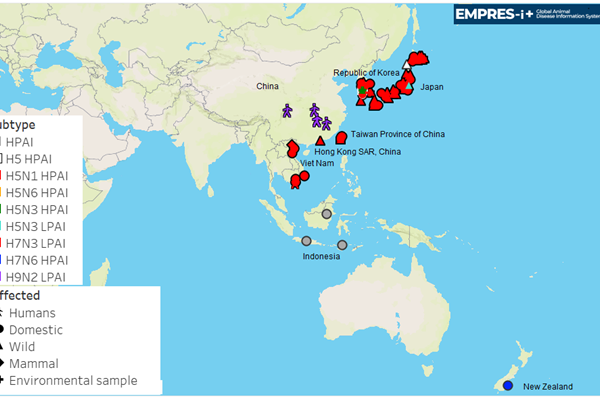
    During the period from 10 September 2024 to 9 December 2024, at least four high pathogenicity avian influenza (HPAI) virus subtypes (H5N1, H5N3, H5N6, H7N6) and three low pathogenicity avian influenza (LPAI) virus subtypes (H5N3, H7N3, H9N2) have been reported in East and Southeast Asia and Oceania. H5Nx HPAI viruses continue to circulate in Asia and are well established in certain areas of the region.

    During this period, China reported five H5N1 HPAI cases in wild birds: four cases in Black-faced Spoonbill (Platalea minor) in Taiwan Province and one case in an unspecified wild bird in Hong Kong Special Administrative Region (SAR). Taiwan Province also reported seven H5N1 HPAI outbreaks affecting domestic birds including chickens and geese. In addition, six environmental samples tested positive for H5N1 HPAI virus in Hong Kong SAR (2) and Taiwan Province (4), along with two H7N3 LPAI virus detections in faecal samples collected from Anatidae species in Kaohsiung City, Taiwan Province.

    Since early September, a significant increase in the HPAI activity was observed in Japan, with a total of 73 H5N1 HPAI events reported over 19 prefectures. Of these, 54 H5N1 HPAI cases were reported in wild birds including Hooded Crane (Grus monachal), Whooper Swan (Cygnus cygnus), Eurasian Wigeon (Mareca Penelope), and Peregrine Falcon (Falco peregrinus), among others, with 22 events occurring at the Izumi Wintering Habitat of Cranes (a Ramsar site), while seven H5N1 HPAI virus detections resulted from environmental sampling. Japan also reported 12 H5N1 HPAI outbreaks in poultry, mostly chicken farms, which affected over 1.2 million birds including those culled as part of control measures. Moreover, H5N3 LPAI virus was detected during October in a dead Eastern Spot-billed Duck (Anas zonorhyncha) in Fukushima Prefecture.

    The Republic of Korea reported eight H5N1 HPAI outbreaks affecting poultry farms in seven provinces and metropolitan cities. Six H5N1 HPAI cases occurred in wild birds involving species such as Mandarin duck (Aix galericulata), Northern pintail (Anas acuta), Peregrine falcon (Falco peregrinus), and other unspecified wild birds. As part of active surveillance efforts, the Republic of Korea reported environmental samples (wild bird faeces) positive for H5N1 HPAI (6), H5N3 HPAI (1) and H7 LPAI (1) viruses.

     In Southeast Asia, Viet Nam officially reported a total of 11 H5N1 HPAI outbreaks. Eight outbreaks occurred on farms, affecting domestic birds of various species in Nam Dinh, Nghe An, Khanh Hoa, Binh Phuoc and Long An provinces, from North to South. Two H5N1 HPAI outbreaks were reported in captive felids (Tiger [Panthera tigris], Lion [Panthera leo] and Amur leopard [Panthera pardus] species) in zoos of Dong Nai and Long An provinces and one H5N1 HPAI outbreak occurred in unspecified domestic mammals in Phu Tho Province. In addition, H5N6 HPAI was reported in a duck farm in Nam Dinh Province. In Indonesia, three provinces confirmed HPAI outbreaks in domestic birds namely Central Java, East Kalimantan, and East Nusa Tenggara.

    In Oceania, New Zealand reported one H7N6 HPAI outbreak in domestic chickens of a commercial farm located in Otago Region. The H7N6 strain is closely related to LPAI strains present in wild birds in New Zealand.

    Meanwhile, China reported a total of nine influenza A(H9N2) human infections in Chongqing Municipality (1), and Guangdong (1), Hubei (1), Hunan (4), Jiangxi (1), and Sichuan (1) provinces, while Viet Nam reported one influenza A(H5) human infection in Long An Province.

    Highly pathogenic H5N1, H5N2, H5N5, H5N6, and H5N8 viruses have demonstrated the ability to spread via migratory water birds. We consider avian influenza activity to have increased during the period from September to December, driven partly by wild bird winter migration. Therefore, reports of outbreaks in poultry and detections in wild birds are expected to increase over the coming months in the region alongside further cases in humans.

    The list of bird species affected by H5Nx HPAI globally is available HERE with the new species reported since 2021 highlighted in orange.

  • GOOSE BULLETIN ISSUE 30 (NOVEMBER 2024)

    GOOSE BULLETIN ISSUE 30 (NOVEMBER 2024)

    GOOSE BULLETIN issue 30 (November 2024) has published.

    The article on the Bar-headed Goose Workshop and Hands-on Training held in Monglia has contributed by Dr. Hyun-Ah Choi at Hanns Seidel Foundation Korea, in collaboration with Minjae Baek, Communications Officer at the EAAFP Secretariat.

    This is the official bulletin of the Goose Specialist Group of Wetlands International and IUCN.

    GOOSE BULLETIN appears as required, but at least once a year in electronic form.
    The bulletin aims to improve communication and exchange information amongst goose researchers throughout the world. It publishes contributions covering goose research and monitoring projects, project proposals, status and progress reports, information about new literature concerning geese, as well as regular reports and information from the Goose Database.
    Contributions for the GOOSE BULLETIN are welcomed from all members of the Goose Specialist Group and should be sent as a Word-file to the Editor-in-chief.
    Authors of named contributions in the GOOSE BULLETIN are personally responsible for the contents of their contribution, which do not necessarily reflect the views of the Editorial Board or the Goose Specialist Group.

    Editor-in chief: Johan Mooij (johan.mooij@t-online.de)
    Biologische Station im Kreis Wesel
    Freybergweg 9, D-46483 Wesel (Germany)

    Editorial board: Fred Cottaar, Carl Mitchell,
    Johan Mooij, Berend Voslamber

    Goose Specialist Group of Wetlands International and IUCN
    Board: Thomas Lameris (chair), Petr Glazov (co-chair), Tony Fox, Alexander Kondratyev,
    Johan Mooij, Sander Moonen, Julius Morkünas, Ingunn Tombre

    Global coordinator: Petr Glazov
    Regional coordinator North America: Ray Alisauskas (Canada)
    Regional coordinator East Asia: Masayuki Kurechi Wakayanagi (Japan)

    https://www.geese.org/Ganzen/index.jsp

    GOOSE BULLETIN ISSUE 30 (NOVEMBER 2024)

    ISSN: 1879-517X

  • Inspiring Youth to Become Involved with Migratory Birds: Interaction between EAAFP and Michuhol Foreign High School

    Inspiring Youth to Become Involved with Migratory Birds: Interaction between EAAFP and Michuhol Foreign High School

    Group photo with Michuhol Foreign High School students © EAAFP Secretariat

    Tenth grade students from Michuhol Foreign High School in Incheon, Republic of Korea, visited the East Asian–Australasian Flyway Partnership (EAAFP) Secretariat office on 12 July 2024. The goal of this visit was to inspire and encourage students from Michuhol Foreign High School to be more involved in the conservation of migratory waterbird species and to build awareness about the increasing disappearance of their key habitats. The meeting provided an opportunity for students to engage with the EAAFP Secretariat through presentations and personal anecdotes from the Secretariat.

    Jennifer George, Chief Executive of EAAFP, warmly welcoming the students (from left to right, Ms. Yoon Kyung Lee, Ms. Jieon Yoo, Ms. Jennifer George, Ms. Jiyun Ha) ©EAAFP Secretariat

    The meeting began with a short introduction by the EAAFP Chief Executive, Ms. Jennifer George. Ms. George emphasised the importance and potential impact that students, such as those from Michuhol High School, can make in shaping the local community and society. She discussed the EAAFP’s goal of connecting students to ecological conservation and encouraged them to actively participate in the event.

    Ms. Jiyun Ha, External Relations and Foundation Assistant of EAAFP, presenting to the students ©EAAFP Secretariat

    Ms. Jiyun Ha and Ms. Jieon Yoo, EAAFP External Relations and Foundation Assistants, gave a presentation focusing on the overview of the flyway, its key species, Flyway Network Sites (FNS), and the threats they face amidst the climate crisis and biodiversity loss. They provided detailed information about the Black-faced Spoonbill (Platalea minor) or BFS, which is a species known for its distinctive black spoon-shaped bill. These birds face threats such as habitat loss and degradation due to human activities and are categorised as endangered by the IUCN (Birdlife international, 2017). Earlier that day, the students visited Namdong Reservoir in Incheon to personally observe the BFS and several other bird species and learn about the efforts to protect them.

    Ms. Jieon Yoo, External Relations and Foundation Assistant of EAAFP, presenting to the students ©EAAFP Secretariat

    “Although the East Asian–Australasian Flyway (EAAF) is one of the busiest flyways, it is sadly endangered by pollution, illegal hunting, and other anthropogenic stresses,” said Ms. Yoo.

    Ms. Ha and Ms. Yoo highlighted the world map demonstrating the migratory waterbirds’ path along the EAAF. These birds travel extensively along the flyway, beginning their journey in Alaska and Russia, passing through Asian countries like Korea and Malaysia, and ending in Oceania, including Australia and New Zealand. They emphasised that the responsibility for conserving these species does not lie within a single country but requires a concerted, global effort. Ms. Ha and Ms. Yoo suggested several ways for Korean high school students to get involved, such as participating in social campaigns, volunteering at the EAAFP, and birdwatching. Through active collaboration with young people, EAAFP aims to promote awareness and passion for saving migratory waterbirds and their wetland habitats.

    Students actively participating in the short quiz. ©EAAFP Secretariat

    Ms. Ha and Ms. Yoo concluded their presentation with a short quiz on migratory waterbirds and the EAAF. All participants received souvenirs from the Secretariat. The EAAFP hopes this presentation was informative and inspiring for the students.

    Souvenirs that students received. ©EAAFP Secretariat

    Ms. Kyle Esperanza Zuleta, Programme Officer of EAAFP (left), and Ms. Yoon Kyung Lee, External Relations Manager of EAAFP (right), ©EAAFP Secretariat

    Next, Ms. Yoon Kyung Lee, External Relations Manager, and Ms. Kyle Esperanza Zuleta, Programme Officer, held an interactive session with the students. They shared their career journeys to joining the Secretariat and discussed what working at EAAFP means to them.

    “For me, it all began with a deep-seated passion for nature… Having been involved in various youth movements for nature conservation since high school and working with many local and international organisations on environment-related activities, I was driven by a purpose to contribute to efforts in conserving and restoring our natural world,”

    Ms. Zuleta recounted in her anecdote, emphasising the importance of youth action and their potential to contribute to solutions of global issues like climate change and biodiversity loss. She encouraged students to volunteer and participate in local and international forums and conferences. Through these experiences, she gained insights into global issues and met like-minded individuals working on similar advocacies.

    Ms. Yoon Kyung Lee engaging with students. ©EAAFP Secretariat

    On a different note, Ms. Lee discussed how a passion for conservation can start at any point in one’s career. Her journey to the Secretariat began in an urban setting in Korea and the U.S, and it was during her university studies in international relations that she discovered her interest in international environmental issues. Ms. Lee also shared her own insights from working in a developing country in Africa, noting that environment issues are closely related to other societal issues such as poverty, gender, and education. She encouraged the students to remain aware of and interested in the environment.

    Ms. Jiyun Ha, Ms. Jieon Yoo, Ms. Kyle Esperanza Zuleta, and Ms. Yoon Kyung Lee (from left to right) holding a Q&A session. ©EAAFP Secretariat

    During the Q&A session, all presenters answered questions that students had submitted to the Secretariat prior to their visit. Many questions focused on EAAFP’s activities, as elaborated below.

    “How does EAAFP collaborate with companies, and what are the advantages of such collaborations?”

    Ms. Lee and Ms. Zuleta addressed this question by explaining how partnerships with EAAFP are closely tied to implementing corporates’ Environmental, Social, and Governance (ESG) goals, which are increasingly relevant to companies today. They emphasised that collaborating with EAAFP can enhance a company’s reputation and provide additional promotional opportunities. However, EAAFP upholds strict corporate engagement guidelines and due diligence to ensure that these partnerships reflect genuine commitments to environmental protection rather than greenwashing.

    Ms. Jiyeon Back (left) and Mr. Jihu Yun (right) share their experience together ©EAAFP Secretariat

    “How can high school students contribute to the protection of migratory bird species?”

    Ms. Ha and Ms. Yoo responded by stressing that even small actions, such as showing interest in migratory waterbirds, can significantly raise awareness. They underscored the importance of acknowledging the coexistence between humans and migratory waterbirds and the need to avoid exploiting natural resources. Mr. Jihu Yun, Administration and Finance Assistant, and Ms. Jiyeon Back, Communications and Programme Assistant, shared their experiences with birdwatching in high school, highlighting how it fostered their understanding of biodiversity’s importance.

    Ms. Yeounhee Ahn, Deputy Chief Executive, concluded the meeting on a positive note by discussing the positive impact of conservation efforts on BFS populations visiting Incheon. Over eight years, their numbers increased. Ms. Ahn emphasised how the participation and awareness of younger generations are crucial in extending this positive influence and protecting not only BFS but also other migratory bird species that visit Korea.

    After the session, students from Michuhol Foreign High School provided feedback to EAAFP. The Secretariat appreciates the heartwarming words and is extremely grateful for the feedback that the students shared. Here are some examples of what the students wrote:

    “At the EAAFP Secretariat, I gained confidence that I could achieve my dream of becoming a business manager contributing to the environment … The visit to the EAAFP Secretariat, where I gained new insights and courage along with knowledge about migratory birds, will be an unforgettable memory in my high school life.”

    “I admired the fact that everyone had a specific motivation and a clear set of values. It was very helpful to hear the stories of the interns at the end of the session to learn more about their majors and what programmes they did their internships through. It was a day that made me want to be a part of an international organisation in the future.”

    “International organisations always seemed very distant to me but hearing that ‘by continuing to work on something related to your interests, you might find yourself working at the EAAFP’ made me realise that international organisations are not very far from our lives as I thought.”

    “I was impressed by everyone’s common opinion that migratory bird conservation starts with something as simple as taking an interest. I realised that even if I don’t work at the Secretariat, as a student and a citizen, taking an interest in migratory birds and sharing that interest with others can still be valuable.”

    Following is an infographic created based on the student’s feedback.

  • Updates of Avian Influenza situation by FAO/EMPRES-AH (Mar 2024–Jun 2024)

    Updates of Avian Influenza situation by FAO/EMPRES-AH (Mar 2024–Jun 2024)

    The following article is based on a summary provided by Nick Lyons from the FAO Animal Production and Health Division (NSAH). Minor revisions have been made to the original article to improve clarity and align it with the guidelines established by the EAAFP.

    FAO/EMPRES-AH continuously monitors the global avian influenza situation, compiling information from a variety of national and international sources, as well as from peer-reviewed scientific articles. Through close collaboration with country and regional offices, the implementation of field surveillance projects, and networks of expertise such as WOAH/FAO’s OFFLU (www.offlu.org), it provides access to up-to-date information on outbreaks, surveillance findings, and the genetic characteristics or virologic features of circulating viruses. This information is stored in the EMPRES Global Animal Disease Information System (EMPRES-i), a database accessible online at https://empres-i.apps.fao.org/.

    ©EMPRES-i

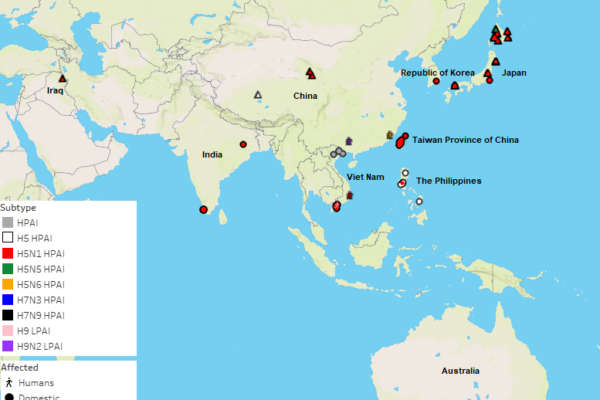
    During the period from 9 March 2024 to 10 June 2024, three highly pathogenic avian influenza (HPAI) virus subtypes (H5N1, H7N3, and H7N9) were reported in East, Southeast Asia, and Oceania. H5Nx HPAI viruses continue to circulate in Asia and are well-established in certain areas of the region.

    • Australia reported five H7N3 HPAI and one H7N9 HPAI outbreaks in poultry farms in Victoria State.
    • China reported the deaths of 275 wild birds, including Pallas’s gulls [Larus ichthyaetus], in May due to H5N1 HPAI in Qinghai Province around Qinghai Lake, and 14 H5N1 HPAI outbreaks in chicken farms (13) in March-April and a goose meat farm in May in Taiwan Province. Furthermore, China reported that H5 HPAI killed 190 wild birds, including brown-headed gulls, in Senyi District, Nagqu City, Xizang Autonomous Region in May and 43 wild birds in Xiangshan County, Ningbo City, Zhejiang Province in June.
    • The Republic of Korea reported one H5N1 HPAI outbreak in a duck meat farm in Changnyeong County, Gyeongsangnam-do. Japan reported 17 H5N1 HPAI detections in wild birds in Hokkaido (12), Iwate (1), Tochigi (1), and Hiroshima (3) prefectures in large-billed crows (21), carrion crows (6), an Eurasian jay, a mountain hawk-eagle, a peregrine falcon, an Ural owl, and a white-tailed eagle. Additionally, two H5N1 HPAI outbreaks were reported in layer chicken farms in Chiba and Hiroshima prefectures.
    • Japan also reported H5N5 detections in large-billed crows in Hokkaido (5) and Iwate prefecture (4).
    • In the Philippines, H5N1 outbreaks in various poultry species were continuously reported in Pampanga, Kalinga, Nueva Ecija, Bataan provinces on Luzon Island from March to June, and in a broiler breeder chicken farm in April in Leyte Province in Eastern Visayas.
    • Indonesia confirmed HPAI from March to May of unknown subtypes.
    • Viet Nam officially reported HPAI outbreaks in domestic birds in Lang Son, Quang Ninh, Soc Trang, Tien Giang, Vinh Long, and Vinh Phuc provinces, with Soc Trang, Tien Giang, and Vinh Long due to the H5N1 subtype.
    • India reported six H5N1 outbreaks among backyard poultry in Kerala State and one in Jharkhand State on a farm.

    In addition, China reported A(H5N6) and A(H9N2) human infections in Fujian (2 cases) and Guangxi (1 case). Viet Nam also reported A(H5N1) and A(H9N2) human infections in Khanh Hoa and Tien Giang provinces (1 case each).

    Highly pathogenic H5N1, H5N2, H5N5, H5N6, and H5N8 viruses have demonstrated the ability to spread via migratory water birds. We consider avian influenza activity to be lower from March to June; therefore, reports of outbreaks in poultry or detections in wild birds and humans are expected to decrease over the coming months in the region.

    The list of bird species affected by H5Nx HPAI globally is available HERE, with the new species reported since 2021 highlighted in orange.

  • EAAFP Renews MOU with Incheon Metropolitan City and Ministry of Environment of the Republic of Korea for Continued Conservation Efforts

    EAAFP Renews MOU with Incheon Metropolitan City and Ministry of Environment of the Republic of Korea for Continued Conservation Efforts

    ©EAAFP Secretariat

    The East Asian-Australasian Flyway Partnership (EAAFP) is pleased to announce the renewal of its Memorandum of Understanding (MoU) with Incheon Metropolitan City and the Ministry of Environment of the Republic of Korea (hereinafter referred to as “MOEK”). This renewal in 2024 extends the hosting agreement for another five years.

    On 7 May 2024, the MOEK officially notified the EAAFP Secretariat of the extension, following comprehensive discussions among the Ministry, Incheon Metropolitan City, and the EAAFP Management Committee. This decision underscores the continued commitment and collaboration efforts of both the Host Government and Host City in supporting the Partnership for the conservation of migratory waterbirds and their habitats across the East Asian–Australasian Flyway.

    The EAAFP host agreement was first signed in 2009, with the previous renewal occurring in May 2019. Over these years, the steadfast support from Incheon Metropolitan City and the MOEK has been instrumental in enabling the Secretariat to carry out its vital activities and initiatives.

    The EAAFP Secretariat extends sincere gratitude to Incheon Metropolitan City and the MOEK for their unwavering financial and administrative support. Their dedication has been pivotal in advancing shared conservation goals and ensuring the success of the EAAFP’s mission.

    Looking ahead, the EAAFP is enthusiastic about strengthening its collaboration and cooperation with all Partners. Together, the EAAFP will continue to champion the conservation of migratory waterbirds and the critical habitats they rely on, ensuring the sustainability and biodiversity of the shared environment!

  • Renewal of MOU Ceremony between the EAAFP Secretariat, KOEN Yeongheung Power Division, and Incheon Metropolitan City, along with the EAAFP Foundation’s 2023–2024 Small Grant Programme Reporting Workshop held in Songdo, Republic of Korea

    Renewal of MOU Ceremony between the EAAFP Secretariat, KOEN Yeongheung Power Division, and Incheon Metropolitan City, along with the EAAFP Foundation’s 2023–2024 Small Grant Programme Reporting Workshop held in Songdo, Republic of Korea

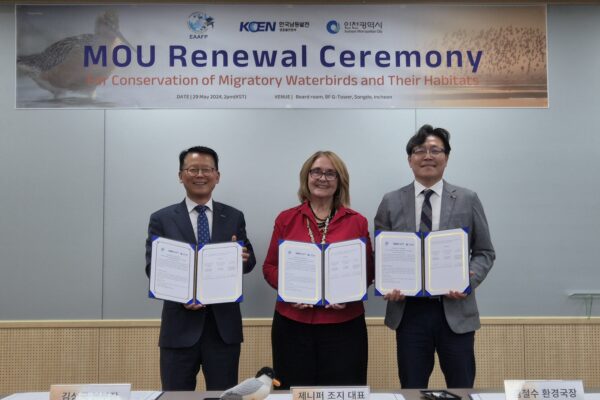
    The MOU was signed by the EAAFP Secretariat, KOEN Yeongheung Power Division, and Incheon Metropolitan City. Pictured from left: Sungkook Kim, Head of KOEN Yeongheung Power Division; Jennifer George, Chief Executive of EAAFP Secretariat; Chulsoo Kim, Head of Environment Bureau, Incheon Metropolitan City. ©EAAFP

    On 29th May 2024, the East Asian–Australasian Flyway Partnership Secretariat (hereafter ‘EAAFP Secretariat’), KOEN Yeongheung Power Division, and Incheon Metropolitan City held a ceremony at G-Tower in Songdo, Incheon, to extend their Memorandum of Understanding (MoU) aimed at protecting migratory waterbirds and their habitats in Incheon. Representatives from KOEN Yeongheung Power Division, Incheon Metropolitan City, the EAAFP Secretariat, and the EAAFP Foundation attended the ceremony.

    KOEN Yeongheung Power Division has been actively collaborating and providing financial support to the EAAFP Secretariat since their bilateral agreement in 2018 and the tripartite agreement in 2021. The extension of the MoU in 2024 for another five years underscores their continued dedication.

    With financial support from KOEN Yeongheung Power Division, the EAAFP has organised various events, including the ‘International Workshop on Alternative Habitats and Wetland Centers in Songdo’ (2018), ‘Incheon Winter Bird School’ (2018), ‘Workshop on Biodiversity Enhancement in Incheon-Gyeonggi Bay Area’ (2019), ‘The Creation of Educational Posters on Birds of the Incheon-Gyeonggi Bay Area’ (2019), and the ‘World Migratory Bird Day Public Lecture’ (2019).

    Since its inception, the EAAFP Foundation has utilised sponsorship from KOEN Yeongheung Power Division for its Small Grant Programme, which commenced in 2020. The EAAFP Foundation’s Small Grant Programme plays a significant role in supporting local projects that raise awareness about the importance of migratory waterbirds, habitat conservation, and biodiversity. These initiatives also contribute significantly to enhancing the capabilities of local stakeholders.

    KOEN Yeongheung Power Division has donated 30 million KRW to the EAAFP Secretariat for conservation activities. Pictured on the left is Sungkook Kim, Head of KOEN Yeongheung Power Division, and on the right is Jennifer George, Chief Executive of EAAFP Secretariat. ©EAAFP

    Following the renewal of the MoU, a donation ceremony was held where KOEN Yeongheung Power Division presented the EAAFP Secretariat with 30 million KRW. This annual donation, intended to continue until 2027, will significantly bolster the EAAFP Secretariat’s efforts in conserving migratory waterbirds and their habitats. The EAAFP Secretariat expressed gratitude for KOEN Yeongheung Power Division’s sustained support and looks forward to continued collaboration with them and Incheon Metropolitan City in the future.

    Participants of the 2023–2024 Small Grant Programme Reporting Workshop ©EAAFP

    After the MoU renewal ceremony and donation event, the EAAFP Foundation hosted its 2023–2024 Small Grant Programme Reporting Workshop. Since its establishment in 2019, the EAAFP Foundation has actively collaborated with the EAAFP Secretariat to support the East Asian–Australasian Flyway Partnership.

    The workshop featured six grantees who conducted conservation activities for migratory waterbirds and their habitats from October 2023 to March 2024. Participants actively shared their experiences in local conservation efforts and discussed strategies for further enhancement. The involvement of KOEN Yeongheung Power Division and the Hanns Seidel Foundation, sponsors of the Small Grant Programme, enriched the discussions.

    The EAAFP Foundation’s Small Grant Programme continues to operate thanks to ongoing financial support from KOEN Yeongheung Power Division, with the Hanns Seidel Foundation joined as a sponsor for the 2023–2024 cycle, further solidifying its partnership with the EAAFP.

    Jennifer George, Chief Executive of the EAAFP Secretariat and Chairperson of the EAAFP Foundation ©EAAFP

    The Small Grant Programme Reporting Workshop began with a congratulatory remark from Jennifer George, Chief Executive of the EAAFP Secretariat and Chairperson of the EAAFP Foundation. Jennifer expressed gratitude to the grantees and sponsors, underscoring the importance of each grantee’s projects. She emphasised the interconnectedness among stakeholders dedicated to the conservation of migratory birds that traverse borders along the sky’s superhighway during spring and autumn migrations. Jennifer also conveyed optimism regarding future cooperation efforts.

    Yeonhee Choi, Senior Manager of KOEN Yeongheung Power Division ©EAAFP

    Yeonhee Choi, Senior Manager of KOEN Yeongheung Power Division, emphasised the value of the ongoing cooperation with the EAAFP Secretariat since 2020. As a regional representative of a public enterprise, she affirmed the company’s commitment to continuing participation in projects and providing financial support in the future.

    Bernhard Seliger, Representative of the Hanns Seidel Foundation Korea ©EAAFP

    Bernhard Seliger, representative of the Hanns Seidel Foundation Korea, highlighted in a video message the significant contribution of the EAAFP Foundation’s Small Grant Programme to the conservation of migratory birds, their habitats, and the preservation of biodiversity. He underscored the essential role of local conservation efforts and expressed determination for the continued success of the Small Grant Programme in the future.

    Following the congratulatory remarks, the reporting presentations proceeded in the following order: Ganghwa Citizen Network, Birds Korea Yeoncheon, KFEM Incheon, Green Together Institute, Wetlands and Birds Korea, and Ulsan River Saving Network.

    Soonrae Kim, Chairman of the Ecology Conservation Committee, Ganghwa Citizen Network ©EAAFP

    Part of the presentation materials from Ganghwa Citizen Network ©EAAFP

    The Ganghwa Citizen Network presented the results of the Incheon Crane Monitoring Project, which aimed to investigate the habitat and ecological environment of Cranes arriving in the Incheon area. This project provided essential data for maintaining a healthy ecosystem and promoting sustainable development in Ganghwa County and the Yeongjong Tidal Flat located in the Han River Estuary (EAAF028).

    During the project period, they reported observing a total of 23 families and 56 species of birds, with the Greater White-fronted Goose and the Bean Goose identified as the dominant species. They also outlined plans to enhance the project by training more Crane surveyors and expanding opportunities for citizen participation in the future.

    Seunggwang Baek, Representative of Birds Korea Yeoncheon ©EAAFP

    Part of the presentation materials from Birds Korea Yeoncheon ©EAAFP

    Next, Birds Korea Yeoncheon presented their findings on the habitat and population changes of the Scaly-sided Merganser, gathered through the ‘Simultaneous Survey of the Scaly-sided Merganser at Flyway Network Sites (FNS)’ project. They detailed their initiatives aimed at conserving and restoring the Scaly-sided Merganser population based on these findings.

    They expressed their dedication to ongoing research and conservation efforts aimed at protecting the habitat and ecosystem of the Scaly-sided Merganser. Furthermore, they affirmed their commitment to engaging in collaborative conservation activities with local communities in the future.

    Okhee Park, Secretary-General of KFEM Incheon ©EAAFP

    Part of the presentation materials from KFEM Incheon ©EAAFP

    As part of the Small Grant Programme, KFEM Incheon conducted a programme where citizens of Incheon explored the Cranes, the city’s symbol, and observed their ecology as winter migratory birds. Approximately 50 citizens participated in this programme, engaging in bird watching activities in Cheolwon and Ganghwa Island. During these expeditions, they had the opportunity to observe endangered species such as the White-naped Crane and the Red-crowned Crane.

    This initiative not only provided citizens with insights into the ecological characteristics of the Red-crowned Crane but also underscored the importance of habitat conservation.

    Green Choi, Representative of Green Together Institute ©EAAFP

    Part of the presentation materials from Green Together Institute ©EAAFP

    Green Together Institute organized an exhibition showcasing observation diaries of migratory birds, directly recorded by natural environment interpreters active in Seocheon County. They presented the outcomes of this project, highlighting that the exhibition was held at the Seocheon Country Cultural and Arts Creation Space from 10th December 2023 to 10th January 2024, spanning a month.

    The exhibition served as a platform to foster knowledge-building and information exchange among residents about migratory birds and their habitats. It was anticipated that this initiative would significantly contribute to enhancing conservation efforts for migratory birds in the region.

    Part of the presentation materials from Wetlands and Birds Korea ©EAAFP

    Following the presentations from the first four grantees, Wetlands and Birds Korea and the Ulsan River Saving Network conducted their presentations via Zoom.

    Wetlands and Birds Korea shared the outcomes of the ‘20th Nakdong Estuary (EAAF097) Winter Bird Watching Event for Youth’ held twice in November and December 2023. The event aimed to cultivate ecological sensitivity and environmental conservation awareness among youth. They highlighted that the event provided an opportunity for youth to recognize the interconnectedness between ecosystems and the future of humanity. They underscored the significance of this awareness, which led to the formation of a “Youth Bird Watching Club.”

    Part of the presentation materials from Ulsan River Saving Network ©EAAFP

    The Ulsan River Saving Network presented the results of their monitoring of migratory waterbirds in the Ulsan Taehwa River (EAAF150) Estuary from 1st October 2023 to 31st March 2024. They conducted winter bird monitoring sessions a total of 22 times from November to March, following an educational programme on winter bird monitoring methods for approximately 30 members of the Ulsan River Saving Network, conducted by avian experts.

    The survey revealed a total of 3,280 individuals from up to 20 different species of waterbirds. They noted that while the number of species observed was similar to the results from 2022 and 2023, there was a significant decrease in the overall number of individuals. They concluded their presentation by emphasising the importance of identifying the causes behind this decrease in numbers.

    Following the presentation of the results, Q&A and discussion sessions are taking place. ©EAAFP

    During the question-and-answer session and subsequent discussion following the presentations, participants engaged in lively discussions. Jennifer George, Chief Executive of the EAAFP Secretariat and Chairperson of the EAAFP Foundation, posed inquiries to representatives from the grantees regarding any challenges encountered during project implementation.

    In response, the grantees expressed their desire for expanded support from international organisations, government agencies, experts, and NGOs to facilitate the seamless sharing and utilisation of monitoring and survey results. Furthermore, some grantees indicated their readiness to engage more actively in conservation efforts by collaborating with other NGOs and governments, contingent upon proactive administrative support to establish networks.

    The workshop concluded successfully with these constructive discussions.

  • EAAFP and BFU Forge Stronger Ties for Ecological Research and Conservation

    EAAFP and BFU Forge Stronger Ties for Ecological Research and Conservation

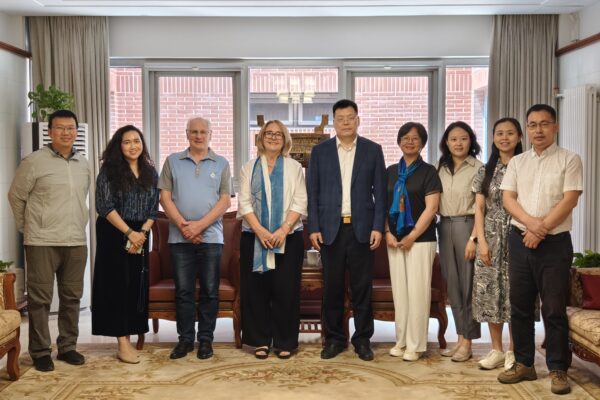
    From 19th to 22nd May, 2024, representatives from the East Asian–Australasian Flyway Partnership (EAAFP) Secretariat, including Chief Executive Jennifer George, Programme Officer Kyle Esperanza Zuleta, and Dr. Taej Mundkur, Vice Chair of the Technical sub-Committee, visited the Science Unit of the EAAFP Secretariat at Beijing Forestry University (BFU). The visit included interactions with Mr. Wang Hongyuan, Party Committee Secretary of BFU; Professor An Lizhe, President of BFU; representatives from the International Exchange and Cooperation Office; the School of Ecology and Nature Conservation; Center for East Asian–Australasian Flyway Studies (CEAAF); and EAAFP interns from BFU.

    Meeting with the Party Committee Secretary of BFU, Mr. Wang Hongyuan. ©️ Science Unit

    During the meeting, Mr. Wang Hongyuan emphasised that addressing climate change and protecting biodiversity require advancements in science and technology as well as the nurturing of young talent. He highlighted the important role of the university in this regard and expressed hope for stronger cooperation between the two sides. He proposed joint efforts in creating and sharing knowledge in flyway ecology, environmental science, and biodiversity conservation, and the establishment of a Flyway University Alliance to cultivate a large number of international youths engaged in global ecological protection efforts.

    Meeting with the President of BFU, Professor An Lizhe. ©️ Science Unit

    Professor An Lizhe extended a warm welcome to the delegation. He elaborated on the academic strengths and potential of BFU in disciplines related to terrestrial ecosystems and emphasised the significance of organising the science symposium for both sides. BFU will continue to optimise the global pattern of ecological civilisation education and contribute to global sustainable development.

    Ms. George indicated that Beijing Forestry University is an outstanding institution and expressed her gratitude for BFU’s long-standing support of the EAAFP Secretariat and its Science Unit. She particularly appreciated the university’s initiative in sending excellent young students to intern at the Secretariat based in Incheon. She emphasised that China’s significant contributions through hosting the Science Unit have set a model for all EAAFP government partners. Ms. George strongly supported joint efforts in conducting cross-regional collaborative research and actions. With the support of Beijing Forestry University, she expressed confidence in successfully organising the EAAFP Science Symposium. Both parties also discussed topics such as promoting common human values, exchanged views on how to conduct internationally impactful activities, and reached consensus on co-hosting the EAAFP Science Symposium in October and establishing the Flyway University Alliance.

    After the meeting, Ms. Jennifer George and her delegation visited the university’s History Hall, Natural Historical Museum, and alumni company Green Garden Group Co., LTD. They also had a friendly exchange with EAAFP interns from various BFU schools and met Professor Ding Changqing, Chair of EAAFP Baer’s Pochard Task Force.

    Group photo with Dr. Taej Mundkur, Vice Chair of EAAFP’s Technical sub-Committee (second from the left). ©️ Science Unit

     Visit to the Forest and Grassland Survey and Planning Institute of The State Forestry and Grassland Administration. ©️ Science Unit

    Visit to Green Garden Group. ©️ Science Unit

    Visit to the History Hall of BFU. ©️ Science Unit

    Meeting with interns from BFU. ©️ Science Unit

    Encounter with wild Mandarin Ducks on the BFU campus. ©️ Science Unit

    Meeting with the Chair of Baer’s Pochard Task Force, Prof. Ding Changqing. ©️Kyle Esperanza Zuleta

    ©️Science Unit

  • Colour marking and tagging of shorebirds in the Philippines

    Colour marking and tagging of shorebirds in the Philippines

    The following article is provided by Ward Hagemeijer from Wetlands International. Minor revisions have been applied to the original article to improve clarity and align it with the guidelines established by the EAAFP.

    In February 2024, an international team of shorebird ringers from various locations along the East Asian–Australasian Flyway (EAAF) — including Mongolia, China, Hong Kong, Taiwan and Australia — and from the Netherlands, conducted waterbird ringing and tagging in the Philippines, a crucial country for migratory waterbirds within the EAAF. Although extensive counts over many years have shown that large numbers of shorebirds use important wetlands in the country, relatively little is known about their use of these wetlands during migration within the EAAF. The primary objective of this study is to gain comprehensive knowledge about the local movements and habitat use of individual waterbirds at their stopover and wintering sites, as well as their migratory movements.

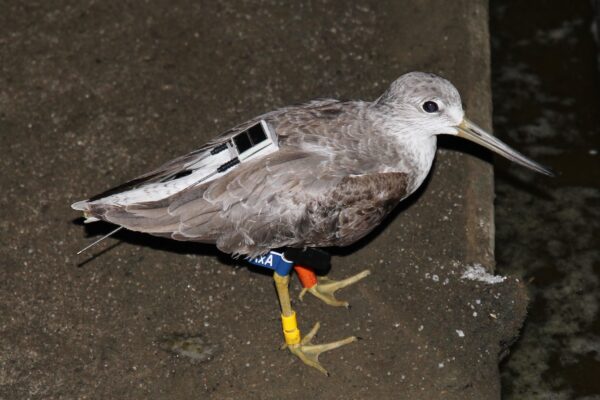
    Shorebirds were fitted with two leg flags: black over blue, in accordance with the EAAF Shorebird Colour Marking Protocol assigned to the Philippines. The blue flag is engraved with a three-letter code, enabling the identification of individual birds when resighted along the Flyway. Egrets and herons were fitted with a blue colour ring, marked with a code starting with “PH” followed by a number, without flags.

    Several individuals of target species were also fitted with transmitters to record their local habitat use and migratory movements. Some of the tagged Great Knots have already reached the Jiangsu coast of China.

    To optimise the options for resighting from somewhat larger distances, individual shorebirds given leg flags were also marked with colour rings on the tarsus, allowing identification in the field when the observation distance is too long to read the flag code. Orange, yellow, blue, and carmine (pink) colour bands were used, two on each tarsus, with the black (plain) and blue (engraved) flags positioned on the tibia.

    An example of a banded shorebird with two yellow colour bands on its right tarsus (below the main leg joint) and a blue and black flag on its right tibia (above the main leg joint). © Ward Hagemeijer

    Please report all sightings of marked birds to the “Shorebird Leg-Flag Sightings in the East Asian–Australasian Flyway (EAAF)” Facebook group or at https://flagsightings.wordpress.com/.

    Tracks of the tagged birds can be viewed using the Animal Tracker app on a mobile phone.

    For more information about the project, you can contact the project technical lead, Ward Hagemeijer, at ward@hagemeijerconsulting.nl.