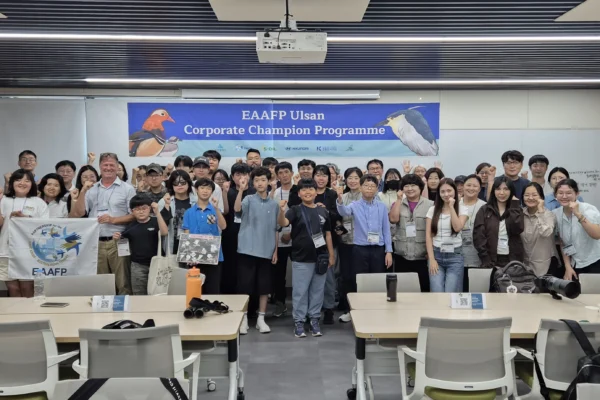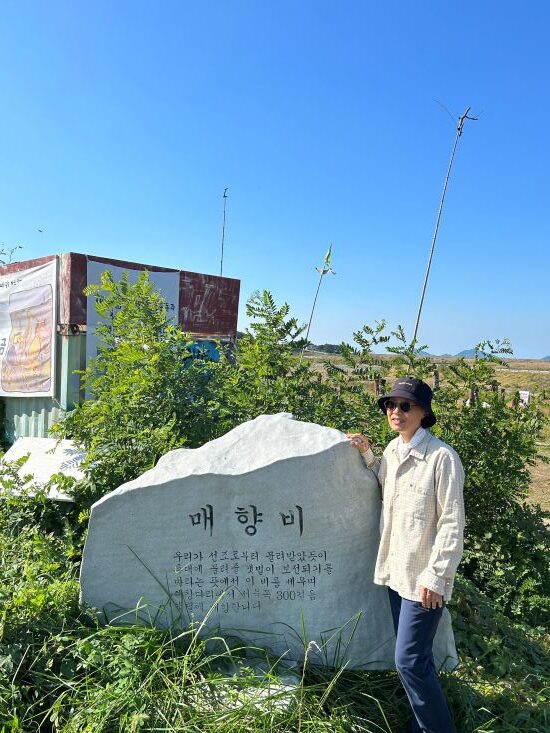
Ms Jiyoung Jang ⓒ Hyeseon Do
* The late Jiyoung Jang was a dedicated conservation advocate in Korea who worked tirelessly to protect the country’s tidal flats. She engaged directly with diverse stakeholders, listening to their perspectives and sharing her own, and played an active role in advancing tidal flat conservation towards the inscription on the UNESCO World Heritage List. Ms Jiyoung Jang sadly passed away in June 2026. This interview was conducted while she was still with us, and we are grateful for the opportunity to share her reflections and memories.
We would like to express our sincere appreciation to Ms Hyeseon Do for conducting this interview with Ms Jang and for kindly sharing it with us.
1. What first motivated you to become involved in efforts to protect the Saemangeum tidal flats, and how do you remember that time?
I began working actively with environmental organisations in 1996. At that time, one of the major environmental issues in Korean society was the Sihwa reclamation project and the severe water pollution that followed.
The Sihwa reclamation project was intended to reclaim the tidal flats of Siheung and Ansan in the Gyeonggi Bay area, with the aim of developing industrial complexes and agricultural land. Construction began in 1987, and after the 12.7-kilometre sea dike was completed in 1994, severe water pollution began to occur in Lake Sihwa, which had been converted into a freshwater lake. It became known as the ‘Lake of Death’ and emerged as a major social issue, highlighting the disastrous consequences of the reclamation project.
At the time, I became involved in responding to the issue as the person responsible for this matter. While the major Korean media focused primarily on the water pollution itself, I came to recognise that the pollution was fundamentally a consequence of the large-scale reclamation of tidal flats. Once the tidal flow was cut off, the organisms living within the tidal flats died in enormous numbers, inevitably resulting in a catastrophic deterioration of water quality.
Eventually, in 2000, the Ministry of Environment officially abandoned its plan to maintain Lake Sihwa as a freshwater lake and decided to restore seawater circulation. Following the construction of the tidal power plant in 2011, continuous seawater circulation has been maintained in Lake Sihwa to this day.
At the time, it was also not difficult to foresee that the Saemangeum reclamation project, which had been underway since 1991 and involved the construction of a 33-kilometre sea dike — the largest of its kind in the world at the time — could become an environmental disaster on an unprecedented scale.
Inspired by our experience responding to the water pollution at Lake Sihwa, a wide range of environmental organisations, civil society groups and religious organisations devoted themselves for more than a decade to efforts to protect the Saemangeum tidal flats. Despite these efforts, the final section of the Saemangeum sea dike was connected in 2006.
As a result, the Saemangeum tidal flats, which were a core stopover and habitat for internationally important shorebirds along the East Asian–Australasian Flyway, have continued to suffer severe degradation and destruction to this day.
Watching the Saemangeum sea dike being completed taught me a profound lesson: even when a region possesses natural heritage of international importance, if the local communities and local governments do not recognise its value and significance, that natural heritage will inevitably remain vulnerable to development pressures in one form or another.
With this understanding and the experience I gained, I subsequently began to focus more actively on tidal flat conservation together with local communities.
I moved to Muan Tidal Flat, an area where a reclamation project of a scale comparable to Saemangeum had once been planned, but was withdrawn in 1998 following strong opposition from the local government and local residents. Since then, I have continued working with local communities to conserve tidal flats in different parts of Korea.
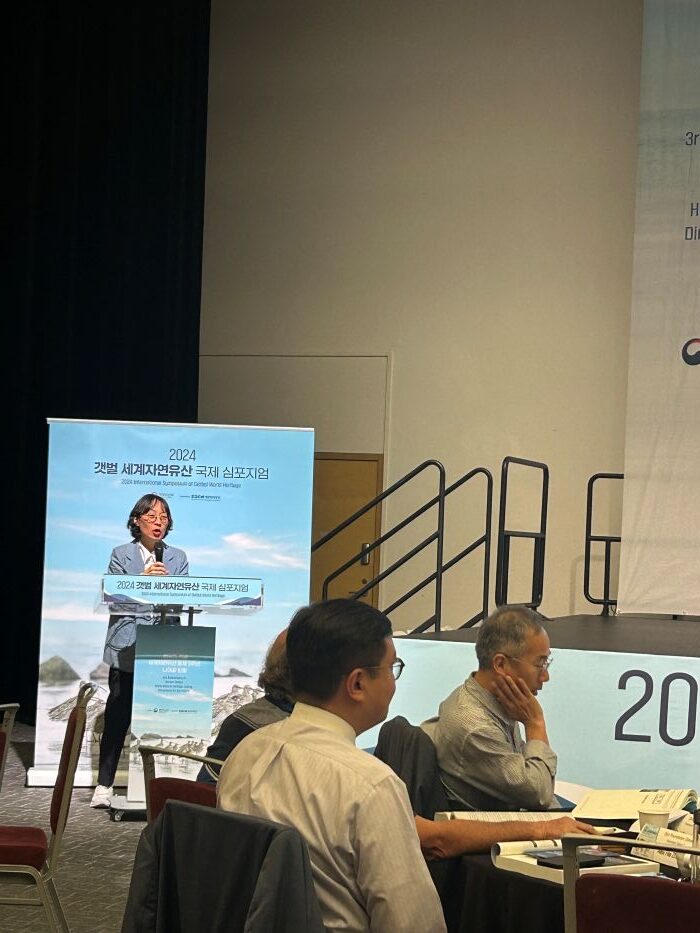 Ms Jiyoung Jang ⓒ Hyeseon Do
2. What was your early conservation motivation or vision to connect with international partners, particularly the Common Wadden Sea Secretariat and the British Embassy in Korea, in the early 1990s?
As the pollution of Lake Sihwa and the Saemangeum reclamation project attracted increasing public attention, the conservation of tidal flats became an important social issue in Korean society by the late 1990s. At the same time, the Wadden Sea was gradually emerging in Korea as one of the leading models for the conservation of tidal flats, an intertidal wetland ecosystem. I had long wanted to visit the Wadden Sea, which I had heard so much about, but an opportunity to see it for myself did not come easily. Finally, in November 1999, I visited the Wadden Sea on my honeymoon. I also learned from that experience that November is not necessarily the best time of year to experience the Wadden Sea at its natural best! During this visit, I met Dr Adi Kellermann, who had worked for the Schleswig-Holstein Wadden Sea National Park Authority, and his family. Sadly, Dr Kellermann passed away in 2025, leaving behind many important achievements. Meeting him marked the beginning of a more substantial relationship with the Wadden Sea, and I began to explore opportunities for cooperation and exchange in a wide range of areas.
Building on various exchanges and collaborations for tidal flat conservation, the Korean Ministry of Oceans and Fisheries signed an MOU with the three Wadden Sea countries in 2009. Since then, exchanges and cooperation have continued across a wide range of areas, including the sharing of information and knowledge, monitoring, conservation and management, migratory birds and marine mammals, awareness-raising and education, the establishment and operation of visitor centres, and sustainable tourism. In that same year, 2009, the Wadden Sea was successfully inscribed on the UNESCO World Heritage List. This became an important turning point that helped shape the direction of tidal flat conservation in Korea.
In particular, the Eco-Horizon Institute (EHI) believed that the most effective way to raise awareness was to let people see and experience these places for themselves — in other words, that seeing is believing. We therefore began organising annual study visits to the Wadden Sea for central and local government officials, relevant institutions, NGOs and local residents in Korea who were interested in tidal flat conservation. At the same time, we invited Wadden Sea experts to Korea to hold workshops and continued to develop a range of exchange and cooperation programmes. Building on these efforts and drawing inspiration from the Wadden Sea model, Korea, working together with many partner organisations, was eventually successful in having ‘Getbol, Korean Tidal Flats’ inscribed on the UNESCO World Heritage List in 2021.
Our exchange and cooperation with the United Kingdom began in 1999 with a wetland conservation project supported by the British Embassy in Korea for Korean NGOs, held to commemorate the visit of Her Majesty Queen Elizabeth II to Korea. As part of the project, we were given the opportunity to visit a number of wetlands in the UK managed by the RSPB and WWT, and to meet with relevant government officials. We also invited British wetland experts to Korea to hold workshops. At the time, with large-scale development projects such as the Saemangeum reclamation project being actively pursued in Korea, the wetland conservation and restoration work we saw in the UK, together with the operation of visitor centres for migratory bird conservation, seemed almost like a dream to us.
But I decided that we should start with what we could do under the circumstances we faced at the time. One of our priorities was to establish a tidal flat visitor centre that could serve as a focal point for conservation activities. We therefore persuaded Incheon Metropolitan City and Ganghwa County, which at the time appeared to offer the greatest potential, to take part in a study visit to wetlands in the UK. Through these visits, we were able to demonstrate how the conservation of tidal flats and migratory birds could contribute to local development. The experience was particularly powerful for the local government leaders and officials who visited the UK wetlands.
As part of these efforts, and with advice from WWT in the UK, Ganghwa Tidal Flat Centre was established in Ganghwa County in 2005. It was the first visitor centre in Korea to be established through a joint partnership between an NGO and a local government. It has now been more than 25 years since I first visited the wetlands of the UK, and Korean society is undergoing significant change. When ‘Getbol, Korean Tidal Flats’ was inscribed on the UNESCO World Heritage List in 2021, there were certainly challenges, particularly because of the global pandemic. Nevertheless, the inscription has created many new opportunities for tidal flat conservation. In 2024, the Korean Ministry of Oceans and Fisheries and the RSPB signed an MOU, while various laws and policies for tidal flat conservation in Korea have been newly established or strengthened. A range of projects are also being implemented to improve conservation and management, including migratory bird monitoring. Most remarkably, a dream that I saw in the wetlands of the UK 25 years ago, but which at the time seemed so far beyond our reach, is now becoming a reality. With advice from the RSPB, a project is currently underway to restore roosting and breeding habitat for migratory birds in the buffer zone of the Gochang Tidal Flat World Heritage Site. This is the first restoration initiative in Korea aimed at creating high-tide roosting habitat for shorebirds in the areas behind the tidal flats. It is remarkable to see how this long-standing connection with the UK has come full circle. Through the efforts and cooperation of so many people, what once seemed like a distant dream is gradually becoming a reality. I would once again like to express my sincere gratitude to the British Embassy in Korea for providing the initial opportunity that helped make these exchanges and collaborations possible.
3. Could you share a memorable moment or behind-the-scenes story from working with international partners, such as EAAFP and RSPB? In your view, how has international cooperation influenced wetland conservation and public awareness in Korea and beyond?
In the past, Korea was very much a country of reclamation. From the period of Japanese colonial rule and the Korean War through to the late 1990s, Korea carried out large-scale reclamation of salt marshes and tidal flats in order to secure food supplies and land for industry, urban development and ports, as the country struggled with poverty and the devastation left by war. It was only later that the importance of tidal flat conservation began to be recognised, as the problems associated with large-scale, state-led reclamation projects such as Saemangeum became increasingly apparent. International organisations played an important role in this process. Their support and assistance provided Korean society with knowledge and information about international conventions on wetlands and biodiversity — areas of knowledge that were still relatively limited in Korea at the time.
In 1997, Korea joined the Ramsar Convention, marking the beginning of its fuller engagement with the international community. Since then, Korea has joined a range of international agreements and initiatives, including the Convention on Biological Diversity, the United Nations Framework Convention on Climate Change, and the East Asian–Australasian Flyway Partnership. Korea is now playing an active role as a member of the international community and continues to strengthen its policies for the conservation of tidal flats. In particular, I came to recognise the vital importance of exchange and cooperation among countries along the flyway, which share networks of important stopover sites and habitats for migratory birds. I began to understand that, beyond conserving individual sites, maintaining the wider network of habitats used by migratory birds can have a profound impact on their survival.
In addition, as the importance of the intertidal wetlands of the Yellow Sea — or the West Sea, as it is known in Korea — along the East Asian–Australasian Flyway has become increasingly recognised, we have been making efforts on many fronts to promote cooperation among Korea, China and the Democratic People’s Republic of Korea. Although differences in political systems present significant challenges, we continue to explore opportunities for cooperation, including through initiatives such as UNESCO World Heritage designation. International cooperation on tidal flats, including our partnerships with the UK and the Wadden Sea countries, is also expanding beyond the conservation of individual tidal flat habitats towards a broader approach that integrates the conservation of both habitats and migratory birds. This cooperation now covers a wide range of areas, including the sharing of information and knowledge, monitoring, conservation and management, public awareness and sustainable tourism, and habitat restoration. The range of stakeholders involved in this cooperation has also expanded into a more inclusive form of governance, bringing together central and local governments, NGOs and community organisations, experts, and the private sector.
For many years, tidal flats in Korea have been recognised by the public primarily as habitats for benthic invertebrates and as the livelihoods of fishing communities whose lives have long depended on coastal fisheries. Alongside agriculture, fisheries have played one of the most important roles in providing food for the people of Korea.
However, following the inscription of ‘Getbol, Korean Tidal Flats’ on the UNESCO World Heritage List, awareness of tidal flats as important habitats for migratory birds has spread rapidly. The number of birdwatchers and the range of birdwatching programmes available to them have also increased significantly. We now need to build a healthy and responsible birdwatching culture, so that people do not simply enjoy observing birds, but are also inspired to take action to protect the habitats on which those birds depend.
Ultimately, I believe that this is how our appreciation of birds can develop into meaningful action for the conservation of their habitats.
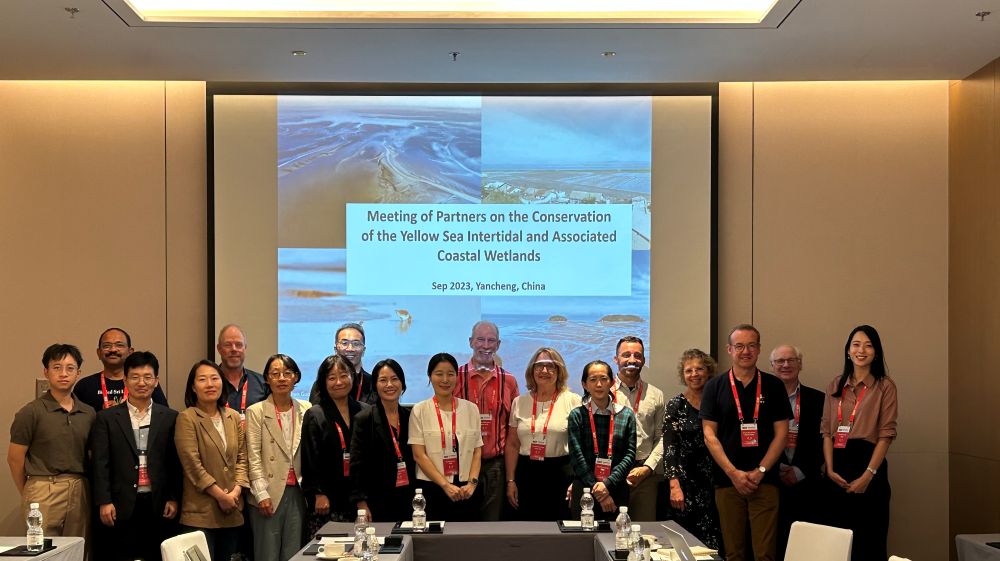 Meeting of Partners on the Conservation of the Yellow Sea Intertidal and Associated Coastal Wetlands ⓒ Hyeseon Do
4. What do you think were the most important factors behind the successful designation of Korean tidal flats as World Heritage sites? In your view, how has this international cooperation influenced wetland conservation, policy, and public awareness in Korea and beyond?
One of the most important factors in the process of inscribing the Getbol, Korean Tidal Flats as a World Natural Heritage Site is the basic interest in, and agreement from, the local governments concerned. This provides the foundation for building trust with local fishers and other stakeholders.
Only through this process is it possible to designate the proposed sites as legally protected areas, which is one of the fundamental requirements for World Heritage inscription. In many ways, this is the key threshold that must be crossed in order to achieve World Natural Heritage status.
The Eco-Horizon Institute became involved in the process of promoting the inscription of the Getbol, Korean Tidal Flats World Heritage Site, particularly to engage with local communities and build partnerships. Through this process, I also had the valuable opportunity to learn a great deal by directly taking part in drafting the World Heritage nomination dossier.
During the final stages of the first-phase inscription of the Getbol, Korean Tidal Flats, the UNESCO World Heritage Committee recommended that Korea pursue a second phase of inscription to include additional tidal flat areas that had not been inscribed. The Korean Government has since continued its efforts to achieve this.
However, despite the efforts and commitment of the Korean Government, it has not yet been possible to complete the process of gaining the understanding and agreement of some local governments and communities. In particular, the tidal flats of Incheon and the Gyeonggi Bay area, including the internationally important southern Ganghwa tidal flats, were not included in the second-phase expansion of the World Heritage Site.
This is certainly disappointing from the perspective of tidal flat conservation in Korea and the protection of important stopover sites for migratory birds. However, I believe that gaining the understanding and support of local governments and communities, and ultimately achieving World Heritage inscription, is a process that requires more time.
At the same time, I have a personal vision for the future. I believe that, as more and more of Korea’s tidal flats are gradually added to the World Natural Heritage Site, there will eventually be another opportunity to restore tidal flows and rehabilitate the Saemangeum tidal flats.
The Saemangeum tidal flats continue to represent a symbol of hope and an important benchmark for tidal flat conservation in Korean society. This hope remains alive because so many people still care deeply about the Saemangeum tidal flats and continue to work towards their conservation and restoration.
Ultimately, I believe that restoring the Saemangeum tidal flats will become an important task of our time, both nationally and internationally.
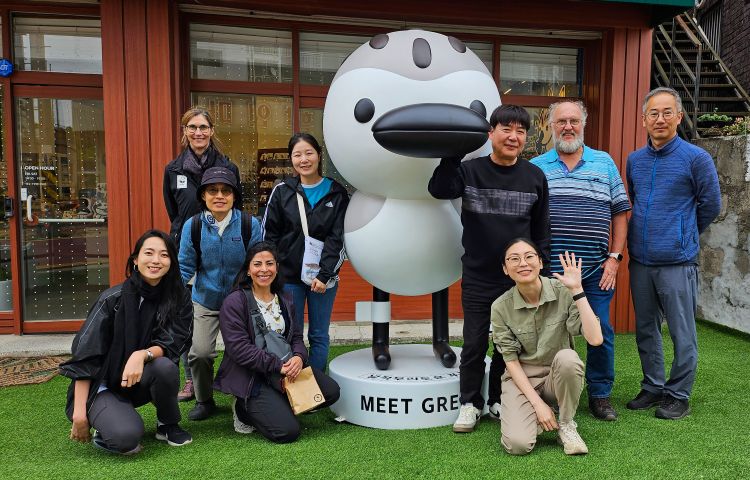 Visit to the green entrepreneur Meet Green in Seocheon County ⓒ Hyeseon Do
5. Looking at Korea today, what do you see as the most important achievements and remaining challenges in conservation in Korea?
For many years in Korea, tidal flats were regarded as land with little or no economic value. Today, however, they have been recognised as a UNESCO World Heritage Site.
The journey from viewing tidal flats as ‘useless’ land to having them recognised as World Heritage was by no means an easy one in Korea. Yet, throughout this long process, Korean society’s perception of tidal flats has changed significantly. This change in perception has led to changes in behaviour, and these changes in behaviour have, in turn, led to changes in government policy. Today, the conservation of tidal flats in Korea is a policy that is broadly recognised and supported by society.
While the conditions for tidal flat conservation have become much more favourable, we are also facing new threats.
As policies to expand renewable energy are being strengthened in response to the global climate crisis, threats to the habitats, roosting sites and migration routes of migratory birds are also intensifying. In particular, salt pans around tidal flats, which have traditionally provided important high-tide roosting sites for migratory birds, are increasingly being lost to solar power facilities.
Plans for onshore and offshore wind farms, as well as new transmission lines, are also posing serious threats to the landscape of tidal flats and to the habitats and migration routes of migratory birds. Offshore wind power, in particular, is emerging as one of the greatest threats to tidal flats and migratory birds in Korea.
In addition, the risks associated with infrastructure development, including new airports and bridges promoted in the name of regional economic development, are also increasing.
To respond to these changes, we need to strengthen preventive approaches, including Environmental Impact Assessments (EIAs) and Heritage Impact Assessments (HIAs) for marine development, while also further improving and strengthening comprehensive marine spatial planning.
The climate crisis and the biodiversity crisis are two sides of the same coin. This is a moment when we need a fundamental shift in the way we think about development, nature and conservation.
Finally, I would like to express my heartfelt thanks to Mr Myoung Ho, who has been by my side and accompanied me throughout all of my work and activities.
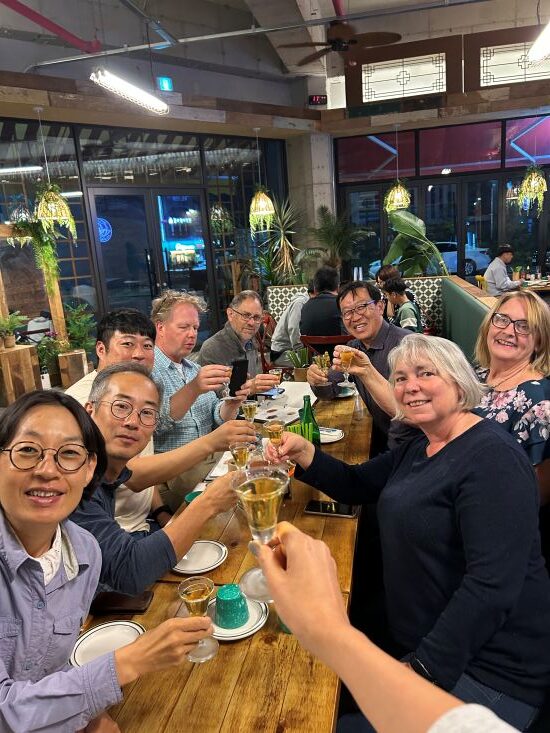 Ms Jiyoung Jang with Mr Myong Ho ⓒ Hyeseon Do
- Interview in Korean: https://eaaflyway.org/flyway-story-series-27-ms-jiyoung-jang-eco-horizon-kor
- Tribute: https://eaaflyway.org/in-memory-of-jiyoung-jang
- Jiyoung’s memory lives on through a tribute page. Please share your photos, and messages: https://jiyoungjang.muchloved.com