Webinar World Seabird Day 2026 in Indonesia
Fransisca Noni Tirtaningtyas, coordinator of Seabirds Indonesia/member of Seabird Working Group EAAFP
Stretching across more than 17,000 islands, Indonesia is a nation defined by the sea. More than 74 percent of its territory is ocean, placing the archipelago at the heart of the East Asian–Australasian Flyway—one of the world’s most important migratory bird flyway. For seabirds, Indonesia’s waters provide essential feeding grounds, resting sites, and breeding habitats.
According to eBird records from 1900–2025, at least 75 seabird species have been documented in Indonesian waters, including migratory, resident, and vagrant species. Many are protected under Indonesian law and international conservation agreements, yet their future remains uncertain. Habitat loss, marine pollution, fisheries bycatch, disturbance at breeding colonies, and climate change continue to drive population declines across many species.
“Despite Indonesia’s global importance for seabirds, our knowledge of their populations and distribution is still limited,” said Fransisca Noni Tirtaningtyas, Coordinator of Seabirds Indonesia, during the 2026 World Seabird Day celebration. Remote breeding islands, difficult access, and the challenge of identifying similar-looking species have long limited monitoring efforts.
That is beginning to change. Since 2020, an expanding network of birdwatchers, photographers, researchers, and coastal communities has transformed seabird monitoring across Indonesia. Social media, training programs, and mentorship have encouraged new observers to contribute valuable records from areas that were once rarely surveyed.
“Learning to identify seabirds takes time,” Noni explained. “Many species share similar plumage and body shapes, so guidance from experienced observers is essential to ensure accurate data.”
To celebrate World Seabird Day 2026, Seabirds Indonesia and the Wildlife Study Group Comata of the University of Indonesia hosted the national webinar Protecting Indonesia’s Seabirds: Local Action for the World. Bringing together more than 100 participants from across the country, the event highlighted field experiences, conservation challenges, and community-led initiatives from some of Indonesia’s most important seabird sites.

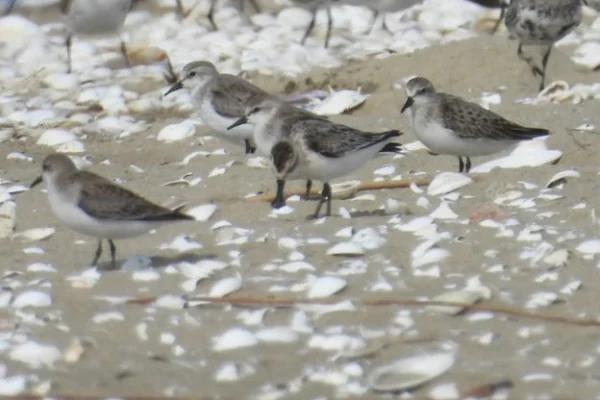
Monitoring in Jakarta Bay © FN Tirtaningtyas
Seabirds Under Pressure
Indonesia’s thousands of small islands support internationally important breeding colonies, but many face increasing pressure from both natural and human threats.
In Karimunjawa National Park, Central Java, at least eleven islands and two sandbars serve as nesting grounds for the Roseate Tern (Sterna dougallii) and other seabird species. Every breeding season, thousands of birds gather on nearby Pulau Gundul, outside the national park, coinciding with the seasonal abundance of anchovies that sustain breeding adults and chicks.
Yet the colonies remain vulnerable. Egg collection, monitor lizards, sea eagles, and increasing human disturbance continue to threaten breeding success.
Farther west, in the Karimata Islands Marine Nature Reserve of West Kalimantan, local communities have joined conservation authorities to patrol remote coral islands where Black-naped Terns (Sterna sumatrana) and Bridled Terns (Onychoprion anaethetus) breed. Equipped with binoculars and mobile phones, community members monitor nesting colonies and respond whenever people attempt to collect seabird eggs.
“We patrol as quickly as we can,” said community leader Helitra. “Sometimes we arrive in time, but not always.”
On the opposite side of the archipelago, Aceh occupies a strategic position where the Malacca Strait, the Andaman Sea, and the Indian Ocean meet. The region supports boobies, frigatebirds, and numerous tern species, but it also faces growing pressures from fisheries and offshore oil and gas development.
“Seabirds frequently interact with fishing gear, and industrial activities may also affect their flight paths and marine habitats,” explained Heri Tarmizi from the Aceh Environmental Study Group. “Regular monitoring is essential if we want to understand these impacts.”
Citizen Science at the Heart of Conservation
Across Indonesia, seabird conservation is increasingly powered by citizen science. Government agencies, researchers, birdwatchers, photographers, and coastal communities are working together to collect information that would otherwise be impossible to obtain.
In Karimunjawa, rangers conduct regular breeding-season surveys while installing information boards around nesting colonies to reduce human disturbance.
In Aceh, fishermen have become some of the region’s most valuable conservation partners. Besides reporting seabirds caught in fishing nets, they often rescue injured birds and release them after recovery. Their traditional knowledge—such as using seabirds to locate schools of fish—also provides insights that complement scientific monitoring.
“The collaboration between researchers and coastal communities is building the foundation for long-term seabird conservation,” Heri said.
A similar transformation has taken place in the Karimata Islands. When community monitoring began in 2020, only about fifteen residents volunteered. Today, more than twenty people—including fishers, youth groups, and women—actively participate after recognizing the value of the data they help collect.
Photography for Conservation
In North Maluku, nature photography has emerged as another powerful conservation tool. Situated along the East Asian–Australasian Flyway, the region has recorded at least 70 seabird species around Halmahera, Ternate, Obi, Bacan, and Morotai since the 1980s.
According to Dewi Ayu Anindita, Chair of Halmahera Wildlife Photography, photographs contributed by photographers, students, fishers, and local residents do far more than capture beautiful wildlife.
“Photographs help map species distributions, document habitats, and strengthen the seabird database for North Maluku,” she said. “We then share these findings through posters, infographics, and photo exhibitions.”
Visual storytelling has made seabird conservation more accessible, helping people see these birds not simply as wildlife, but as vital components of healthy marine ecosystems and long-standing companions of coastal fishing communities.
Monitoring Seabirds in Jakarta Bay
Citizen science is also growing in Indonesia’s capital. On 4 July, Seabirds Indonesia brought together fishers, birdwatchers, and wildlife photographers to monitor seabirds in Jakarta Bay. What began in 2009 has grown into a long-running community effort, with volunteers returning year after year to document the seabirds in Jakarta Bay and contribute valuable observations that support their conservation.
The team recorded 16 bird species, including eight seabird species: the Lesser Frigatebird (Fregata ariel), Christmas Frigatebird (Fregata andrewsi), Little Black Cormorant (Phalacrocorax sulcirostris), Black-naped Tern (Sterna sumatrana), Greater Crested Tern (Thalasseus bergii), Common Tern (Sterna hirundo), Aleutian Tern (Onychoprion aleuticus), and Bridled Tern (Onychoprion anaethetus).
Field team member Boas Emmanuel said Jakarta Bay continues to serve as an important stopover for migratory seabirds, while several species also spend part of their adult lives there before returning to their breeding colonies.
“Local communities are our frontline conservation partners,” Boas said. “Fishers and boat operators spend more time at sea than anyone else. By involving them in monitoring, we gain valuable information while strengthening protection for seabirds.”
From remote coral islands to one of Southeast Asia’s busiest coastlines, Indonesia’s seabird conservation story is increasingly being written by ordinary people. Every observation, photograph, and patrol adds another piece to the puzzle, helping scientists better understand seabird populations and ensuring these remarkable ocean travelers continue to navigate one of the world’s most important marine landscapes for generations to come.

Seabirds Indonesia team during monitoring in Jakarta Bay

Aleutian Tern in Jakarta Bay © FN Tirtaningtyas
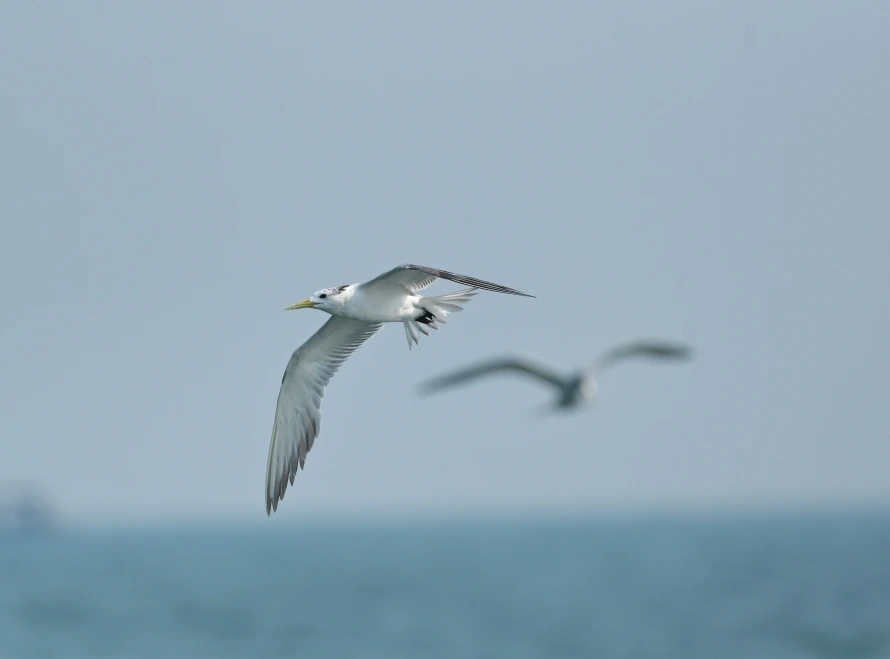
Greater Crested Tern in Jakarta Bay during World Seabird Day Celebration © FN Tirtaningtyas