Chris Hassell and Katherine Leung, 30 May 2026
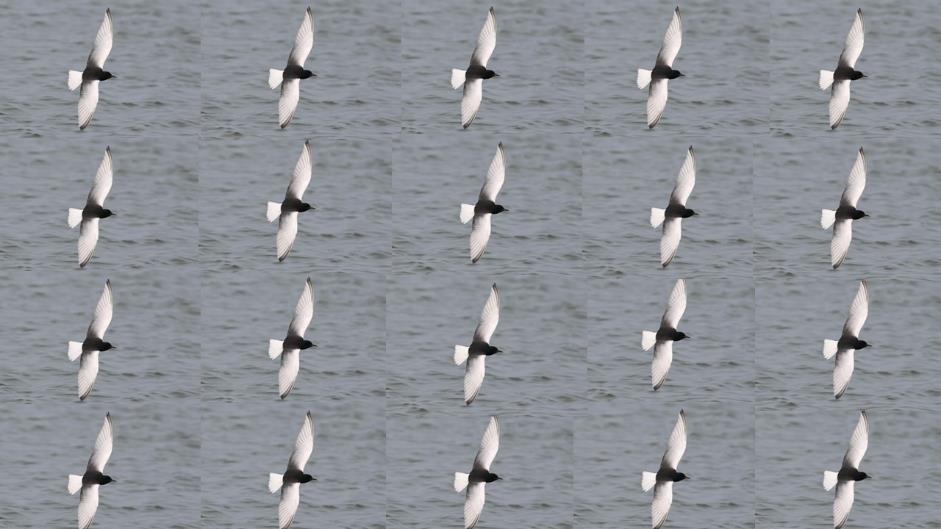
OK, let’s make the opening a bit more upbeat. The weather has been glorious, for 3 days. The White-winged Black Terns feeding over the salt ponds are nothing but stunning.
As previously mentioned, it has felt frustrating, that we haven’t seen as many colourbanded individual Red Knots as we would like. But when compared to the two previous years when the team was the same as this year, Xiao Liu, Kath and Chris; the known individuals are actually very similar in relation to the number of Red Knots here. Or indeed we could say ‘better’. And we have 6 days of fieldwork to go.
| Known Individuals | |||
| Year | NWA – CB | NWA ELF | Highest Red Knot No. |
| 2024 | 69 | 56 | 13,000 |
| 2025 | 132 | 139 | 30,000 |
| 2026 | 63 | 80 | 9,000 |
This is very simplified as the peak numbers are on different days and there’s no known turnover statistics. But as a very basic metric it works.
The birds we are seeing mostly seem to be long stayers. We are still seeing some of the same birds a full 3 weeks after our first sighting of them. We are just in the last few days starting to get new birds arrive. And, as expected, they are the piersmai subspecies.
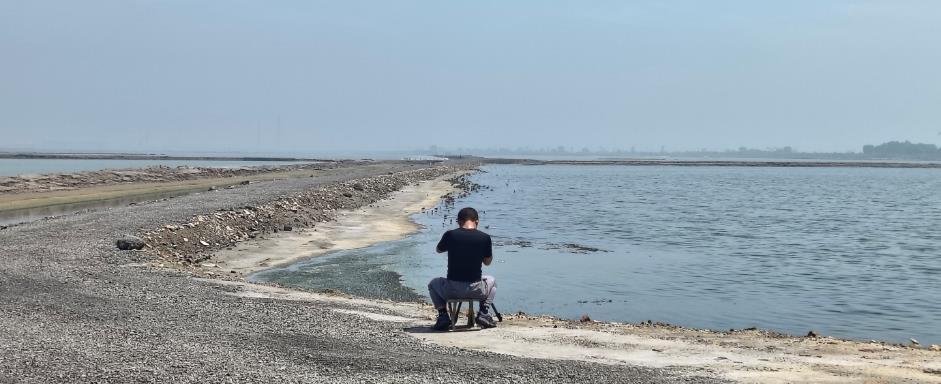 Xiao Liu scanning Red Knots in the ponds 27 05 2026 © Katherine Leung
This late cohort won’t find very good conditions so it will be interesting to see, from our colourband observations, if they stay. Our colleague Hebo Peng and his incredibly hard-working team were here for a couple of days, and this was their last sampling site, of their massive undertaking of benthos sampling along the China coast from south to north. 11,000 km of driving and 45 sites, unbelievable effort.
Hebo’s initial assessment of the abundance of the Red Knots’ favoured prey, the mollusc Potamocorbula laevis (pots) here at Nanpu is ‘very low’. And he said, ‘beyond the concrete wall it is not very low, it is zero!’.
This matches with our observations. This is what I wrote to our colleagues in a private email.
We scan from the start to the end of the concrete wall, basically we all see the same birds’ numerous times. Once we are there, that’s it. There are only a few hundred birds by then and they don’t keep feeding along the mud they take off somewhere. Nice not to walk 7 km but I would rather do the walk and scan more birds.
In many parts of Bohai Bay and the entire Yellow Sea coast seeding the mudflats with species of shellfish for commercial aquaculture is a common practice. This can come with issues for the birds using those same mudflats. The fishermen want to protect their stocks from the birds. This can lead to some conflict with nets deployed to protect the newly seeded shells and active disturbance of the birds with scaring devices, often wandering around throwing fireworks! Luckily, here in Nanpu we have only witnessed this once many years ago, the fireworks example. Just recently we saw one of the local fishing teams preparing to seed the flats. From chatting to them it seems the species is the Korean Mud Snail Bullacta exarata. Ziyou and Hebo Peng both suggest that this species is not a favoured food of any species of migratory bird due to it being ‘slimy’. Hopefully its introduction should cause little or no conflict.
We wonder if the fishermen know this and choose this species specifically to prevent any conflict?
 |  |
The Korean Mud Snails being delivered to the Nanpu mudflat 2026 05 22 © Chris Hassell
Passerine migration (OK bird nerds this is a non-passerine) is still underway and the seawall can still turn up great birds.
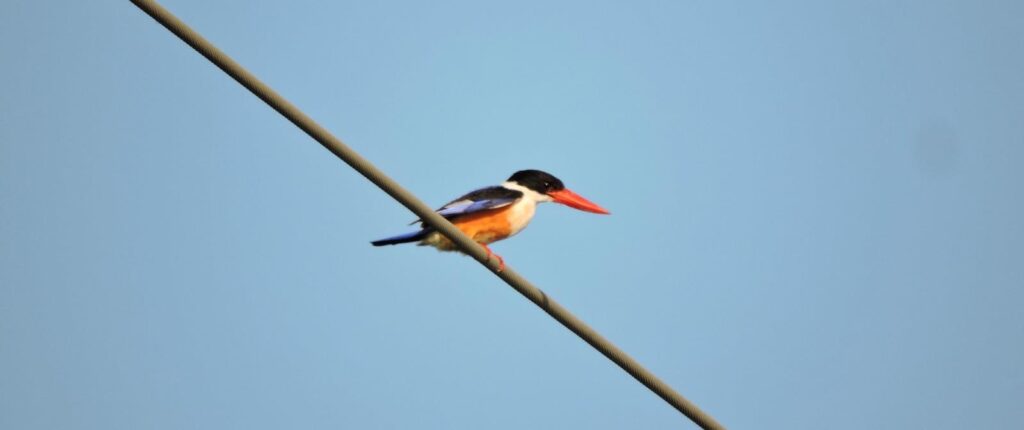 Black-capped Kingfisher 2025 05 30 © K Leung
And, while not strictly ornithological information, we have a new best friend on the seawall.
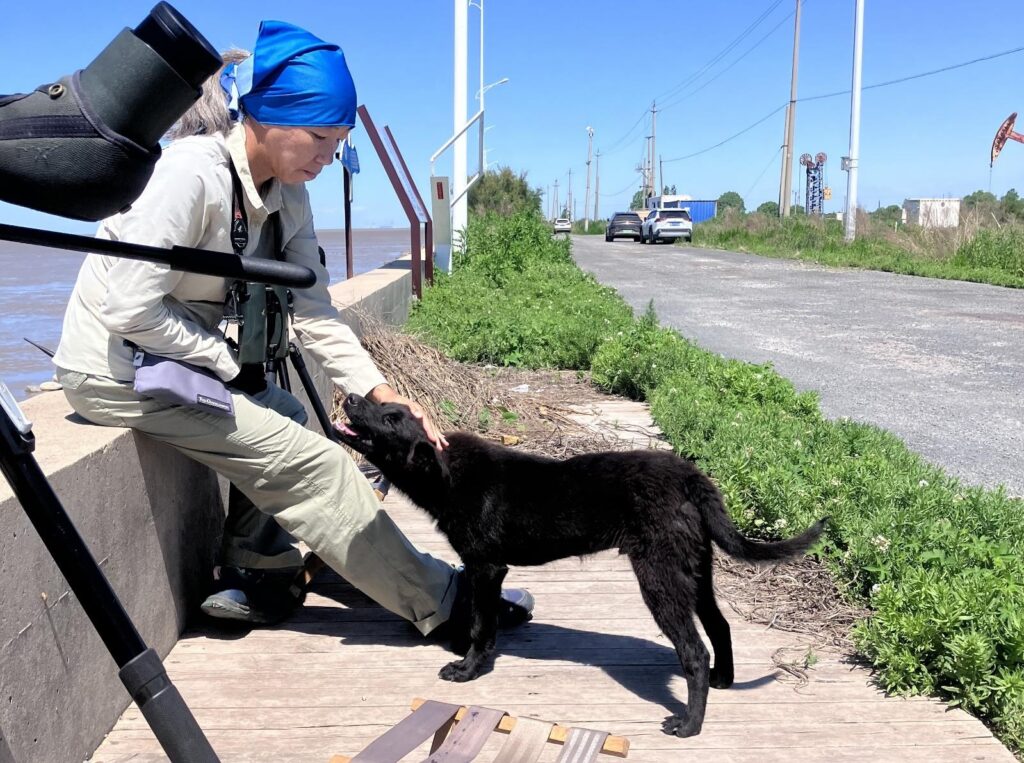 Dogs are marvellous 2026 05 28 © C Hassell