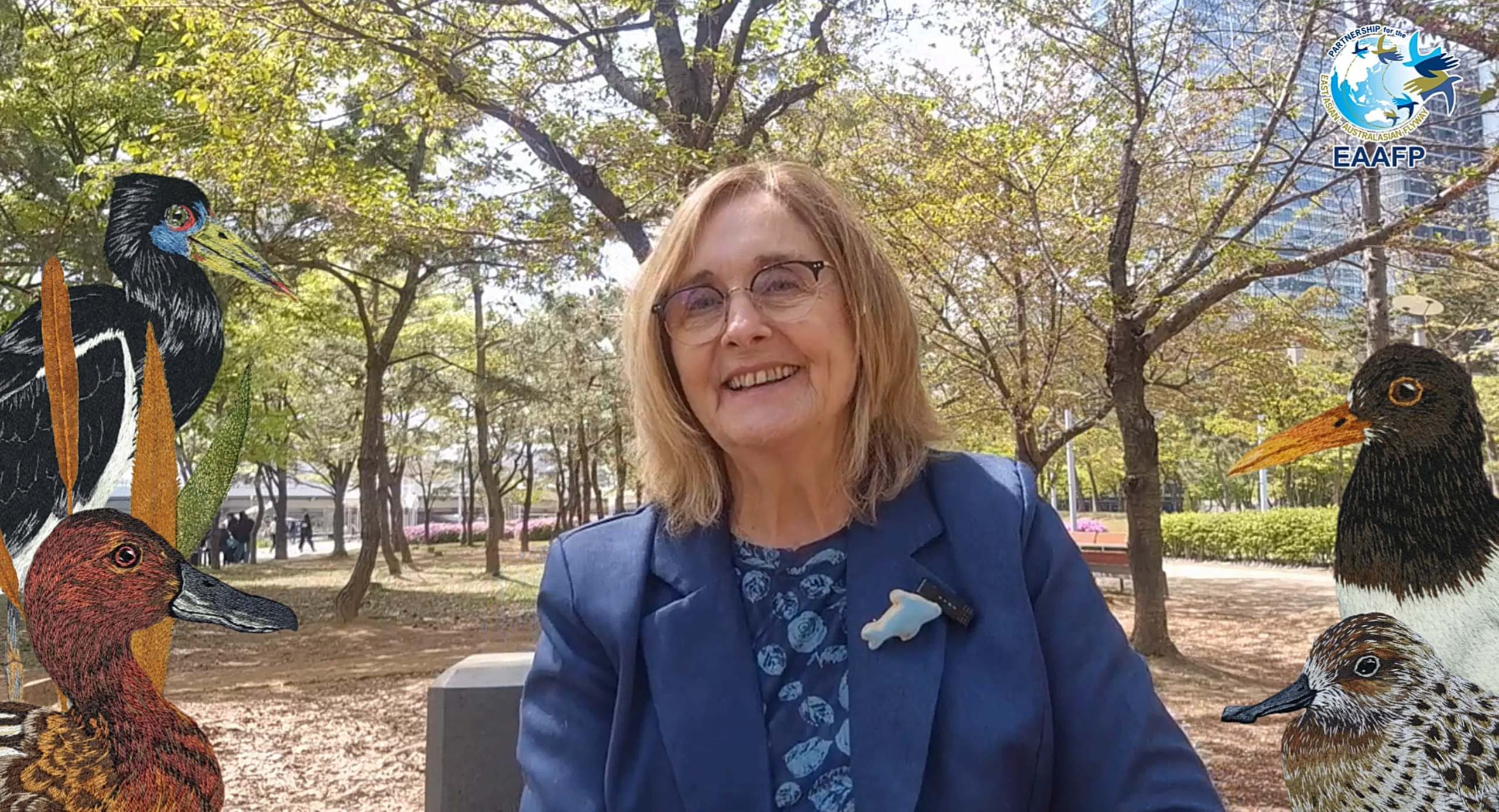
Jennifer George, Chief Executive, EAAFP Secretariat
Every year, billions of migratory birds take to the skies. They cross continents and oceans, navigate storms and shifting landscapes, and return. Often to the exact same wetlands, coasts, and rivers that sustained them the year before. For many of us, these journeys still feel like a mystery. How does a bird that weighs less than a cup of water travel thousands of kilometres across the globe and find its way home again?
For scientists and conservationists, solving that mystery matters. Understanding where birds go, where they stop, and what challenges they face is essential if we are to protect the habitats they depend on across the world’s great flyways.
Over the years, we have developed remarkable tools to help us learn from these travellers. Small leg bands and coloured flags allow individual birds to be identified across continents. Satellite transmitters reveal entire migration routes in real time. Large-scale monitoring efforts, like the annual waterbird census, help us understand population trends across entire flyways.
But these tools only become powerful when people notice them.
A single observation, a bird with a tiny colour ring seen on a beach, a band recorded during a morning birdwatch, a flock counted on a winter wetland—can unlock a story of migration that spans countries and cultures. Each observation becomes a thread of knowledge that connects places, people, and ecosystems across the globe.
Some people make these observations as part of their work. Many more do it out of curiosity, passion, and a love for nature. Together they form a growing global community—citizen scientists, researchers, local communities, and governments—all contributing pieces to a much larger picture.
Because in the end, every bird really does count. And every observation matters.
This year’s World Migratory Bird Day global official poster beautifully captures this idea. The birds are illustrated through the delicate art of stitchery, each representing different flyways around the world. It is a powerful metaphor. Just like stitches woven together to form a complete and beautiful design, our collective efforts, our observations, our science, our conservation actions are woven together to protect migratory birds.
The birds themselves are also part of this global tapestry. Their journeys stitch together wetlands, coastlines, forests, and communities across the planet. But if even one stitch breaks – if one critical habitat is lost, if one link in the flyway fails, their journey becomes far more dangerous.
Migratory birds remind us that nature does not recognise borders. Their survival depends on cooperation across countries and across continents. And it depends on all of us paying attention.
So this World Migratory Bird Day, look closely. Count the birds you see. Share what you observe. Report that leg flag or band. Join a birdwatching group. Be part of the story.