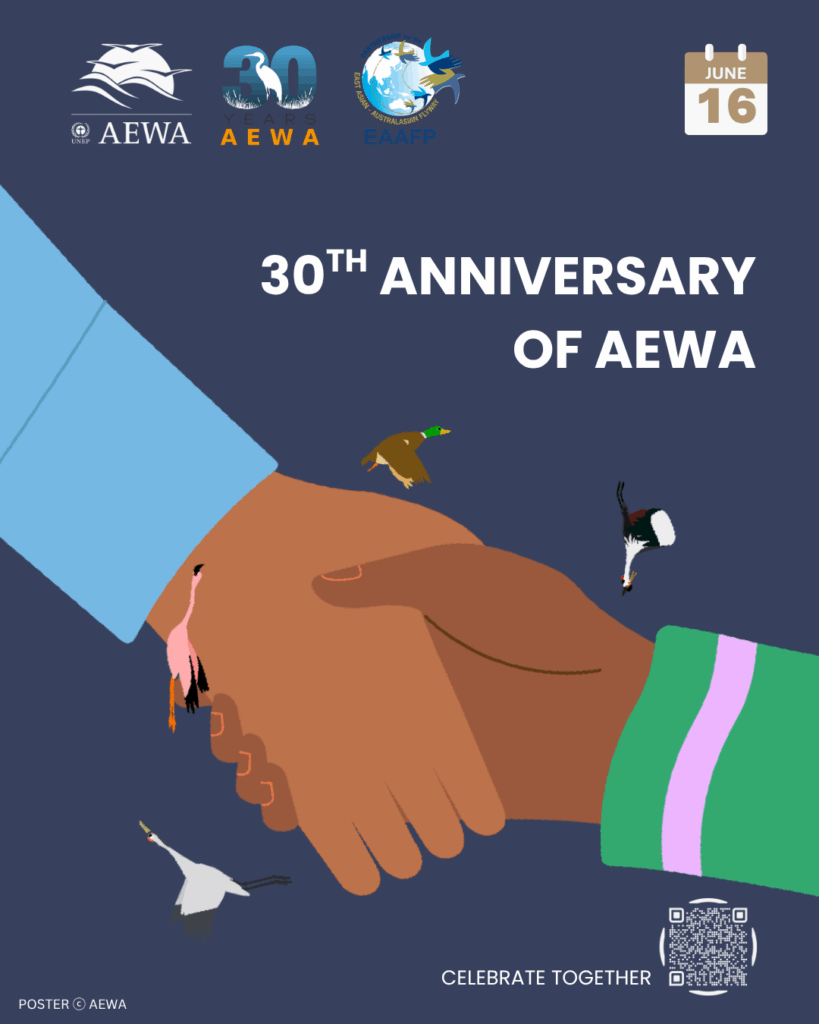
AEWA’s 30th Anniversary
Jennifer George,
Chief Executive, EAAFP Secretariat
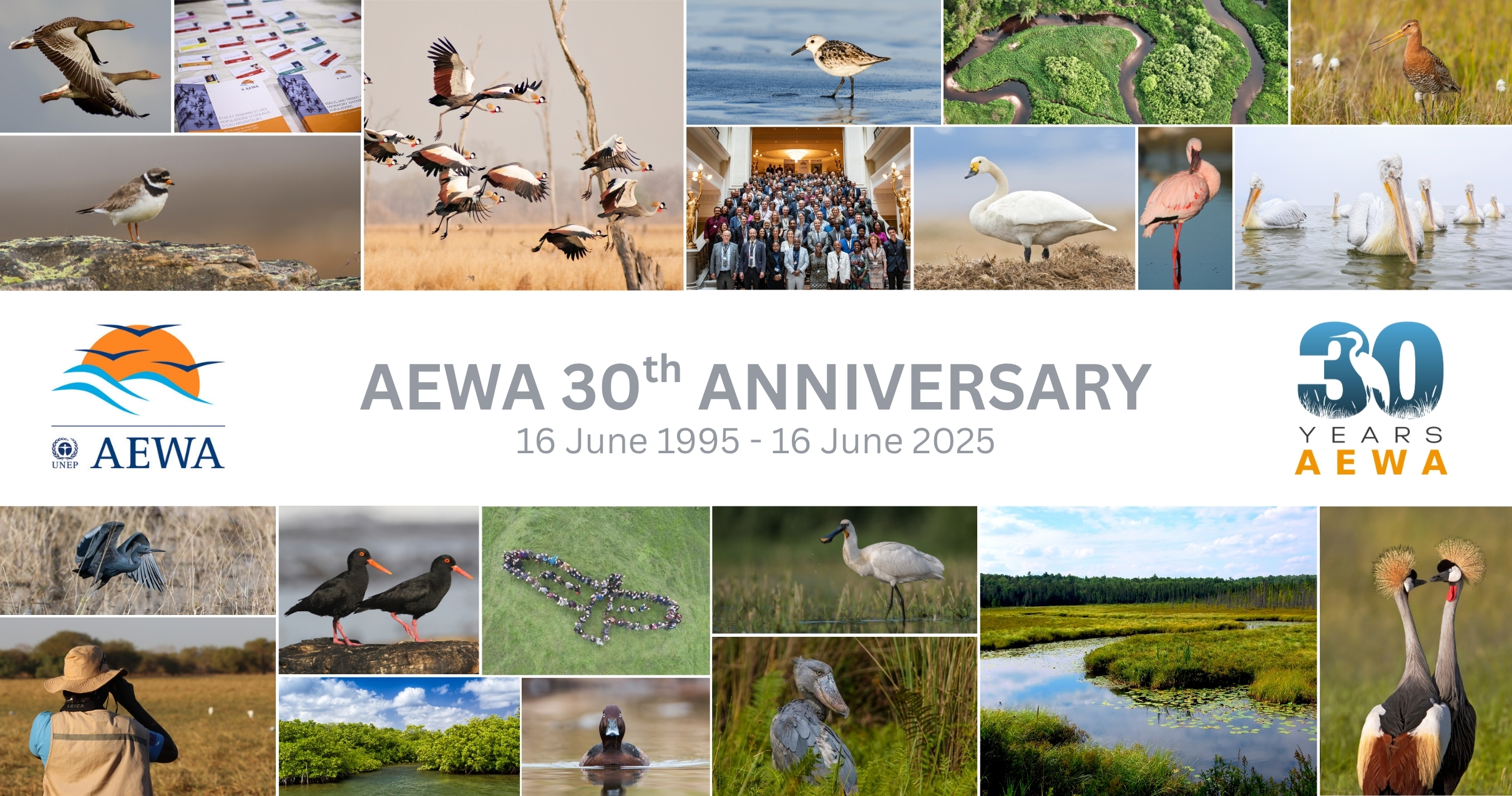
On behalf of the East Asian–Australasian Flyway Partnership (EAAFP), I would like to extend our heartfelt congratulations to our sister flyway initiative, the Agreement on the Conservation of African-Eurasian Migratory Waterbirds (AEWA), as it celebrates its 30th anniversary this June.
As EAAFP approaches its own 20th anniversary in 2026, we take this moment to reflect on the close and collaborative relationship we have shared with AEWA over the years. Our partnership has been marked by mutual support, shared goals, and a strong spirit of cooperation in the conservation of migratory waterbirds.
This anniversary comes at a time of growing global recognition of the importance of flyway conservation and the international frameworks that enable it. New initiatives are emerging along the Central Asian and Americas flyways—many of which involve species that migrate across multiple flyways. In this context, the value of cooperation, information exchange, and communication among established and emerging flyway initiatives has never been more evident.
EAAFP was proud to host the first Global Inter-Flyway Network meeting in the Republic of Korea in 2011, and a second gathering 13 years later during the 14th Meeting of the Conference of the Parties to the Convention on Migratory Species (CMS). AEWA played a significant and valued role in both events, underscoring the importance of inter-flyway dialogue and shared learning.
Our two flyways have also worked hand-in-hand over the years in promoting World Migratory Bird Day (WMBD). It is encouraging to see how WMBD has grown into a vibrant global campaign, increasing awareness of migratory birds and the challenges they face along their remarkable journeys.
Moreover, the two flyways support different populations of shared species, such as the Dalmatian Pelican and the Lesser White-fronted Goose. Collaboration on these and other species has helped to shape more effective and coordinated conservation action across flyway boundaries.
As AEWA enters its fourth decade of dedicated conservation action, we are confident that its role will only grow in importance. Continuing to foster communication, learning from the past, and responding to new challenges will be vital in the face of increasing environmental uncertainty. One thing remains certain: thanks to AEWA, the migratory waterbirds of the African–Eurasian Flyway are better understood, better protected, and more celebrated than ever before.
Once again, congratulations to AEWA on this important milestone. We at EAAFP look forward to continuing our strong partnership in the years ahead—for the benefit of migratory waterbirds and the ecosystems and communities that depend on them.
AEWA official website: https://www.unep-aewa.org