In this issue of Flyway Story, we invited our donor, essay writer Yeonju Lee.
“The scientific fact that most migratory waterfowl move along the East Asian-Australasian Flyway, along with the realization that even small contributions can help protect habitats, were key factors that led me to decide to support them.” — Ms. Yeonju Lee
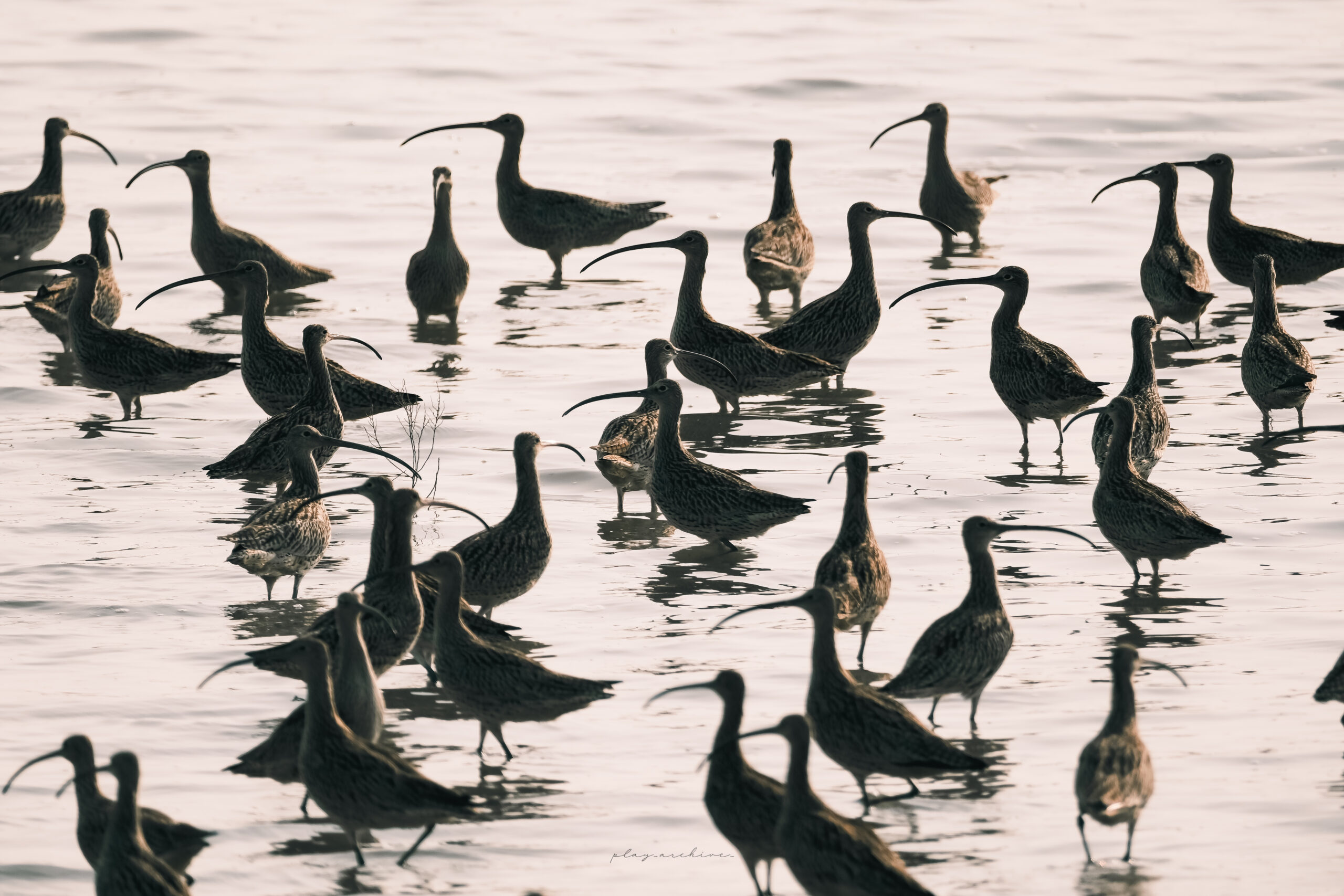 Songsan Reservoir_Bar-tailed Godwit ©Yeonju Lee
EAAFP: Hello, Yeonju Lee. Could you please introduce yourself? Also, could you briefly introduce your essay “Bird Watching”?
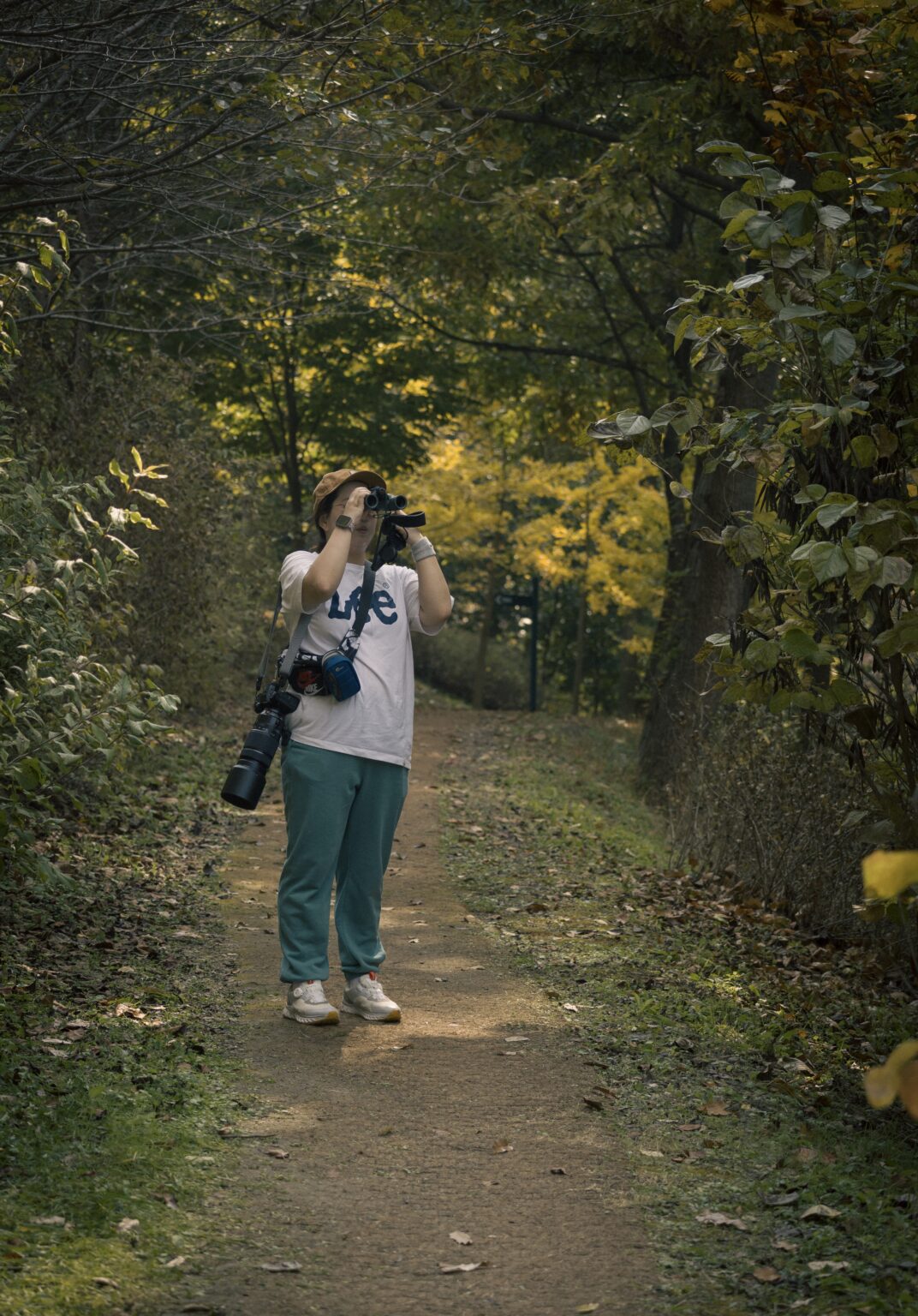
Yeonju Lee: Hello! I’m Yeonju Lee, and I find great joy in encountering birds that live and breathe in nature. I used to work as a marketer for a magazine that dealt with various cameras and related equipment, but now I’m a freelancer working in photography and videography. While working at that job, I happened to cover a photography exhibition and learned about the culture of “birdwatching,” which not only involves viewing birds as subjects but also understanding their ecosystem and caring for their lives. It felt like a kind of “accidental enlightenment.” Although I had always liked animals, there was an indescribable, strong pull when I saw photos of the Spoon-billed Sandpiper. Since then, I started birdwatching little by little on weekends, and now asking about the well-being of birds has become part of my life. I serialized some brief episodes from my birdwatching experiences on Brunch, and in May of this year, I submitted this manuscript, compiled into a book-length piece, to the Gyeonggi Hidden Writers competition organized by the Gyeonggi Content Agency. It’s titled Bird Watching. Since it’s not a technical book but rather an essay, I focused on sharing my personal feelings and impressions from the moments I encountered the birds. For those who don’t know much about birds, I wanted to let them know that we coexist with these beautiful creatures, and for those who are already birdwatching, I wanted to connect with them through shared experiences.
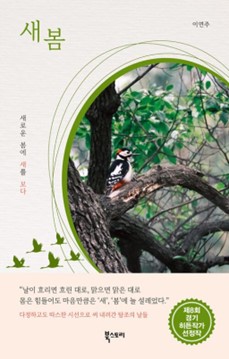
“새 봄” ©Yeonju Lee
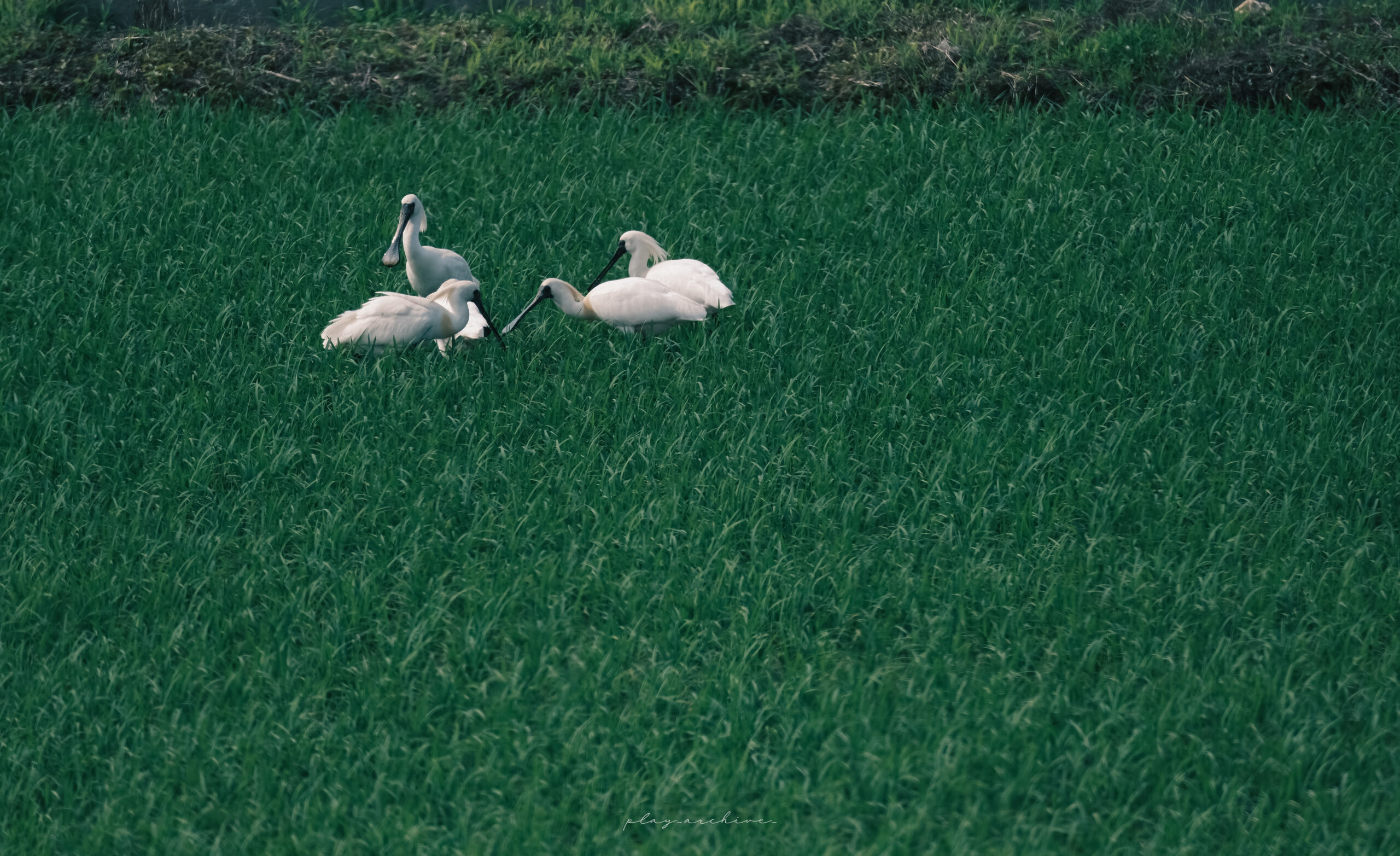
Black-faced Spoonbills near Gongneungcheon Stream ©Yeonju Lee
EAAFP: I thought that your essay Bird Watching is a warm book that conveys the joy of connecting with nature. It captures moments from observing birds over the course of the four seasons. Your sincere interest and love for birds are clearly conveyed through the book. I truly appreciate this precious gift of a book. What do you think is needed to encourage the public to take more interest in birds and birdwatching?
Yeonju Lee: Since the pandemic, many people have become more aware of the climate crisis, and there has been a significant increase in interest in nature observation and birdwatching. This is a positive development. However, I believe that it’s more important to do things “right” rather than “quickly.” I think of birdwatching as a moment where we, as humans, briefly visit the lives of wild birds. When we visit someone else’s home, we naturally show respect, right? Birdwatching also requires such manners, but sometimes the actions of those who are unaware of this become a social issue. Birdwatching is meant to maintain a respectful distance from the birds, and it’s about experiencing it with some difficulty to truly appreciate it. If we focus not just on capturing photos for show, but on being considerate of the birds’ lives, I believe it could become a better, more widely accepted culture for the public.
EAAFP: Is there an unexpected challenge or a memorable episode you experienced during birdwatching that you could share?
Yeonju Lee: On December 31st last year, I spent the night at Cheonsuman, and the next morning, I saw the Hooded Cranes with the New Year’s sunrise. Under the rising red sun, the Hooded Cranes were picking up fallen grains, and flocks of geese flew over them—it was truly a beautiful sight. I couldn’t forget that moment, so I returned to Cheonsuman at the end of October this year. This time, I didn’t see the sunrise, but I witnessed a magnificent scene where thousands of geese, scattered along the rice fields, grouped together and flew towards the water at sunset. Even on days when I don’t meet many birds while birdwatching, I always seem to come across a breathtaking landscape as a bonus.
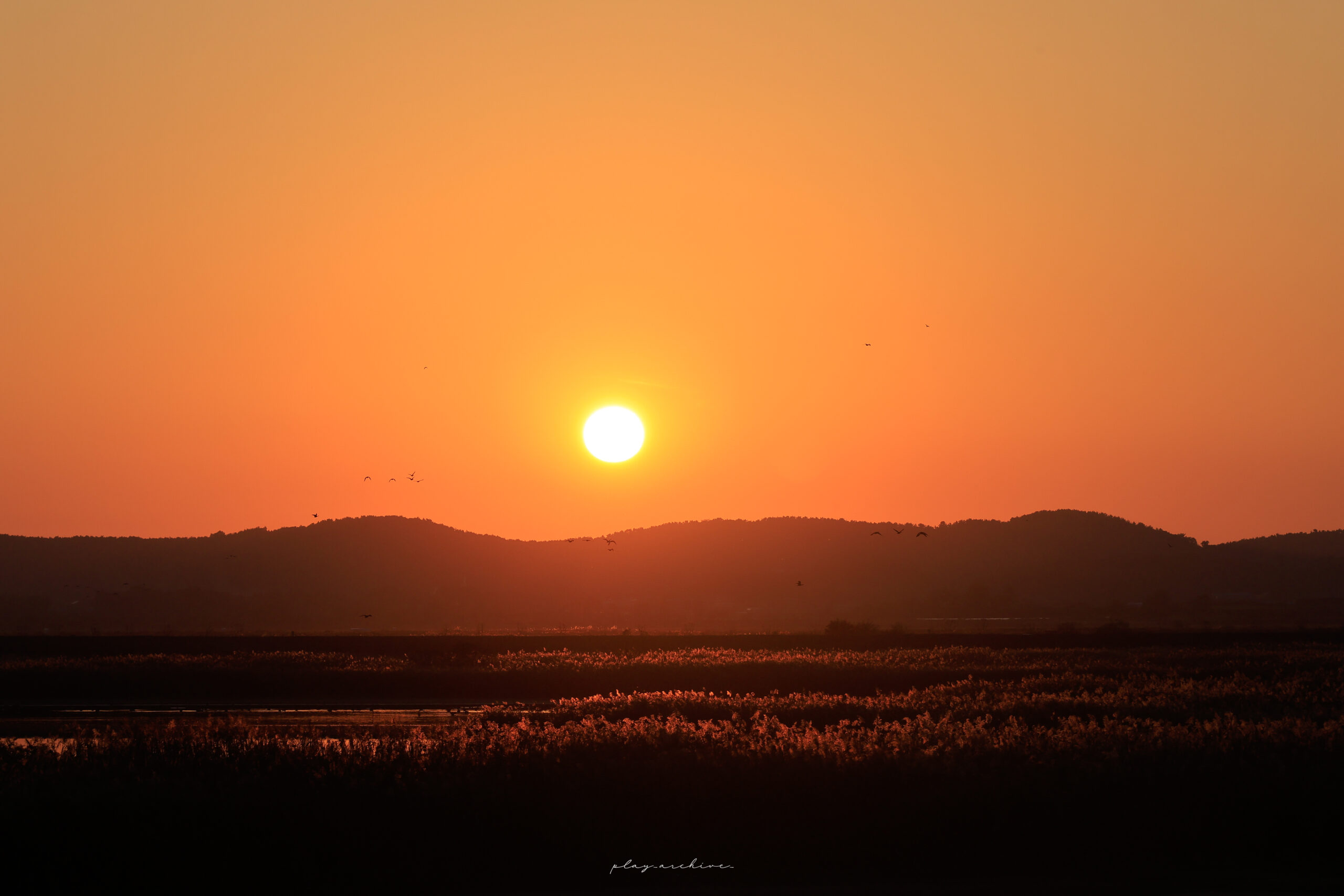 Sunset at Cheonsu Bay ©Yeonju Lee
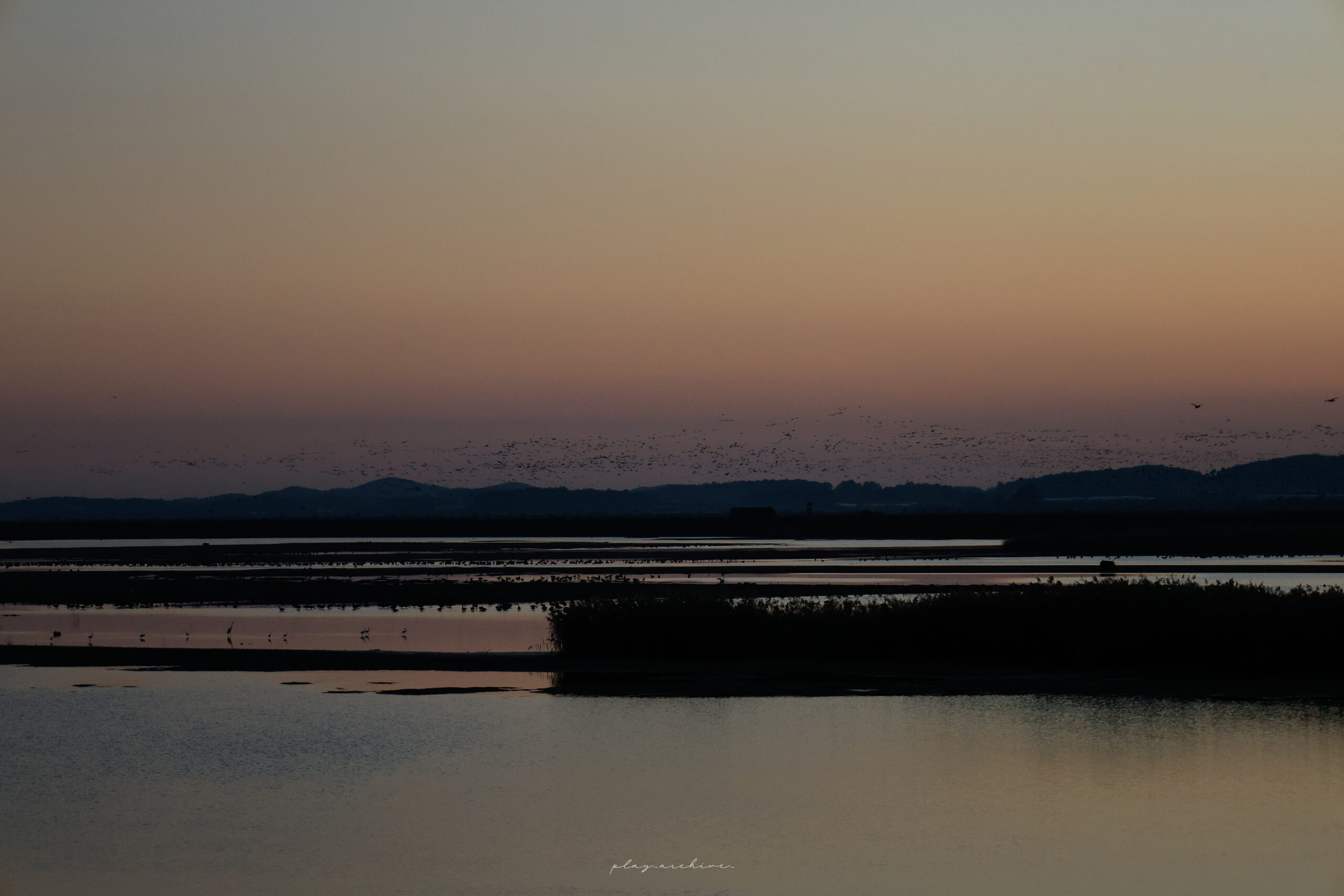
Flock of Geese at Cheonsu Bay ©Yeonju Lee
EAAFP: As mentioned in your book, the west coast of South Korea is rich in food sources for birds, making it a crucial stopover for numerous wader species. The EAAFP’s Yellow Sea Ecoregion Task Force emphasizes the ecological importance of the west coast and is carrying out various conservation activities. Additionally, sites such as the mudflats of Seocheon, Yubudo Island, Sinan Chilbaldo Island, Aphae Island, and Gochang in South Korea have been designated as Flyway Network Sites (FNS) for migratory birds. Are you familiar with these habitats, or have you ever visited any of them?
Yeonju Lee: I’ve been to Cheonsuman (EAAF046), Junam Reservoir (EAAF095), Upo Wetland (EAAF096), and the Nakdong River Estuary (EAAF097). Each of these areas has a slightly different environment, which allowed me to encounter a variety of birds and enjoy the beautiful landscapes. I visited Upo Wetland in the lush summer, Junam Reservoir in late autumn, and the Nakdong River Estuary in early winter. I became curious about how the next season and the colors would change in each region. For those primarily birdwatching in the metropolitan area, visiting the Flyway Network Sites one by one, almost like checking off a bucket list, could also be a wonderful experience.
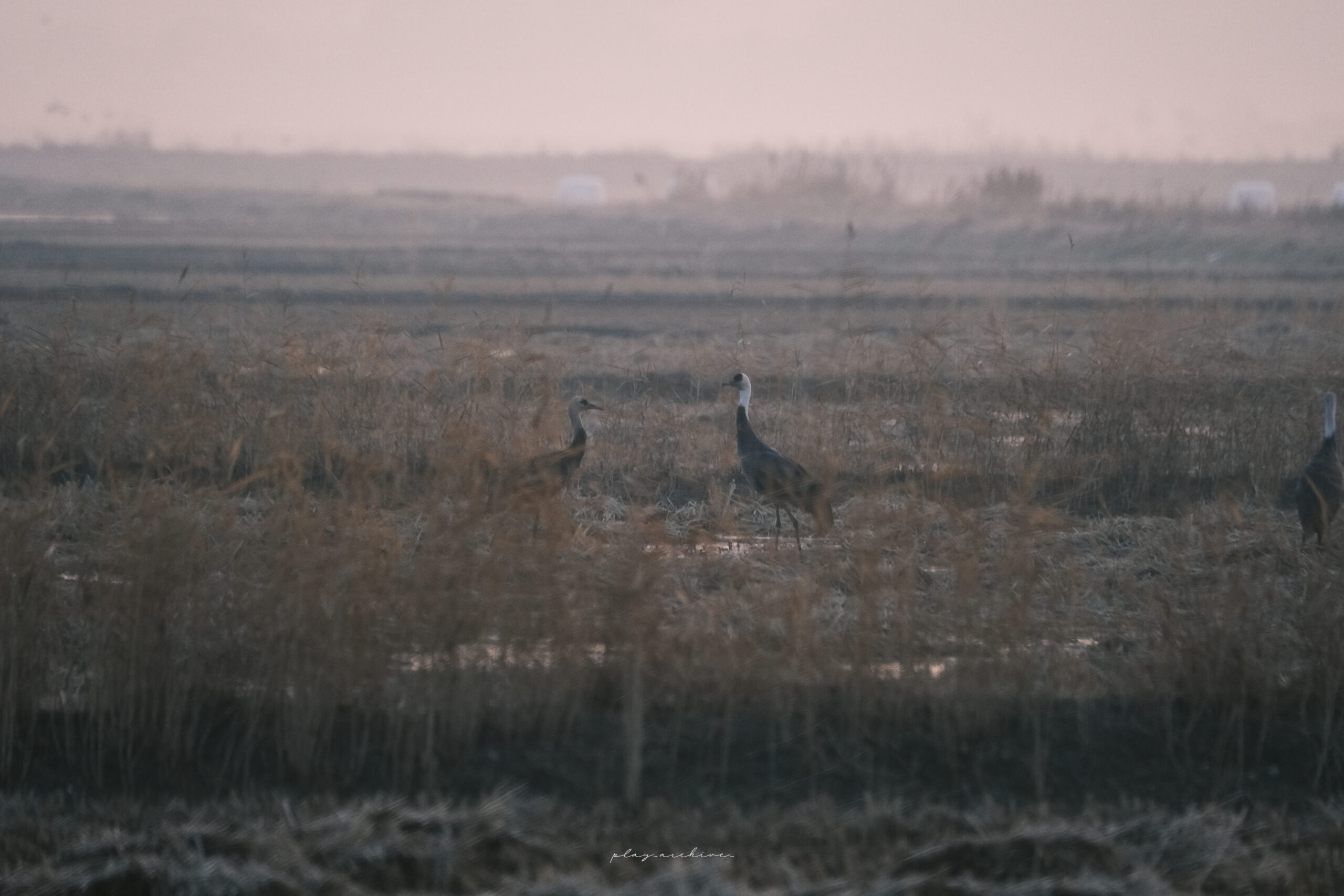 Hooded Crane at Cheonsu Bay ©Yeonju Lee
EAAFP: As you mentioned in your book, the case where wild animals lose their habitats due to land development and the construction of apartments, or due to human’s reckless development, is something that happens quite frequently in reality. When observing such situations, what thoughts come to mind? And what efforts do you think we can make to address this?
Yeonju Lee: It seems that the loss of bird habitats due to development is happening more frequently in the metropolitan area. As mentioned in the book, the wetland tree habitats for waterfowl are not only in my neighborhood but are actually quite common nationwide. It’s unfortunate that stopping such developments, by fighting with relevant authorities and local governments, can’t be done overnight—it sometimes feels like an insurmountable mountain. However, there are definitely cases where collective, active attention has managed to halt construction projects. I believe it’s important to never think of these issues as something distant from us and to continue showing interest and raising awareness consistently.
EAAFP: In your book, you mentioned “caring for birds.” What does it mean to care for birds? How can we show care for them?
Yeonju Lee: I believe the simplest way we can show care for birds in our daily lives is by keeping a physical distance from them. It’s important not to get too close. At the same time, maintaining ongoing interest in the preservation of bird habitats and changes in the ecological environment isn’t difficult either. However, I wanted to go a step further and find a concrete way to show care. Even as I was finishing the book, I kept wondering, “What actions can I take?” Then, I learned about EAAFP and decided to start regular sponsorship. The scientific fact that most migratory waterfowl move along the East Asian-Australasian Flyway, along with the realization that even small contributions can help protect habitats, were key factors that led me to decide to support them.
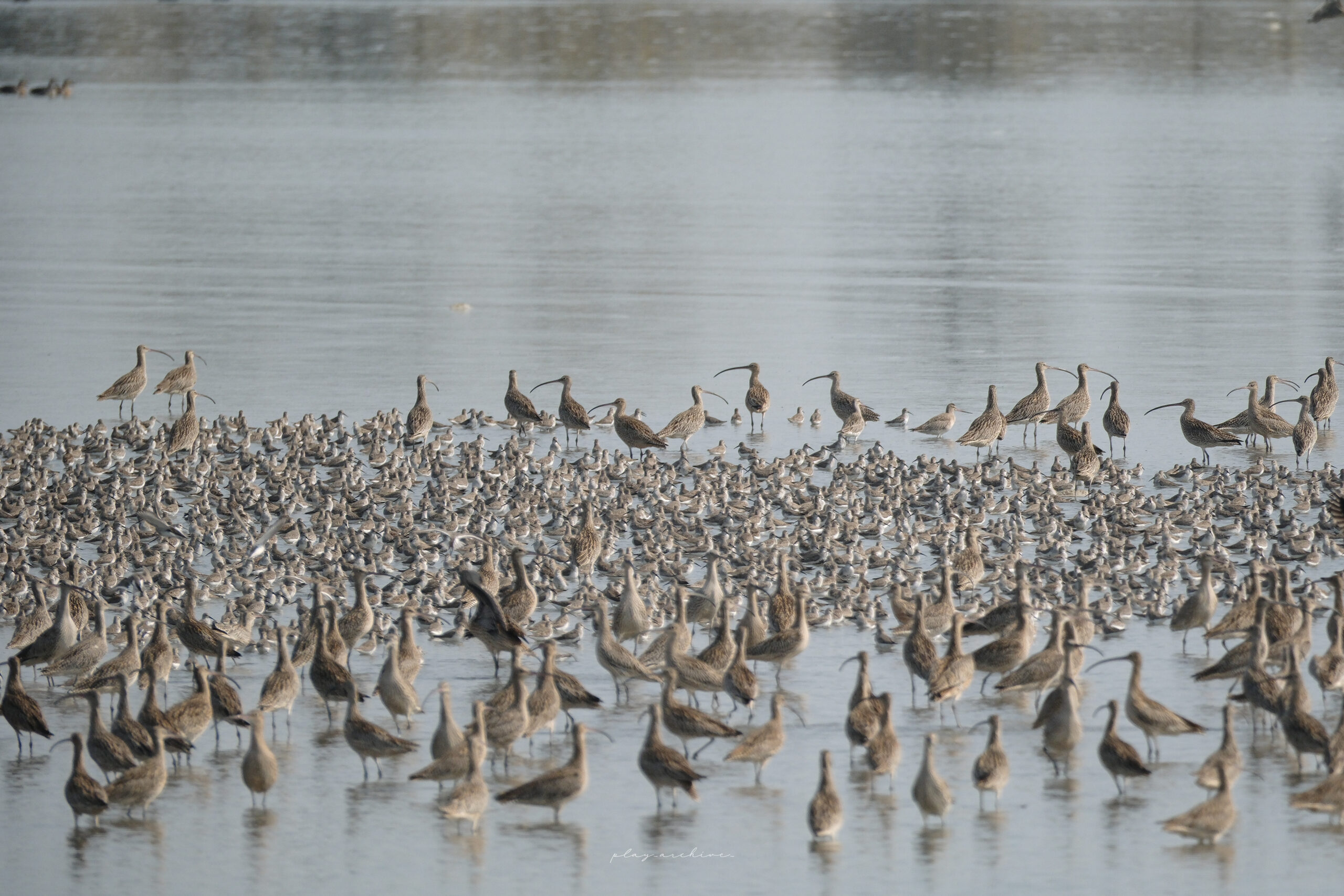 Shorebirds at Songsan Reservoir ©Yeonju Lee
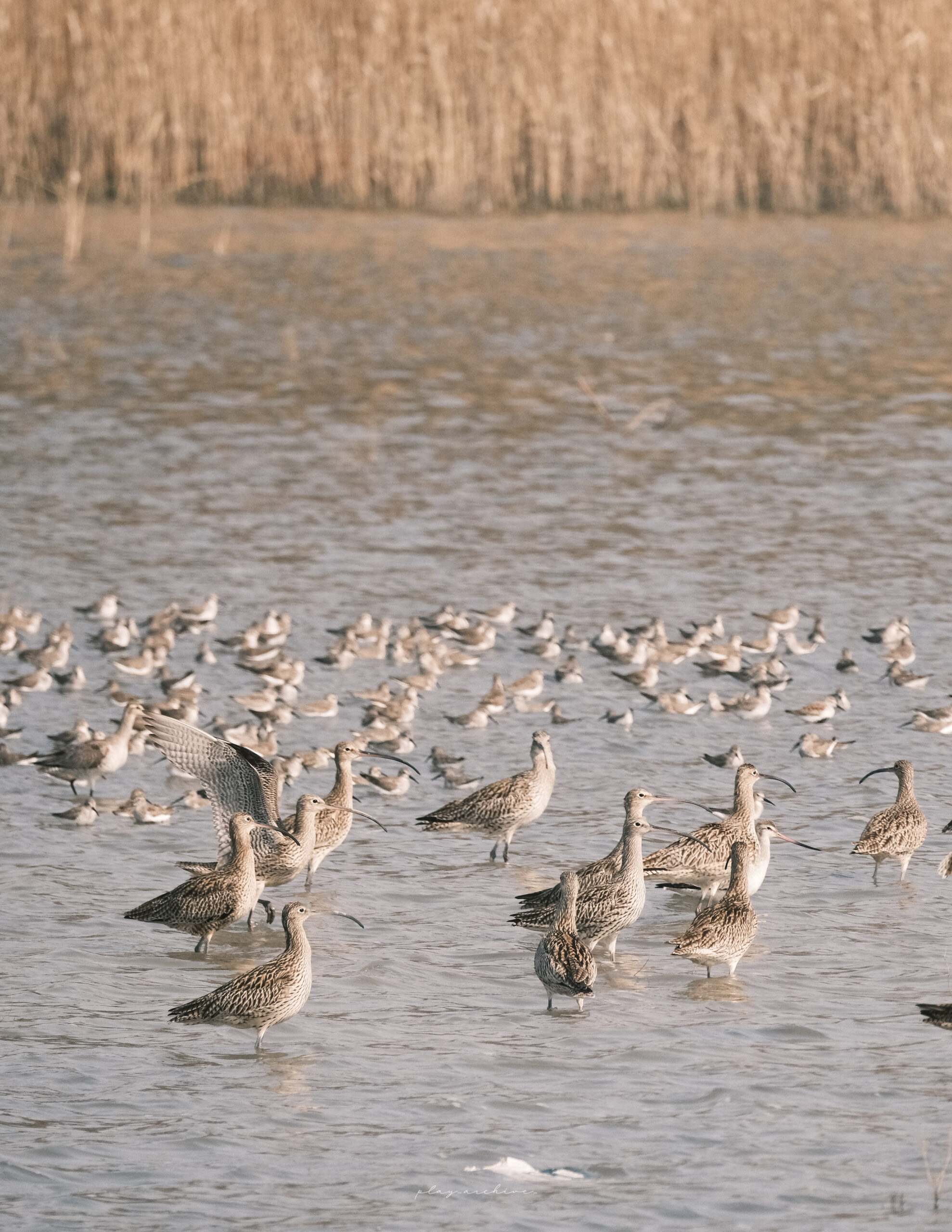 Bar-tailed Godwit at Songsan Reservoir ©Yeonju Lee
EAAFP: For the new year of 2025, which bird would you most like to encounter as a birder?
Yeonju Lee: Actually, there is a bird I’ve always wanted to encounter, not just in 2025 but at some point in my life. It’s a bird that hasn’t been seen for a long time, and recently I heard the heartbreaking news that it can no longer be spotted. Despite this, I don’t want to give up hope that one day I might be able to see the Slender-billed Curlew again on this planet.
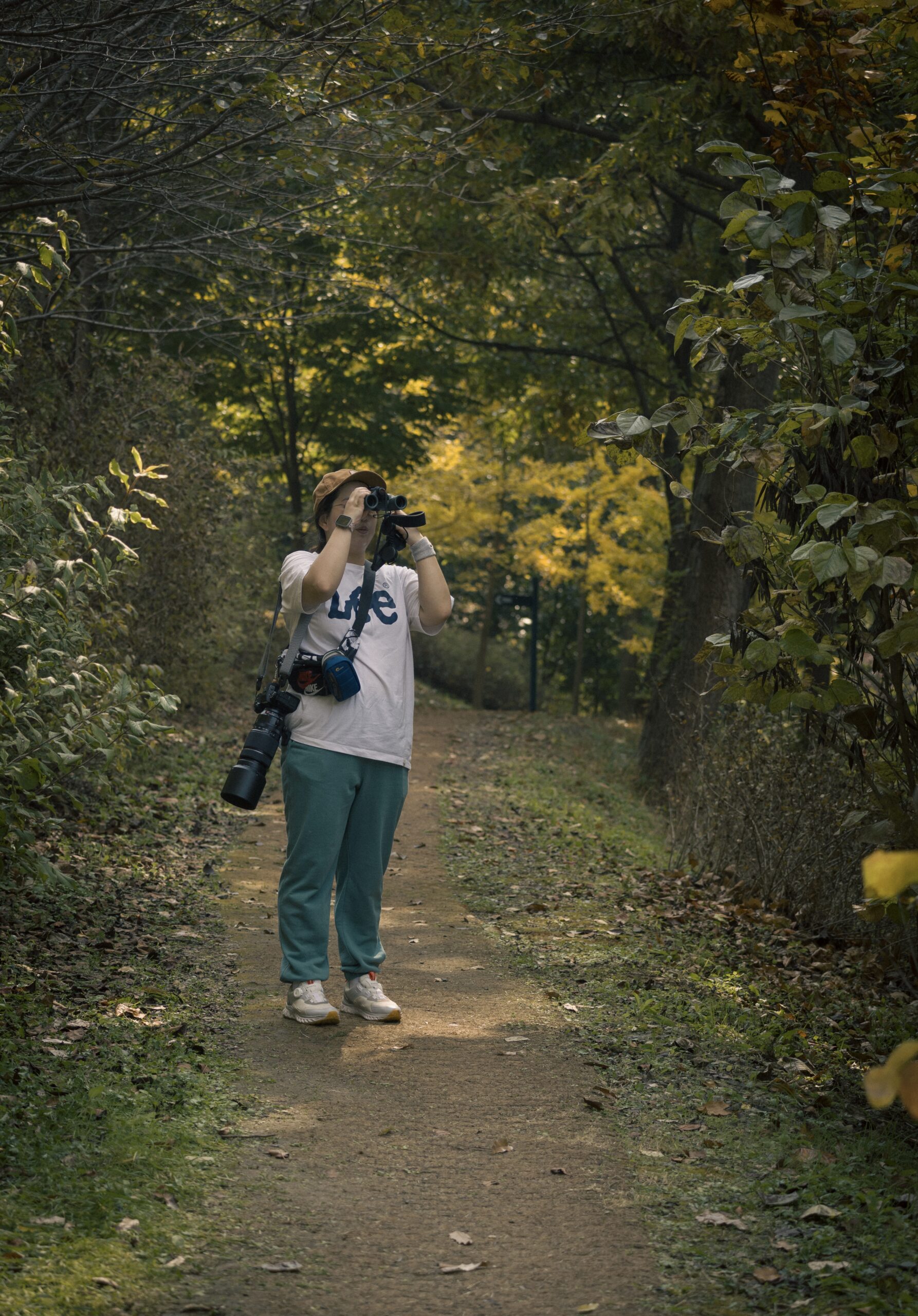 ©Yeonju Lee
EAAFP: What do you think about EAAFP (East Asian-Australasian Flyway Partnership) and the foundation EAAFP? If you have any wishes for EAAFP, please share them.
Yeonju Lee: It has been almost three years since I began birdwatching, which isn’t that long. The reason I’ve been able to easily encounter protected species so far is thanks to EAAFP. The sites designated as migratory bird flyway routes provide a crucial justification to prevent reckless development in these areas. I’m always grateful for EAAFP’s efforts in establishing this and spreading the word to more people. As a birder, I promise to participate in the various activities organized by EAAFP, and I also hope to continue sharing the beauty of birds and our coexistence through my writing, photography, and videos!
Hooded Crane at Cheonsu Bay ©Yeonju Lee
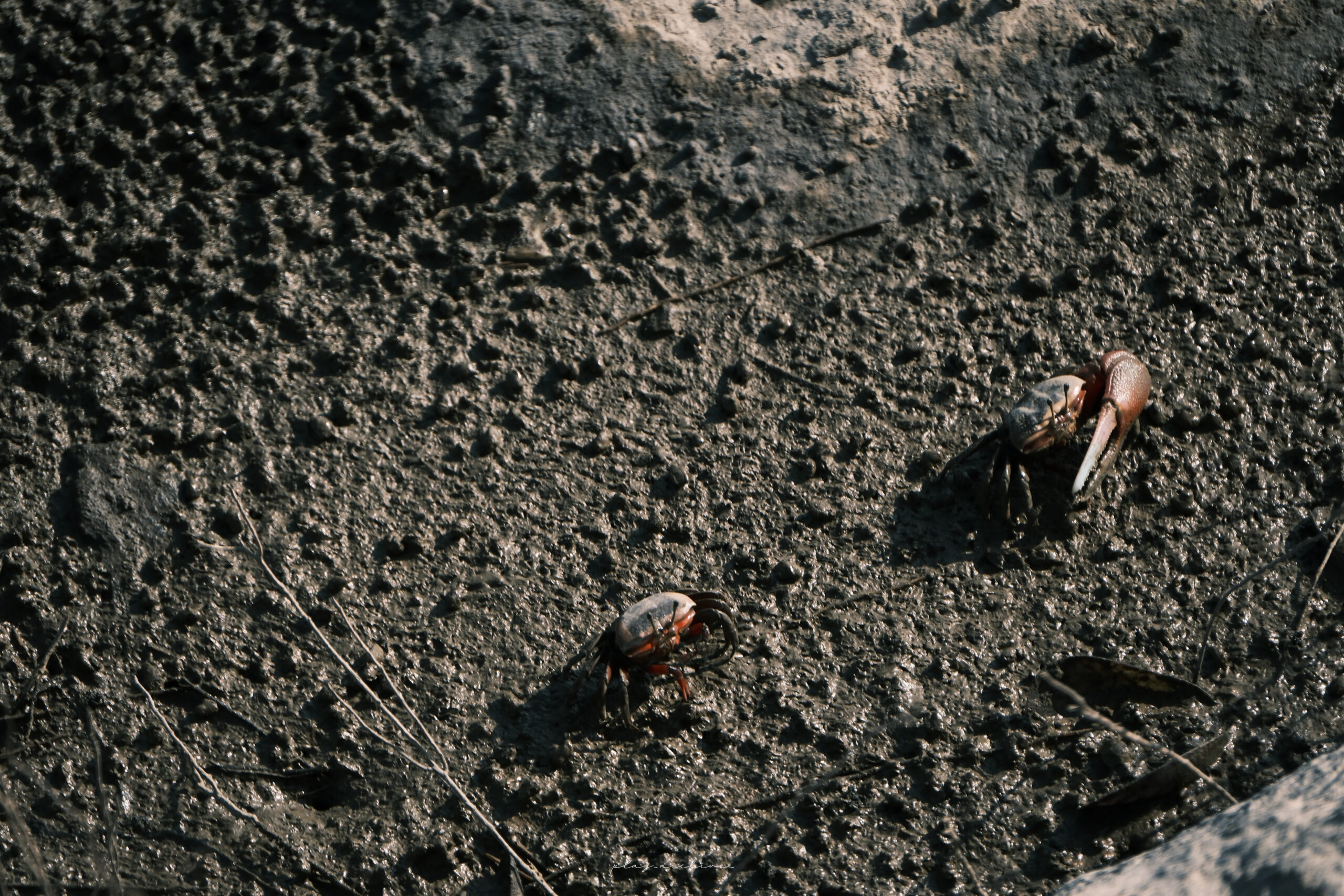 Fiddler Crab at Janghang Wetlands ©Yeonju Lee
Instagram: @play_archive_
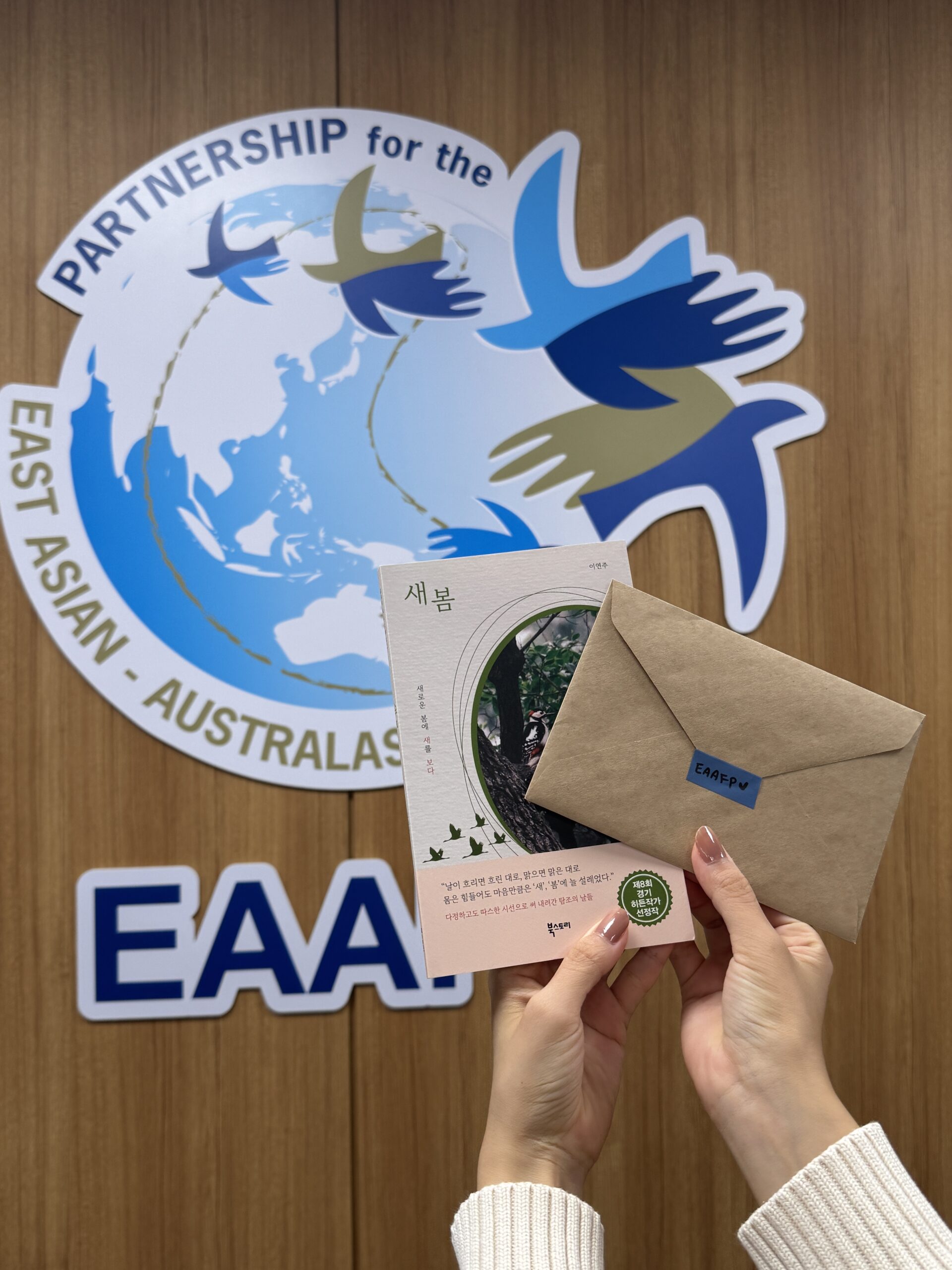 ©EAAFP