Every year on June 5, the world unites to observe World Environment Day, the United Nations’ flagship platform for raising environmental awareness and inspiring action. First established in 1972 during the UN Conference on the Human Environment, this day marks a pivotal moment in the global movement to protect our planet.
In 2025, the theme is clear and urgent: Beat Plastic Pollution. Spearheaded by the United Nations Environment Programme (UNEP), this year’s campaign urges us all to confront the environmental and human health crisis caused by plastic waste.
Plastic has become one of the most widely used materials in the modern world. And yet, most of it is used only once—before becoming waste that lingers for centuries.
The facts:
Over 300 million tons of plastic are produced each year
More than 8 million tons end up in the ocean annually
Plastics can take 20 to 500 years to degrade
Microplastics are now found in soil, water, air—and even in the human body
Designed to last but often used briefly, plastics are choking our ecosystems and harming wildlife across the globe.
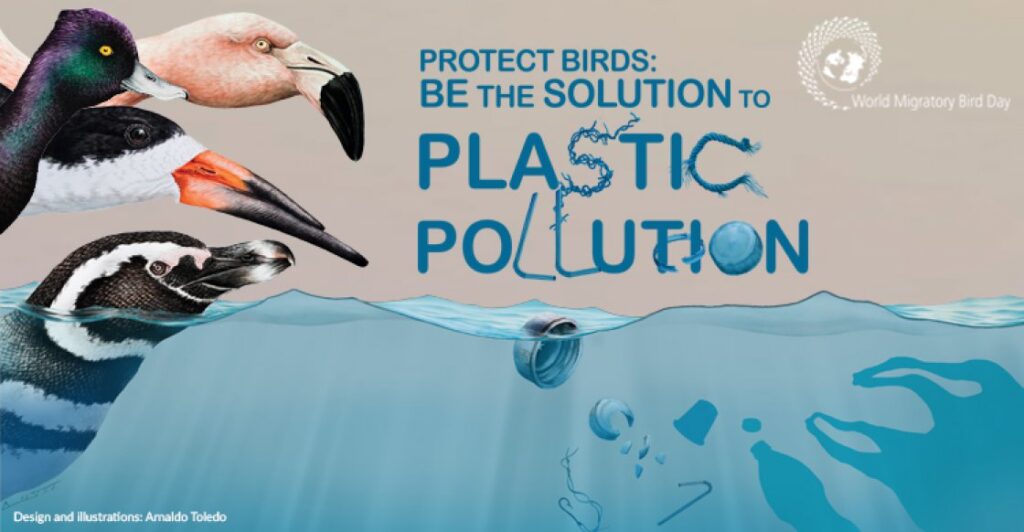
Birds, particularly migratory and seabird species, suffer greatly from plastic pollution. In 2019, the theme of World Migratory Bird Day: “Protect Birds: Be the Solution to Plastic Pollution!”—a call to action that remains relevant today.
Plastic threatens birds in two primary ways:
Ingestion
Seabirds often mistake plastic debris for food. Items like straws, bottle caps, and plastic bags, especially when coated in algae, resemble prey in both shape and scent. Tragically, adult birds sometimes feed these plastics to their chicks, leading to starvation, internal injuries, and chemical poisoning. Plastic fills the stomach but provides no nutrition, creating a chronic sense of fullness that masks life-threatening hunger.
Entanglement
Birds can become entangled in discarded fishing gear, nets, and other plastic waste. This can lead to injury, infection, drowning, or predation. One particularly troubling phenomenon, known as “ghost fishing,” occurs when abandoned fishing gear continues to trap and kill marine life long after being discarded.
If no action is taken, studies predict that by 2050, 99% of seabirds will have plastic in their stomachs—a dire forecast that underscores the urgent need for change.

What Can Be Done?
While the challenge is immense, solutions exist—and they start with each of us. Here’s how we can all contribute to fighting plastic pollution:
Reduce, Reuse, Recycle: Limit the use of single-use plastics. Choose reusable bags, containers, and utensils. Opt for biodegradable or recyclable alternatives wherever possible.
Clean Up: Participate in or organize clean-up events in your community. Beach and riverbank clean-ups make a tangible difference and raise awareness about the scale of the problem.
Spread the Word: Talk about plastic pollution with friends, family, and colleagues. Support policies and initiatives aimed at reducing plastic use and improving waste management systems.
Support Local and Global Action: Advocate for systemic change. Governments and industries must shift towards a circular economy, in which materials are reused and waste is minimized. By supporting sustainable policies and practices, we can help turn the tide.
A Call for Collective Action
World Environment Day 2025 is more than a date on the calendar—it is a call to reflect, rethink, and reimagine our relationship with the environment. Let us draw inspiration from nature and from real-world solutions that are already making a difference. From grassroots movements to international agreements, every step counts.
Together, we can beat plastic pollution and protect the creatures—like migratory waterbirds—that share this planet with us. Their survival is intricately tied to ours.
Let’s act now—for our environment, our health, our winged traveler, and future generations.
Official website:
Related article: