

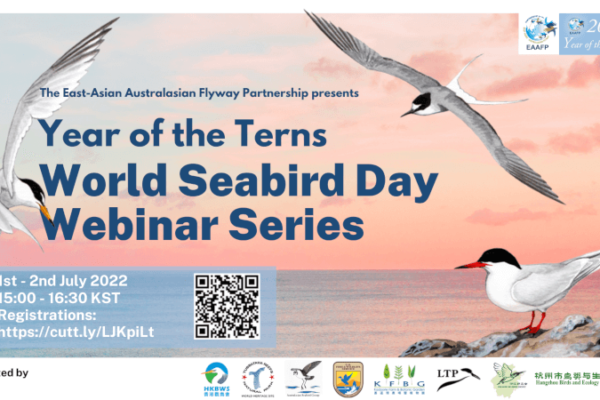
“Year of the Terns” World Seabird Day Webinar Series
“Year of the Terns” World Seabird Day Webinar SeriesBrief Introduction To raise awareness among EAAFP Partners, researchers, conservationists, and the general public about seabirds in the East Asian – Australasian Flyway (EAA Flyway), while promoting the exchange of information and collaboration on seabird conservation in the Flyway, the EAAFP Secretariat and the Seabird Working Group initiated the “Year of the Terns” in 2022. The World Seabird Day Webinar Series is one of the campaign activities for “Year of the Terns.” With the aim of showcasing and raising awareness for seabird conservation work along the EAA Flyway, the webinar series consist of two sessions, to launch the Asia Seabird Colony Registry, as well as showcasing work on tern species and their conservation.Date/Time: 1 – 2 July 2022 (15:00 – 16:30 KST on both dates) Topics: Session 1 (1 July): Launch of the Asia Seabird Colony Registry Session 2 (2 July): Showcase of tern conservation projects in EAA Flyway Organizers: EAAFP Secretariat, EAAFP Seabird Working Group, Australasian Seabird Group, Hong Kong Bird Watching Society, Tubbataha Reefs Natural Park. Meeting Platform: Zoom Language: English Registration: https://us02web.zoom.us/meeting/register/tZ0rce6prD8iGtax5wFiPEf6GfTOomM8A58c (https://cutt.ly/LJKpiLt)Overall Programme Day Programme SpeakersDay 1 Welcoming Speech Doug Watkins, Chief Executive of EAAFP Secretariat Robert Kaler, Chair of EAAFP Seabird Working Group Presentation on Year of the Terns Vivian Fu, EAAFP Communication Officer Introduction of World Seabird Registry Robert Kaler, Chair of EAAFP Seabird Working Group Presentation on the launch of the Seabird Breeding Registry in EAAF Simba Chan, Seabird Working Group Panel Discussion Moderated by Yat Tung Yu, Coordinator of EAAFP Seabird Working Group Panelists: Simba Chan, Angelique Songco, Site Manager of Tubbataha Reefs Natural Park, Philippines, Miran Kim, Seabirds Laboratory of Korea, Republic of Korea Nicholas Carlile, Australasian Seabird Group Day 2Welcoming Speech Yat-tung Yu, Coordinator of EAAFP Seabird Working GroupPrimer screening of “Terns Operation” about Chinese Crested Tern, by Fung Hong Shing 1. Presentation on Aleutian Tern Robert Kaler, EAAFP Seabird Working Group Chair2. Presentation on Little Tern Professor Wataru Kitamura, Tokyo City University3. Presentation on Chinese Crested Tern Siyu Wang, Zhejiang Natural History Museum4. Presentation on Terns breeding in Hong Kong John Chung, Hong Kong Bird Watching Society5. Presentation on River Tern Zheng Xi, Kadoorie Farm and Botanic Garden – Hong Kong6. Presentation on Black Noddy Retch Pagliawan-Alaba, Research Officer, Tubbataha Reefs Natural Park7. Presentation on White Tern Nicholas Carlile, Australasian Seabird GroupQ&A Moderated by Yuna Kim, Australasian Seabird GroupWebinar Speakers and Moderators: Day 1 “Launch of the Asia Seabird Colony Registry” Date: 1st July 2022 (15:00 – 16:30 KST) Registration Link: https://us02web.zoom.us/meeting/register/tZ0rce6prD8iGtax5wFiPEf6GfTOomM8A58c Key speakerSimba Chan Seabird Working GroupPanelistsAngelique Songco Site Manager, Tubbataha Reefs Natural Park, the Philippines Angelique Songco has more than 20 years of experience as a site manager of Tubbataha Reefs Natural Park, an UNESCO World Heritage Site and Flyway Network Site. Referred to as “Mama Ranger,” Angelique is also a member of the EAAFP Seabird Working group and works on the frontier in safeguarding important sites.Miran Kim Seabirds Laboratory of Korea Miran Kim is working in the Seabirds Lab of Korea. During her PhD, she studied egg morphology and hatching asynchrony in gulls. She has worked for the conservation of Swinhoe’s storm petrels and long-term monitoring of Black-tailed gulls. Recently, she is investigating the impacts of marine debris and bycatch on seabirds.Nicholas Carlile Australasian Seabird Group Nicholas commenced ecological research with the Australian Museum 1986 and since 1988 with the NSW States government. His work includes island biodiversity restorations and surveys, research into seabirds and their translocation. While focusing mainly on petrels, he has researched Little, Sooty and White terns as well as Boobies and Tropicbirds.ModeratorsVivian Fu Communication Officer, EAAFP SecretariatYat Tung Yu Director, Hong Kong Bird Watching Society Coordinator, Seabird Working Group Day 2: “Showcase of Tern Conservation Projects in the EAA Flyway “ Date: 2nd July 2022 (15:00 – 16:30 KST) Registration Link: https://us02web.zoom.us/meeting/register/tZ0rce6prD8iGtax5wFiPEf6GfTOomM8A58c SpeakersRobert Kaler Chair, Seabird Working Group Robb Kaler is a biologist with the U.S. Fish and Wildlife Service in Alaska, USA. Robb serves as chair of the EAAFP Seabird Working Group is interested in developing collaborations towards broad conservation goals that inform management decisions and promote seabird conservation.Professor Wataru Kitamura Associate Professor, Tokyo City University Wataru Kitamura Ph.D. is an associate professor at Tokyo City University and the president of NPO Little Tern Project aiming for conservation of the Little Terns on a rooftop in Tokyo. His main research area is conservation biology of avian species such as giving solutions for bird collisions to wind turbines and interaction between alien and native species.Siyu Wang Research Associate, Zhejiang Museum of Natural History Siyu Wang, research associate of Zhejiang Museum of Natural History, now mainly working on Chinese Crested Tern and Scarly-sided Merganser conservation. Since 2014, I participates in the Chinese Crested Tern Project as a team member. Except from research work, I'm also responsible for Science Popularization of Chinese Crested Tern and other birds.John Chung Hong Kong Bird Watching Society After graduating from the Chinese University of Hong Kong with an MPhil degree, John Chung devotes himself to bird research and conservation. He is currently a research officer in the Hong Kong Bird Watching Society. He is responsible for coordinating bird ringing, tern study, and citizen science programs in Hong Kong.Zheng Xi Kadoorie Farm and Botanic Garden - Hong Kong Zheng Xi is a Conservation Officer of Kadoorie Farm & Botanic Garden. He has been actively involved in several key conservation projects to minimize biodiversity loss in China and Cambodia, including the conservation of River Tern and Hornbills in western Yunnan of China.Retch Pagliawan-Alaba Research Officer, Tubbataha Reefs Natural Park Retch is the Research Officer of the Tubbataha Reefs Natural Park in the Philippines. She began working on seabirds in 2013 as part of her MSc studies. One of their seabird conservation projects is the restoration of the Black Noddy population in TRNP.Nicholas Carlile Australasian Seabird Group Nicholas commenced ecological research with the Australian Museum 1986 and since 1988 with the NSW States government. His work includes island biodiversity restorations and surveys, research into seabirds and their translocation. While focusing mainly on petrels, he has researched Little, Sooty and White terns as well as Boobies and Tropicbirds.Moderators: Yat Tung Yu Director, Hong Kong Bird Watching Society Coordinator, Seabird Working GroupYuna Kim Australasian Seabird Group Supporting Organizations Playback of the Webinar Day 1 Launch of the Asia Seabird Colony RegistryDay 2 Showcase of conservation work of terns EAAFContact If you have any inquiries, please feel free to contact Mr. Yat-tung Yu, Coordinator of the Seabird Working Group at yyattung@hkbws.org.hk; or Ms. Vivian Fu, Communication Officer of EAAFP at communication@eaaflyway.org.
Continue reading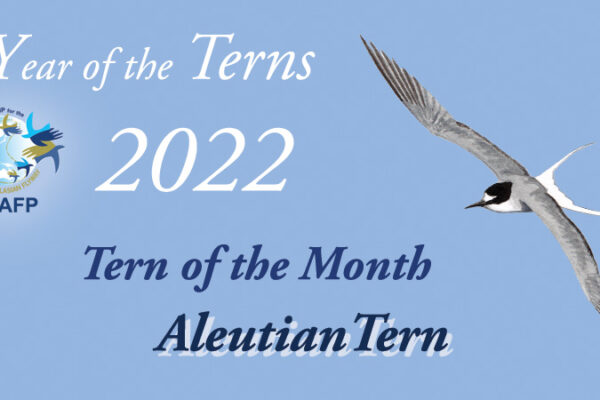
Aleutian Tern
©️ Kenneth LamCommon name: Aleutian Tern Scientific name: Onychoprion aleutica Local names: 白腰燕鸥 (Simplified Chinese), 白腰燕鷗(traditional Chinese), Алеутская крачка(Russian), 알류샨제비갈매기(Korean) , コシジロアジサシ(Japanese), Daralaut Aleutian (Indonesian), Camar Aleutian (Malayu). Conservation status: IUCN - VulnerableAleutian Tern (Onychoprion aleutica) is a representative of an East Asian-Australasian Flyway species. It is a medium-sized, coastal and colonial nesting seabird. The species was discovered in 1868 on Kodiak Island, Alaska, but studies are limited, mainly at breeding grounds. Its breeding ground Aleutian Tern is often found associated with Common Tern or Arctic Tern. The population of the bird is declining and listed as Vulnerable on the IUCN Red List.Identification Size: 32-28cm; wingspan 75-80cm. Body: mid-grey back and has long wings, the underparts are a dark gray, while rump and forked tail are white Head: Breeding – adults have black cap and lore with a white forehead, chin, throat, and cheeks; Juvenile: brownish crown, and upper body Underwing: dark leading edges on secondaries are diagnostic for identication. Beak: Black Legs: Short and blackDistribution rangeBreeding range: at colonies in coastal Siberia, including Sakhalin Island, the Kamchatka Peninsula, the Sea of Okhotsk, and in the Bering Sea at Olyutortskiy Bay and Karagin Island, while in Southwest Alaska, they were found in Kasegaluk Lagoon, on the Seward Peninsula, the Yukon-Kuskokwim River Delta, and along the Alaska Peninsula, as well as the Aleutian Islands, Kodiak Archipelago, Kenai Peninsula, Copper River delta, and along the Gulf of Alaska as far east as Dry Bay. Non-breeding range: in spring and autumn offshore across the East Asia region covering waters in Japan, Korea, China, including Hong Kong and Taiwan, and the Philippines, and in winter found in the tropical western Pacific region including Indonesia, Malaysia and Thailand. Recent vagrant records reached Australia.Habitat The Aleutian tern breeds on wetlands and solitary rocky islands along coasts, particularly at river mouths, along with sparsely vegetated shorelines, grassy meadows, and marshes. It is pelagic during the non-breeding season.BehaviorBreeding season occurs from May-August with egg-laying mostly in June, usually nesting among Arctic Terns in Alaska or Common Terns in Russia. Aleutian terns primarily feed on small fish, but also eat insects, crustaceans and zooplankton. They forage by flying, hovering low over water, and then surface-dip or pounce to take the food from the water surface.Population estimateAbout 31,000 mature individuals.Main threats Habitat degradation Egg harvest and hunting Human disturbanceNatural threats:Natural predators (e.g. American Mink, Fox, rats) and domestic dogsConservation WorkAleutian Tern Conservation Plan and a Statewide Aleutian Tern Colony Census Protocol in Alaska As Aleutian Tern is a species of USFWS and ADF&G “Species of Conservation Concern/Species of Conservation Need”, in 2016, an Aleutian Tern Technical Committee (ATTC) was formally established. The ATTC has members include representatives from US’s federal and state agencies, scientists, and NGOs. ADF&G and collaborators. The recent population declines triggered an assessment of the status of the birds in 2017.Fun Fact Aleutian Tern usually nests among Arctic Terns, who are known to be defensive of their nests, so they can take advantage of this behavior, while Aleutian Terns do not attempt to defend their own nests.Year of the Terns 2022Webinar on Chinese Crested Tern in the Yellow Sea and Seabird Conservation in ChinaBlack-naped TernWhite-winged TernGreater Crested TernRoseate TernBridled Tern11th Yakutat Tern FestivalLittle Tern“Year of the Terns” Flyway Story Series #16 – Prof. Daniel Roby, Seabird researcher and conservationist
Continue reading
“Year of the Terns” Flyway Story Series #16 – Prof. Daniel Roby, Seabird researcher and conservationist
As EAAFP is designating 2022 the “Year of the…
Continue reading
Chinese Crested Tern
©Simba Chan Common name: Chinese Crested Tern Scientific name: Thalasseus bernsteini Local names: 中华凤头燕鸥 (Simplified Chinese), 中華鳳頭燕鷗/黑嘴端鳳頭燕鷗(Traditional Chinese), 뿔제비갈매기 (Korean), ヒガシシナアジサシ(Japanese), Dara-laut Cina (Indonesian), Camar Cina Berjambul (Malayu), Nhàn mào Trung Quốc (Vietnamese). Conservation status: IUCN - Critically Endangered, CMS - Appendix IThe Chinese Crested Tern (Thalasseus bernsteini) is one of the rarest seabirds in the world. It seemed it had always been rare. It was not described until 1861, when the type specimen was collected at Kao, Halmahera, Indonesia. Since the last 21 specimens were collected at Qingdao, China in 1937, there was no confirmed record of the species. In 2000, the bird was resighted on Matsu Islands off the coast of Fujian. In 2004 another breeding colony was discovered at Jiushan Islands in Zhejiang Province. With international cooperation using social attraction restored the breeding colony, Chinese Crested Tern is estimated to be about 150 birds in population and is stable or slowly increasing.Identification Size: around 45 cm; wingspan 94 cm. Head: Short crested, Breeding: entire cap turned black with crest; Non-breeding: forehead turned white Beak: bright orange-yellow bill with a black tip and almost invisible white tip at the end of the beak Light grayish from the mantle to upperwing, rump, uppertail-coverts and tail forked tail; black legsDistribution rangeBreeding range: Since the rediscovery of the species in 2000, there are only five breeding locations: Jiushan Islands, Wuzhishan Islands (Zhejiang, China), Matsu Islands (Fujian, China), Penghu Islands (Taiwan, China) and Chilsando Islands in the Republic of Korea. Non-breeding range: The bird is believed to breed off Shandong formerly, but is now only sighted in coastal areas in Shandong after breeding season. Non-breeding records were from South China, Japan, the Philippines, Thailand and eastern Malaysia. Confirmed recent wintering grounds include Seram, Maluku of Indonesia and Mindanao of the Philippines. Eastern Indonesia and the Philippines are likely to be the major wintering areas for this species.HabitatBreeding habitat of Chinese Crested Tern, Tiedun Dao, Zhejiang, China © Simba Chan Chinese Crested Tern breeds only on offshore uninhabited islets, non-breeding habitat is of little information. Non-breeding ground in Indonesia © Ken FungBehaviorDuring the breeding season, Chinese Crested Tern usually congregate with Greater Crested Tern nesting areas, but in Ro Korea they nest in colony of Black-tailed Gulls. They can move between different colonies in the breeding season and are very nervous at disturbance. They are very little known during the non-breeding season but are likely to stay in flocks with Greater Crested Terns. However, these two species may not migrate together as previously assumed.Breeding Chinese and Greater Crested Terns in Tiedun Dao, China © Simba ChanPopulation estimateAbout 150 individuals of all ages (prior to 2012, only less than 50 individuals).Main threats Human disturbance (people reaching too close to the breeding colonies) Egg collectionOther threats:Pollution (water pollution, plastic pollution) OverfishingNatural threats:Typhoons Natural predators (e.g. Peregrine Falcon, snakes, rats)Conservation WorkSocial attraction setting to restore Chinese Crested Tern in China © Vivian Fu International collaboration to use social attraction technique to restore breeding population Since 2011, an international cooperation project using social attraction (using decoys and playback) restored the breeding colony at Jiushan. The population increased from less than 50 to about 150 in 10 years. Subsequently, Social attraction was also done in breeding grounds of Matsu, Wuzhishan and Chilsando. Remove human-induced threats Through education and advocacy to promote law enforcement to prevent exploitation (egg collection) and disturbance, such as regulated tourism, allocation of park rangers for monitoring, as well as fishing communities and public engagement.Fun Fact Chinese Crested Tern was once thought extinct, so when it was rediscovered after 63 years in 2000, the bird was called “Bird of Legend”. Prior to 1975, the Chinese Crested Tern was known as Sterna zimmermanni Reichenow 1903 and the type locality was thought to be Qingdao of Shandong Province, China (when the team from Fan Memorial Institute of Biology collected 21 specimens from Qingdao area in 1937 all of them were labeled as Thalasseus zimmermanni). It was later on corrected that the type specimen should be the one collected near Halmahera, Indonesia in 1861, which had been misplaced as a population of Greater Crested Tern. Interestingly, when Dr. Nagamichi Kuroda obtained his specimen of Chinese Crested Tern from Korea in 1917 he also regarded it as a Greater Crested Tern. Luckily he left a detailed description of this long-lost specimen for verification to be a Chinese Crested Tern.Reference IUCN Red List: https://www.iucnredlist.org/species/22694585/131118818 Birds of the World: https://birdsoftheworld.org/bow/species/chcter2/cur/introduction Simba Chan, 2022, Chinese Crested Tern (Thalasseus bernsteini). Editor(s): Dominick A. DellaSala, Michael I. Goldstein, Imperiled: The Encyclopedia of Conservation, Elsevier: Pages 19-28 (linkGochang Big Bird Race 2023 brought birdwatchers to contribute bird data to the UNESCO World Heritage SiteSpecial achievement award to the Chinese Crested Tern teamWebinar on Chinese Crested Tern in the Yellow Sea and Seabird Conservation in ChinaChinese Crested Tern banded in Republic of Korea sighted in ChinaRestoration of the Critically Endangered Chinese Crested Tern using social attraction techniqueA Conservation Success in Minjiang River EstuaryA tern for the betterCritically Endangered Chinese Crested Terns appear on a deserted island in South KoreaThe First Ever Banded Chinese Crested Tern Chick has FledgedEAAFP Seabird Working Group Update
Continue reading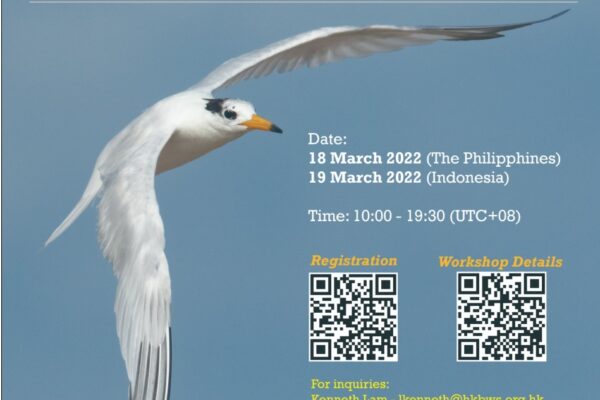
Seabird Training Webinars for Southeast Asia
The Hong Kong Bird Watching Society (HKBWS, an EAAFP Partner) has been engaging with an international team established for the conservation of…
Continue reading
The First Asian Ornithological Conference convened
The last two decades have seen a tremendous increase in the development of scientific studies and conservation of birds in Asia. The…
Continue reading
The Third World Seabird Conference: seabird study and conservation in Asia
The Third Seabird World Conference was held virtual from 4 to 9 October 2021 (covering all time zones). It was scheduled to be convened in Hobart, Australia in 2020…
Continue reading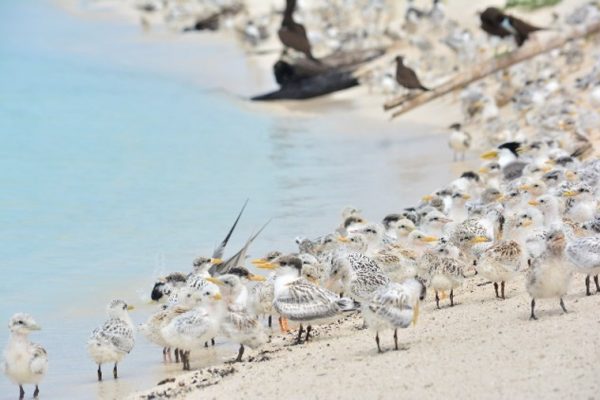
EAAFP Small Grant Fund project: 2021 Tubbataha Seabird Survey, Philippines
Seabirds spend their entire life in the open ocean, hence, they are a good indicator of coral reef health. Their nutrient-rich droppings fertilize roosting grounds and the surrounding water to the benefit of other marine life. Seabirds are one of the most highly threatened species of animals. Although they have a relatively long life span, they breed much slower and have fewer offspring than other birds in general. Partly supported by EAAFP Small Grant Fund for Working Groups and Task Forces, this year, the Tubbataha Management Office (TMO) use seabirds as an indicator to assess of how well – or how badly – the site are conserving Tubbataha Reefs Natural Park, A Flyway Network Site (EAAF 123) in the Philippines. We monitored the population of the seven species that breed in the Park, the: Red-footed Booby (Sula sula), Brown Booby (Sula leucogaster), Masked Booby (Sula dactylatra), Great Crested Tern (Thalasseus bergii), Sooty Tern (Onychoprion fuscata), Brown Noddy (Anous stolidus), and endemic Black Noddy subspecies (Anous minutus worcesteri). We use various monitoring methods and integrate results for a more accurate estimate of the populations. Distance counts are conducted once a month, while direct counts are done once a quarter. In-flight counts are done late in the afternoon, and dawn counts are made before the birds leave the islet to forage for food. When called for, we would do night counts of birds that come to roost after sundown. Adults, subadults, juveniles, pullus, eggs, and nests of each species are counted. Two teams conduct the count of the various species in various life stages. In all, it took a total of 39 teams to complete the survey. In May each year, we join the marine park rangers (MPR) for quarterly monitoring. The Covid 19 situation interposed several complications that delayed our trip, with interesting results. Together with WWF-Philippines staff, and volunteers, we were finally able to set sail on 2 June 2021. This year’s survey was funded by the East Asian-Australasian Flyway Partnership (EAAFP), Department of Environment and Natural Resources (DENR), and Pilipinas Shell Foundation, Inc. (PSFI). Report of the surveys will be shared by the end of 2021. Tubbataha Reefs Natural Park is both a Ramsar site and a Flyway Network Site of the EAAFP. Located 92 nautical miles southeast of Palawan, it is a 97,030-hectare marine protected area which was established on 11 August 1988. It is the largest no-take marine protected area in the Philippines. Its two islets are among the last known safe breeding habitats of seabirds in Southeast Asia. Article prepared by Tubbataha Management Office. The Tubbataha Reefs Natural Park is in the middle of the Sulu Sea. It is composed of two atolls and a reef. The Bird Islet is in the North Atoll and the smaller South Islet is located in the South Atoll. Marine park rangers construct the ‘Tubbataha Hilton’, our shelter from the sweltering heat in Bird Islet. Photo © Segundo Conales Jr Our team from Puerto Princesa City met with MPRs at the ranger station upon arrival. Research Officer Retch Alaba gave a briefing on the work at hand and assigned tasks for each person. Photo © Rowell AlarconOur first task before setting foot on the islets was to do a distance count. Park Ranger Jeffrey David (in blue) leads the count in Bird Islet, where 80% of the total seabird population of Tubbataha reside. Photo © Rowell AlarconIn the following days, the teams got busy with their respective tasks. Here, one group counts the eggs of the Great Crested Tern. Photo © Kymry DelijeroShowing off their EAAFP hats, Angelique Songco and Rowell Alarcon count Brown Noddies. Photo © Kymry DelijeroMarine Park Ranger Segundo Conales Jr., (with umbrella) counts the eggs, nests, and adults of Black Noddy in the structure while John Eric Magbanua, Bantay Dagat of Local Government of Cagayancillo (LGU), serves as recorder. Photo © Retch AlabaFrom left: MPR Noel Bundal, SN2 Paul Balonsay PN, and Joan Pecson, WWF-Philippines, start the in-flight count at 4:30, when birds begin to arrive from the day’s foraging. Photo © Kymry DelijeroThe team doing a night count of the Sooty Tern population that landed after sundown. The estimate was 6000 individuals! Photo © Kymry DelijeroFrom left to right: Marine Park Rangers Segundo Conales Jr, SNDP Paul Balonsay PN, SN2 Francis Lim and Noel Bundal (in blue shirt) with tallies their day’s count in the native dining table inside our hut. Photo © Kymry DelijeroWe observed lesser seabirds, probably because we arrived at the end of the breeding season when most of the adults have left. We also counted lesser eggs because most of the birds were already in the pullus or juvenile stages. Photo © Kymry DelijeroBlack Noddies continue to occupy the artificial nesting structures we built in 2017. Last year, we added new structures made of PVC and steel pipes (above), which are designed to last longer. Photo © Gerlie GedoriaWe planted saplings of native trees in the islet in 2020 but most did not survive. Marine Park Rangers Amado Cayabo (LGU) and Cris Caranay (TMO) construct bamboo guards around a sapling so birds would not build their nests on the saplings and use their leaves as nesting materials. Photo © Kymry DelijeroThe only known breeding Masked Booby in Philippines lain an egg for the fourth time (!) since 2019. A second egg appeared a week later. Photo © Retch Alaba We used the WWF-Philippines research vessel, M/Y Navorca for the survey. Here, the team disembarks for the survey in South Islet. Photo © Rowell Alarcon This year's seabird survey team. Photo © Rowell Alarcon
Continue reading
Seabird Survey in Goseong, Ro Korea
On 9 February 2021, Mr. Doug Watkins, Chief Executive, Ms. Vivian Fu, Communication Officer, and…
Continue reading
What does the revised China Protected Species list mean for EAAFP?
February 5th, the Chinese government announced the publication of…
Continue reading
