
Bridled Tern
Bridled Tern ©Kenneth Lam Common name: Bridled Tern Scientific name: Onychoprion anaethetus Local names: Бурокрылая крачка(Russian), 褐翅燕鸥 (Simplified Chinese), 褐翅燕鷗 (traditional Chinese), 에위니아제비갈매기 (Korean), マミジロアジサシ(Japanese), Dara laut kendal (Indonesian), Camar Batu (Malayu), Nhàn lưng nâu (Vietnamese), นกนางนวลแกลบคิ้วขาว(Thai) Conservation status: IUCN - Least ConcernBridled Tern is a widespread seabird found in warm oceans around the world. They are fairly common in the tropical seas. It is a strictly marine species but is often found in offshore waters instead of open oceans. IdentificationIdentification:Adult Bridled Tern ©Kenneth LamImmature Bridled Tern ©Kenneth LamSize: 30–32 cm; wingspan 77–81 cm. Body: medium-sized, with long and narrow wings as well as long and deeply forked tail with white. Wings, back and tail brownish-grey color. Underwing and body white color. Head: black cap with white forehead and a white stripe above the eyes. White chin and beck Beak: black and as long as the head Legs and feet: blackish Juvenile: coloration is similar but duller than adults, but with some scaling and streaking to the upperpartsA similar species to Bridled Tern is Sooty tern as general plumage color of upper surface, but could be distinguished by its larger size (33 -36 cm; wingspan 82 -94 cm) and head pattern, which the latter has less of the white forehead and lack white stripe running above and extending after the eyes.Distribution rangeThe breeding range is widespread, mainly in subtropical and tropical west Pacific, Atlantic, and Indian Oceans. In EAA Flyway, It breeds on the west coast of Thailand, east Gulf of Thailand, Malaysia, and south to Indonesia and Australia, towards the west to north of Philippines and islands off Southeast China. Its known northernmost breeding sites are Zhongjieshan Islands of Zhejiang, and Toku-no-jima of Kagoshima Prefecture, Japan. Wintering range is understudied but basically in oceans of their breeding grounds. Birds breeding in China were found wintering at the Gulf of Thailand, Natuna Sea, Sulu Sea and Makassar Strait in Southeast Asia.HabitatBreeding habitatBridled Tern breeds on offshore rocky islands of limestone and volcanic stacks, vegetated coral cays and exposed reefs. Also found breeding on slopes of sandy dunes, under low vegetation and cliff-holes in some colonies. Breeding habitat of Bridled Tern ©Kenneth LamNon-breeding habitatEntirely aerial and marine during non-breeding season. Bridled Tern at non-breeding period, resting on flotsam ©Kenneth LamBehaviorBridled Terns showed an uncommon breeding pattern, in some populations, they has synchronous, subannual breeding cycles (breeding interval is less than one year) that coincide with molt. Some breeding pairs maintain with the same partners over successive seasons. Breeding space is highly dispersed and unevenly. Typically laying 1 egg per clutch. They are frequently found at mixed colonies with Black-naped Terns and Roseate Terns in South China and Southeast Asia waters.Population estimateGlobal estimated population: The global population is estimated to number c. 400,000-1,000,000 individuals. Its population in the EAAF is not yet estimated but it is one of the most common coastal breeding terns in tropical and sub-tropical Asia.Main threats Human disturbance, e.g. recreational and tourism activities at breeding site trigger nest abandoned Egg collection and chicks harvestOther threats:Pesticides and Other Contaminants/Toxics, e.g. oil spills risk Plastic pollution Exotic predatorsConservation WorkHong Kong has started tracked study of breeding tern species. In 2017, the Agriculture, Fisheries and Conservation Department (AFCD), Hong Kong SAR Government attached color flags to 19 adult and juvenile Bridled Terns in August 2017. In 2018, Hong Kong Bird Watching Society (HKBWS, EAAFP Partner) started conservation research on breeding terns in Hong Kong waters, with support from the Japan Fund for Global Environment (JFGE). HKBWS deployed marking with rings and coloured flags on a total of 110 adult and juvenile Bridled Terns trapped during breeding season in 2019m including two individuals fitted with satellite-tracking transmitters. (Note: speciall permit issued by AFCD, HKSAR)Tracking study of Bridled Tern ©HKBWSFun FactThe specific name of Bridled Tern, anaethetus, is derived from a Greek root meaning senseless or stupid, a reference to its tameness and ease of capture by hungry sailors. One Bridled Tern found injured (and later died) at Nago City, Okinawa, Japan on 13 October 2014 was found to be banded in Persian Gulf in Iran (as chick) on 28 July 2013. The bird travelled more than 7,450 km (linear distance) and was the first Iranian banded bird recovered in Japan (link).References IUCN Red List: https://www.iucnredlist.org/species/22694730/154676367 Birds of the World: https://birdsoftheworld.org/bow/species/briter1/cur/introduction Projects on terns in Hong Kong:AFCD: https://eaaflyway.org/bridled-terns-onychoprion-anaethetus-ringed-in-hong-kong/ HKBWS: https://cms.hkbws.org.hk/cms/en/hkbws/work/resarch/tern/tern2019eGochang Big Bird Race 2023 brought birdwatchers to contribute bird data to the UNESCO World Heritage SiteSpecial achievement award to the Chinese Crested Tern teamWebinar on Chinese Crested Tern in the Yellow Sea and Seabird Conservation in ChinaChinese Crested Tern banded in Republic of Korea sighted in ChinaChinese Crested TernRestoration of the Critically Endangered Chinese Crested Tern using social attraction techniqueA Conservation Success in Minjiang River EstuaryA tern for the betterCritically Endangered Chinese Crested Terns appear on a deserted island in South KoreaThe First Ever Banded Chinese Crested Tern Chick has Fledged
Continue reading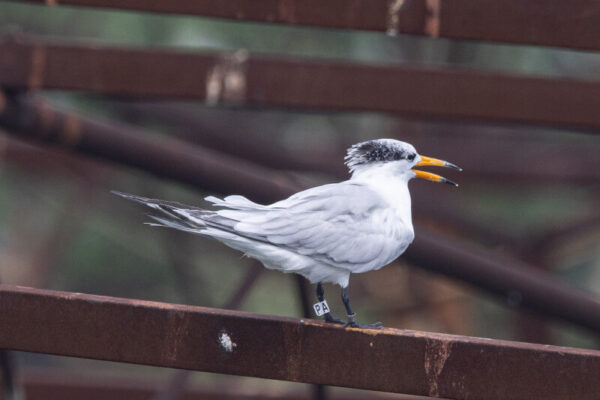
Chinese Crested Tern banded in Republic of Korea sighted in China
The connection between RoK-breeding Critically Endangered Chinese Crested Tern and…
Continue reading
The Philippines conducts its 1st National Training on Seabird Identification and Monitoring
In the effort to increase our knowledge and capacities in conserving seabirds in the Philippines, the Biodiversity Management Bureau of the Department of…
Continue reading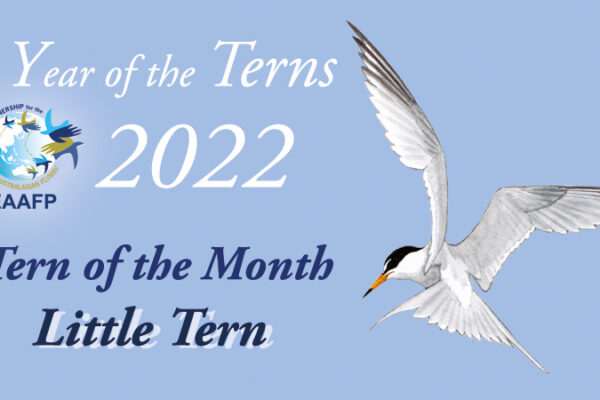
Little Tern
Little Tern ©Kenneth LamCommon name:Little Tern Scientific name: Sternula albifrons Local names: Малая крачка(Russian), Хурган хараалай(Mongolian), 白额燕鸥 (Simplified Chinese), 白額燕鷗/小燕鷗 (traditional Chinese), 쇠제비갈매기 (Korean), コアジサシ(Japanese), Dara laut kecil (Indonesian), Camar Kecil (Malayu), Nhàn nhỏ (Vietnamese), นกนางนวลแกลบเล็ก (Thai). Conservation status: IUCN - Least ConcernThe Little Tern is one of the smallest tern species in EAA Flyway. It has wide distribution range across the East Asian-Australasian Flyway and the East Atlantic Flyway. Five subspecies recognized: Sternula albifrons albifrons; Sternula albifrons innominate; Sternula albifrons guineae; Sternula albifrons sinensis and Sternula albifrons placens, with the later two subspecies S. a. sinensis and S. a. placens found within the EAA Flyway. Identification Size: 22–28 cm; wingspan 47–55 cm. Body: slender light grey wings and body, with a white rump, tail long and forked Breeding plumageHead: distinctive white forehead, black cap and lores. Beak: bright yellow beak with a small black tip Orange-yellow legsNon-breeding PlumageHead: forehead is more predominantly white Beak: blackish beak Dull orange to blackish legsJuveniles appear like the non-breeding adults, except for a narrower black rear crown, and a more brownish-white forehead and crown. They have a U-shaped marking which is visible on the shouldersLittle Terns can be confused with Fairy Terns (Sternula neresis), Saunder's Terns (Sternula saundersi), Least Terns (Sternula antillarum), Yellow-billed Terns (Sternula superciliaris), and Peruvian Terns (Sternula lorata).Distribution rangeSternula albifrons sinensis:Palaearctic breeders in southeastern Siberia, Korea Penisular, Japan and China migrate south in the non-breeding season, mainly in the tropical region, but could reach down to New Guinea and Australia. Some are also found all year round in northern India and Sri Lanka east to southeastern Asia, the Philippines, and northern Australia.Sternula albifrons placens:East Australia and East TasmaniaHabitatBreeding habitatLittle Tern breeds on sand spits, banks, ridges or islets, and sandy beaches in coastal environments including coastal lakes, estuaries and inlets. The nest is a shallow scrape positioned on the ground above the high tide-line and often only a few meters away from shallow clear water where it lays one to three eggs a clutch.Breeding habitat of Little Tern © Yutaka OtsukaNon-breeding habitatCoastal tidal creeks, lagoons and saltpans; sometimes feed in the open sea.Non-breeding site in Singapore ©Kenneth LamBehaviorLittle Terns is a ground-nesting bird and it nests in small loose colonies., with the distance between nests usually more than 2m. Breeding colonies are small to medium-sized, up to 40 pairs, seldom > 100 pairs. Little Tern shows moderately high site fidelity. Courtship occurs by presenting and feeding the females with fish and may last from a few days to weeks.Population estimateThe global population is estimated to number c.190,000-410,000 individuals. There is no accurate census date for subspecies S.a. sinensis but estimated to 10,000 – 100,000 birds, while S. a. placens is estimated to have 10,000 birds.Main threats Habitat loss by reclamation Human disturbance, e.g. recreational and tourism activities at coastal areas close to breeding colonies Stray or feral dogs and cats at breeding sites.Other threats:Pollution Egg collection Artificially-induced water-level fluctuation Sand-miningNatural threats:Flooding Adverse weather conditions, e.g. typhoons, heavy rains, strong winds and waves Natural predators (e.g. Peregrine Falcon, snakes, rats) Conservation WorkArtificial breeding habitat on building rooftop in Tokyo, Japan to restore Little Tern breeding colony Since 2001, a new NGO Little Tern Project has been established to manage the initiative of building artificial breeding habitats on the rooftop of buildings in Tokyo Bay, Japan. This sustained over 2000 nests, although the population fluctuate due to various factors. The project also integrates with local community engagement and citizen science. Conservation of Little Tern is also part of local policy, e.g. Basic Environmental Plan of Ota City. Learn more: https://littletern.net/Little Tern breeding at Morigasaki Water Reclamation Center of Tokyo © Little Tern Project Tracking and studies on migratory routes of Little Tern There are independent or internationally collaborative banding and tracking projects on Little Tern. Banding and colour-marking have been done in Australia by New South Wales (NSW) National Park and Wildlife Services (2003). In Japan, Yamashina Institute of Ornithology, Japanese Society for Preservation of Birds and Little Tern Project had banding and banding programme, and utilize of geo-locators. Japan had a collaborative project with Australia between 2012-2015 (link). In Guangdong, China, a joint research carried out by Little Tern Project, Hong Kong Bird Watching Society, Guangdong Haifeng Bird Provincial Nature Reserve Office, and Sun Yat-sen University has done colour-marking on Little Terns in 2017 and 2018. A yellow ring with a white engraving of A and 2 numerals had been placed on the right tarsus, as shown in the photo below (Yu, pers. comms.). However, further surveys in 2018 could not find any colour-marked Little Tern at this site.A Little Tern with geolocator ©Eugene Cheah Little Tern Recovery Plan in New South Wales, Australia The Little Tern is listed as Endangered in New South Wales of Australia under the Threatened Species Conservation Act 1995 (TSC Act). This Recovery Plan was launched in 2003, which constitutes the approved NSW State Recovery Plan for the Little Tern. It covers conservation requirements of the species across and identifies conservation actions to be undertaken to ensure the long-term survivorship of the species. Learn more: link © New South Wales Government Fun Fact A Little Tern in Australia had been recorded to reach 17 years old. Generally, Little Terns start breeding from 3 years old, occasionally at 2 years old. Regarding species looks similar to the Little Tern, while Fairy Tern might turn up in Indonesia and Saunders’s Tern in western SE Asia, Yellow-billed Tern and Peruvian Tern are highly unlikely to be found in EAAF countries. The most frequent confusion is with the Least Tern. It is an uncommon but regular visitor to Japan (first confirmed record was a banded bird from North Dekota, USA recovered at the coast of Ibaraki Prefecture, Japan in July 2014) and probably can occasionally be found in eastern Asia.References IUCN Red List: https://www.iucnredlist.org/species/22694656/155476219 Birds of the World: https://birdsoftheworld.org/bow/species/litter1/cur/introductionGochang Big Bird Race 2023 brought birdwatchers to contribute bird data to the UNESCO World Heritage SiteSpecial achievement award to the Chinese Crested Tern teamWebinar on Chinese Crested Tern in the Yellow Sea and Seabird Conservation in ChinaChinese Crested Tern banded in Republic of Korea sighted in ChinaChinese Crested TernRestoration of the Critically Endangered Chinese Crested Tern using social attraction techniqueA Conservation Success in Minjiang River EstuaryA tern for the betterCritically Endangered Chinese Crested Terns appear on a deserted island in South KoreaThe First Ever Banded Chinese Crested Tern Chick has Fledged
Continue reading
Australia’s Wildlife Conservation Plan for Seabirds
At the national level in Australia, the Environment Protection and Biodiversity Act 1999 (EPBC Act) provides for the development and…
Continue reading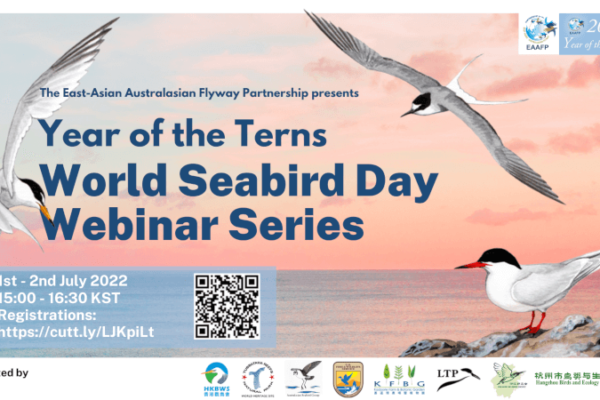
“Year of the Terns” World Seabird Day Webinar Series
“Year of the Terns” World Seabird Day Webinar SeriesBrief Introduction To raise awareness among EAAFP Partners, researchers, conservationists, and the general public about seabirds in the East Asian – Australasian Flyway (EAA Flyway), while promoting the exchange of information and collaboration on seabird conservation in the Flyway, the EAAFP Secretariat and the Seabird Working Group initiated the “Year of the Terns” in 2022. The World Seabird Day Webinar Series is one of the campaign activities for “Year of the Terns.” With the aim of showcasing and raising awareness for seabird conservation work along the EAA Flyway, the webinar series consist of two sessions, to launch the Asia Seabird Colony Registry, as well as showcasing work on tern species and their conservation.Date/Time: 1 – 2 July 2022 (15:00 – 16:30 KST on both dates) Topics: Session 1 (1 July): Launch of the Asia Seabird Colony Registry Session 2 (2 July): Showcase of tern conservation projects in EAA Flyway Organizers: EAAFP Secretariat, EAAFP Seabird Working Group, Australasian Seabird Group, Hong Kong Bird Watching Society, Tubbataha Reefs Natural Park. Meeting Platform: Zoom Language: English Registration: https://us02web.zoom.us/meeting/register/tZ0rce6prD8iGtax5wFiPEf6GfTOomM8A58c (https://cutt.ly/LJKpiLt)Overall Programme Day Programme SpeakersDay 1 Welcoming Speech Doug Watkins, Chief Executive of EAAFP Secretariat Robert Kaler, Chair of EAAFP Seabird Working Group Presentation on Year of the Terns Vivian Fu, EAAFP Communication Officer Introduction of World Seabird Registry Robert Kaler, Chair of EAAFP Seabird Working Group Presentation on the launch of the Seabird Breeding Registry in EAAF Simba Chan, Seabird Working Group Panel Discussion Moderated by Yat Tung Yu, Coordinator of EAAFP Seabird Working Group Panelists: Simba Chan, Angelique Songco, Site Manager of Tubbataha Reefs Natural Park, Philippines, Miran Kim, Seabirds Laboratory of Korea, Republic of Korea Nicholas Carlile, Australasian Seabird Group Day 2Welcoming Speech Yat-tung Yu, Coordinator of EAAFP Seabird Working GroupPrimer screening of “Terns Operation” about Chinese Crested Tern, by Fung Hong Shing 1. Presentation on Aleutian Tern Robert Kaler, EAAFP Seabird Working Group Chair2. Presentation on Little Tern Professor Wataru Kitamura, Tokyo City University3. Presentation on Chinese Crested Tern Siyu Wang, Zhejiang Natural History Museum4. Presentation on Terns breeding in Hong Kong John Chung, Hong Kong Bird Watching Society5. Presentation on River Tern Zheng Xi, Kadoorie Farm and Botanic Garden – Hong Kong6. Presentation on Black Noddy Retch Pagliawan-Alaba, Research Officer, Tubbataha Reefs Natural Park7. Presentation on White Tern Nicholas Carlile, Australasian Seabird GroupQ&A Moderated by Yuna Kim, Australasian Seabird GroupWebinar Speakers and Moderators: Day 1 “Launch of the Asia Seabird Colony Registry” Date: 1st July 2022 (15:00 – 16:30 KST) Registration Link: https://us02web.zoom.us/meeting/register/tZ0rce6prD8iGtax5wFiPEf6GfTOomM8A58c Key speakerSimba Chan Seabird Working GroupPanelistsAngelique Songco Site Manager, Tubbataha Reefs Natural Park, the Philippines Angelique Songco has more than 20 years of experience as a site manager of Tubbataha Reefs Natural Park, an UNESCO World Heritage Site and Flyway Network Site. Referred to as “Mama Ranger,” Angelique is also a member of the EAAFP Seabird Working group and works on the frontier in safeguarding important sites.Miran Kim Seabirds Laboratory of Korea Miran Kim is working in the Seabirds Lab of Korea. During her PhD, she studied egg morphology and hatching asynchrony in gulls. She has worked for the conservation of Swinhoe’s storm petrels and long-term monitoring of Black-tailed gulls. Recently, she is investigating the impacts of marine debris and bycatch on seabirds.Nicholas Carlile Australasian Seabird Group Nicholas commenced ecological research with the Australian Museum 1986 and since 1988 with the NSW States government. His work includes island biodiversity restorations and surveys, research into seabirds and their translocation. While focusing mainly on petrels, he has researched Little, Sooty and White terns as well as Boobies and Tropicbirds.ModeratorsVivian Fu Communication Officer, EAAFP SecretariatYat Tung Yu Director, Hong Kong Bird Watching Society Coordinator, Seabird Working Group Day 2: “Showcase of Tern Conservation Projects in the EAA Flyway “ Date: 2nd July 2022 (15:00 – 16:30 KST) Registration Link: https://us02web.zoom.us/meeting/register/tZ0rce6prD8iGtax5wFiPEf6GfTOomM8A58c SpeakersRobert Kaler Chair, Seabird Working Group Robb Kaler is a biologist with the U.S. Fish and Wildlife Service in Alaska, USA. Robb serves as chair of the EAAFP Seabird Working Group is interested in developing collaborations towards broad conservation goals that inform management decisions and promote seabird conservation.Professor Wataru Kitamura Associate Professor, Tokyo City University Wataru Kitamura Ph.D. is an associate professor at Tokyo City University and the president of NPO Little Tern Project aiming for conservation of the Little Terns on a rooftop in Tokyo. His main research area is conservation biology of avian species such as giving solutions for bird collisions to wind turbines and interaction between alien and native species.Siyu Wang Research Associate, Zhejiang Museum of Natural History Siyu Wang, research associate of Zhejiang Museum of Natural History, now mainly working on Chinese Crested Tern and Scarly-sided Merganser conservation. Since 2014, I participates in the Chinese Crested Tern Project as a team member. Except from research work, I'm also responsible for Science Popularization of Chinese Crested Tern and other birds.John Chung Hong Kong Bird Watching Society After graduating from the Chinese University of Hong Kong with an MPhil degree, John Chung devotes himself to bird research and conservation. He is currently a research officer in the Hong Kong Bird Watching Society. He is responsible for coordinating bird ringing, tern study, and citizen science programs in Hong Kong.Zheng Xi Kadoorie Farm and Botanic Garden - Hong Kong Zheng Xi is a Conservation Officer of Kadoorie Farm & Botanic Garden. He has been actively involved in several key conservation projects to minimize biodiversity loss in China and Cambodia, including the conservation of River Tern and Hornbills in western Yunnan of China.Retch Pagliawan-Alaba Research Officer, Tubbataha Reefs Natural Park Retch is the Research Officer of the Tubbataha Reefs Natural Park in the Philippines. She began working on seabirds in 2013 as part of her MSc studies. One of their seabird conservation projects is the restoration of the Black Noddy population in TRNP.Nicholas Carlile Australasian Seabird Group Nicholas commenced ecological research with the Australian Museum 1986 and since 1988 with the NSW States government. His work includes island biodiversity restorations and surveys, research into seabirds and their translocation. While focusing mainly on petrels, he has researched Little, Sooty and White terns as well as Boobies and Tropicbirds.Moderators: Yat Tung Yu Director, Hong Kong Bird Watching Society Coordinator, Seabird Working GroupYuna Kim Australasian Seabird Group Supporting Organizations Playback of the Webinar Day 1 Launch of the Asia Seabird Colony RegistryDay 2 Showcase of conservation work of terns EAAFContact If you have any inquiries, please feel free to contact Mr. Yat-tung Yu, Coordinator of the Seabird Working Group at yyattung@hkbws.org.hk; or Ms. Vivian Fu, Communication Officer of EAAFP at communication@eaaflyway.org.
Continue reading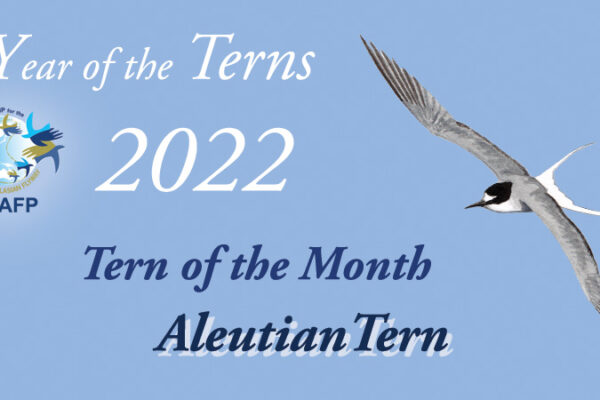
Aleutian Tern
©️ Kenneth LamCommon name: Aleutian Tern Scientific name: Onychoprion aleutica Local names: 白腰燕鸥 (Simplified Chinese), 白腰燕鷗(traditional Chinese), Алеутская крачка(Russian), 알류샨제비갈매기(Korean) , コシジロアジサシ(Japanese), Daralaut Aleutian (Indonesian), Camar Aleutian (Malayu). Conservation status: IUCN - VulnerableAleutian Tern (Onychoprion aleutica) is a representative of an East Asian-Australasian Flyway species. It is a medium-sized, coastal and colonial nesting seabird. The species was discovered in 1868 on Kodiak Island, Alaska, but studies are limited, mainly at breeding grounds. Its breeding ground Aleutian Tern is often found associated with Common Tern or Arctic Tern. The population of the bird is declining and listed as Vulnerable on the IUCN Red List.Identification Size: 32-28cm; wingspan 75-80cm. Body: mid-grey back and has long wings, the underparts are a dark gray, while rump and forked tail are white Head: Breeding – adults have black cap and lore with a white forehead, chin, throat, and cheeks; Juvenile: brownish crown, and upper body Underwing: dark leading edges on secondaries are diagnostic for identication. Beak: Black Legs: Short and blackDistribution rangeBreeding range: at colonies in coastal Siberia, including Sakhalin Island, the Kamchatka Peninsula, the Sea of Okhotsk, and in the Bering Sea at Olyutortskiy Bay and Karagin Island, while in Southwest Alaska, they were found in Kasegaluk Lagoon, on the Seward Peninsula, the Yukon-Kuskokwim River Delta, and along the Alaska Peninsula, as well as the Aleutian Islands, Kodiak Archipelago, Kenai Peninsula, Copper River delta, and along the Gulf of Alaska as far east as Dry Bay. Non-breeding range: in spring and autumn offshore across the East Asia region covering waters in Japan, Korea, China, including Hong Kong and Taiwan, and the Philippines, and in winter found in the tropical western Pacific region including Indonesia, Malaysia and Thailand. Recent vagrant records reached Australia.Habitat The Aleutian tern breeds on wetlands and solitary rocky islands along coasts, particularly at river mouths, along with sparsely vegetated shorelines, grassy meadows, and marshes. It is pelagic during the non-breeding season.BehaviorBreeding season occurs from May-August with egg-laying mostly in June, usually nesting among Arctic Terns in Alaska or Common Terns in Russia. Aleutian terns primarily feed on small fish, but also eat insects, crustaceans and zooplankton. They forage by flying, hovering low over water, and then surface-dip or pounce to take the food from the water surface.Population estimateAbout 31,000 mature individuals.Main threats Habitat degradation Egg harvest and hunting Human disturbanceNatural threats:Natural predators (e.g. American Mink, Fox, rats) and domestic dogsConservation WorkAleutian Tern Conservation Plan and a Statewide Aleutian Tern Colony Census Protocol in Alaska As Aleutian Tern is a species of USFWS and ADF&G “Species of Conservation Concern/Species of Conservation Need”, in 2016, an Aleutian Tern Technical Committee (ATTC) was formally established. The ATTC has members include representatives from US’s federal and state agencies, scientists, and NGOs. ADF&G and collaborators. The recent population declines triggered an assessment of the status of the birds in 2017.Fun Fact Aleutian Tern usually nests among Arctic Terns, who are known to be defensive of their nests, so they can take advantage of this behavior, while Aleutian Terns do not attempt to defend their own nests.Year of the Terns 2022Webinar on Chinese Crested Tern in the Yellow Sea and Seabird Conservation in ChinaBlack-naped TernWhite-winged TernGreater Crested TernRoseate TernBridled Tern11th Yakutat Tern FestivalLittle Tern“Year of the Terns” Flyway Story Series #16 – Prof. Daniel Roby, Seabird researcher and conservationist
Continue reading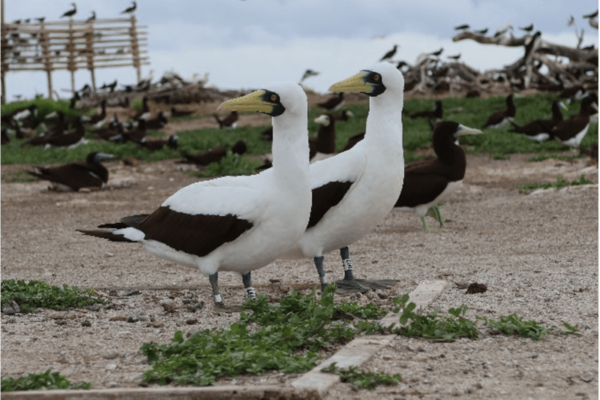
Masked Future
The article I wrote, ‘Are the Masked Boobies Home for Good In Tubbataha? A rollercoaster ride on the wings of hope’, was published at the East Asian-Australasian Flyway Partnership website in 2020. It was filled with hope and a smattering of apprehension and despair. Then, I was confident that we would see the resurgence of the masked booby Sula dactylatra population in the Tubbataha Reefs Natural Park Flyway Network Site (EAAF 123) in the Philippines. This singular pair of masked boobies known in the Philippines, has been with us since 2019. The second batch of eggs that it laid resulted in one chick that grew to five months, but which the rangers later found dead for unknown reasons. Marine park rangers regularly monitor the seabirds of Tubbataha, with special attention given to this finicky pair. Rangers built a complicated drainage network to rival that of ancient Rome to ensure the nests remain dry during the rainy season. They would practically walk on tiptoes around these celebrities for fear of causing undue stress. Five times more the pair laid eggs, usually a couple, and these would disappear without a trace, a mystery we have since brought to the attention of seabird experts worldwide through various seabird expert groups. Luckily for us, many were willing to help. Dr. Enriqueta Velarde of the Pacific Seabird group introduced us to Dr. Roxana Torres of the Universidad Nacional Autónoma de México, who specializes in boobies. Like us, Dr. Torres was disconcerted by the breeding failure of our Masked Boobies. At her behest, we tagged the two Masked Booby with metal and plastic ring bands during our seabird census in May 2022 for identification. We are poised to install a camera trap to monitor their breeding behavior and to identify the ‘thief’ of their precious eggs. And so, it is time to wait, to be patient, and to observe in silence. Figure 1. Park ranger, Segundo Conales, and reseracher, Ace Acebuque, installed rings on our lone Masked Booby pair. © B.Jimenez/TMO This couple laid seven pairs of eggs in two years, laying eggs almost every other month during the first quarter of this year alone. It earnestly wants to survive and is working double-time to perpetuate the species. As it is, we can but wait and do what little we can to unmask the future that lies ahead. Meanwhile, the Masked Booby colony we dream of will have to wait. Figure 2. Masked Booby 446 and 256 now sport colored and metal wedding rings. © R.Alarcon/TMO If you have any advice for us, we would be so happy to hear from you! Email Tubbataha at tmo@tubbatahareefs.org or message via Facebook page: @OfficialTubbataha Learn more about this site: https://eaaflyway.org/philippines/ Prepared by Angelique Songco, Superintendent, Tubbataha Reefs Natural Park Flyway Network Site
Continue reading