Co-organiser/s Wetlands International, EAAFP Science Unit, EAAFP Technical Sub-Committee, Asian Waterbird Census coordinators, Working Groups and Task Force Leads
Target Audience EAAFP Technical Sub-Committee, Asian Waterbird Census coordinators, Working Groups and Task Force Leads
Background
EAAFP MOP11 DD8 calls for improving knowledge of population size and trend estimates of migratory waterbirds in the East Asian – Australasian Flyway (EAAF). EAAFP Partners adopted Decision 12 at MoP10 that “Calls on the Monitoring Task Force to develop standardised guidance required for development and implementation of comprehensive national waterbird monitoring programmes.” This calls for a flyway-wide framework and protocols to be developed in consultation with Partners of the EAAFP, Working Groups/Task Forces, Asian Waterbird Census (AWC) Coordinators, and other key players, guided/supported by the EAAFP Waterbird and Wetland Monitoring Task Force with oversight of the Technical Sub-Committee. Wetlands International is offering to lead the Task Force.
In October 2024, back-to-back with the Flyway Science Symposium in Beijing, a meeting was held for the EAAFP Technical Sub Committee, Working Group and Task Force leads to promote waterbird monitoring in the flyway. Outcomes are described in EAAFPMOP12 Doc.8_Report_of_the_Technical_SubCommittee, and these make the starting point for further discussion in this side event. Further reference can be made to EAAFPMOP12 Draft Decision 18 on the EAAFP Science Strategy.
Alignment with the EAAFP Strategic Plan (2019–2028)
The side event addresses Strategic Plan Objective 3 KRA 3.1 National monitoring systems to assess the status of migratory waterbirds and their habitats are established, maintained and further enhanced, Indicator 3.1.1 A standardized monitoring methodology for migratory waterbirds and their habitat is developed and used in nationally coordinated monitoring programmes, and Indicator 3.1.2 All country partners have nationally-coordinated monitoring programs in place.
Objectives
This meeting aims to bring together representatives of key organisations, leads of Working Groups/Task Forces, AWC Coordinators, and other selected experts to discuss:
• options and next steps to implement this work
• mobilise the EAAFP Waterbird & Wetland Monitoring Task Force to lead this work
Expected Outcomes
Agreed next steps towards a functioning EAAFP Waterbird & Wetland Monitoring Task Force, with agreed roles and ingredients for a workplan.
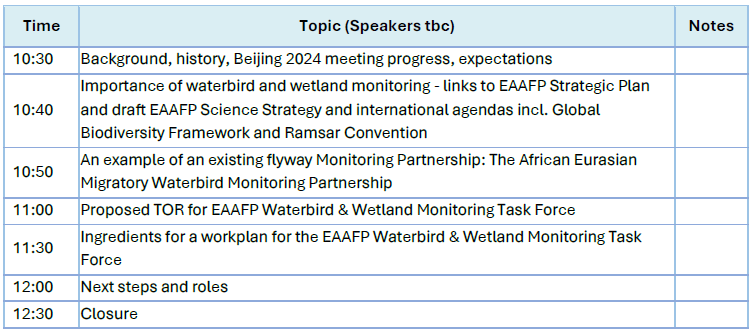
Tentative Programme
The outcomes of this event will be reported back to plenary.