

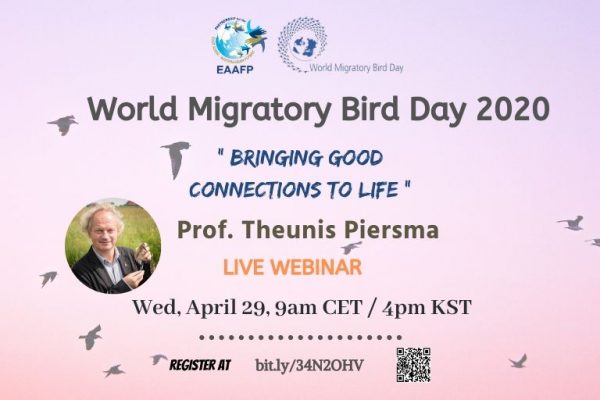
Bringing Good Connections to Life – EAAFP 2020 World Migratory Bird Day Webinar by Theunis Piersma
Continue readingThis year the theme of World Migratory Bird Day is “Birds Connect Our World”, to highlight the importance of conserving and restoring the ecological connectivity and integrity of ecosystems that support the natural movements of migratory birds. The COVID-19 pandemic did not stop us from being connected. In this Webinar, we have invited Prof. Theunis […]

Celebrating World Albatross Day on 19 June, 2020!
Continue readingTo raise awareness that thousands of albatrosses, petrels and shearwaters dying every year as a result of fisheries operations and other human-induced threats, the Agreement on the conservation of Albatrosses and Petrels (ACAP) is inaugurating a World Albatross Day (WAD), to be held annually from 2020 on 19 June, the date the Agreement was signed in […]

“Year of the Cranes” Story series #3 – What do farmers do in winter in Korea? They help to count cranes!
Continue readingEvery year after harvest of rice in Cheorwon, a place in Ro Korea close to the border of DPR Korea, farmers laid down their farming equipment and picked up other tools – binoculars and cameras – and contribute to the conservation of cranes. As Cheorwon is a fertile place with clean water flowing from the […]
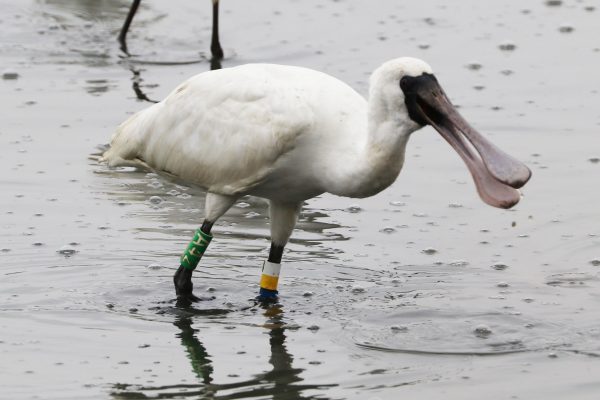
Birdwatchers, you can join us to conserve Black-faced Spoonbill! – Call for re-sighting records of individually-marked Black-faced Spoonbills
Continue readingEAAFP Black-faced Spoonbill Working Group is a group of researchers working on a Black-faced Spoonbill conservation project. One of the goals is to quantify the variation in survival rate overtime and between wintering sites. We therefore need EVERY resighting record of individually-marked Black-faced Spoonbill. There have been about 700 Black-faced Spoonbill individually-marked so far and 500 […]

”Flyway: connecting people and migratory waterbirds” story series #3 – Interview with China Coastal Waterbird Census Team”
Continue readingOur 3rd interviewee of ”Flyway: connecting people and migratory waterbirds” story series is a group of people, they are China Coastal Waterbird Census (CCWC) Team, who are a group of armature bird watchers devoted to waterbird monitoring for 15 years. EAAFP: Can you briefly introduce China Coastal […]
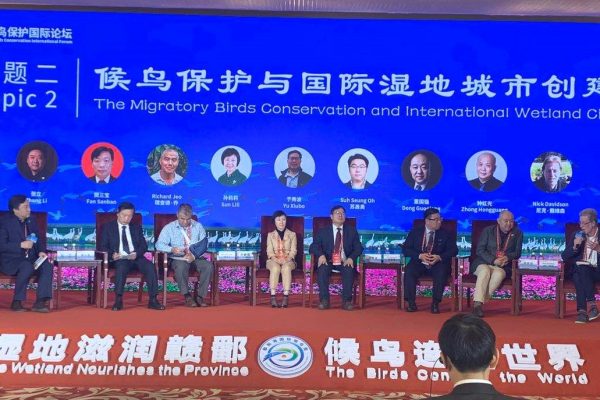
Nanchang Declaration released to urge effective conservation of wetlands and migratory birds during Poyang International Forum
Continue readingOn December 7th 2019, the “International forum on migratory bird protection of Poyang lake” was co-organized by Science Unit of EAAFP with Jianxi Provincial government, as a part of the 1st Poyang Lake International Birdwatching Week, nearby Poyang Lake, one of very important Flyway Network Sites and Ramsar Sites in the Yangtze River basin, broadly […]

A National Workshop for Flyway Network Site Managers Held in Japan
Continue readingFrom 30 to 31 October 2019, at the Lake Utonai Wildlife Conservation Center in Tomakomai, Hokkaido, a workshop for EAAFP Flyway Network Site (FNS) managers in Hokkaido area was held by the Ministry of the Environment (MoE) in cooperation with Tomakomai City. Total 24 participants from local government, visitor center, and stakeholders for the FNS […]
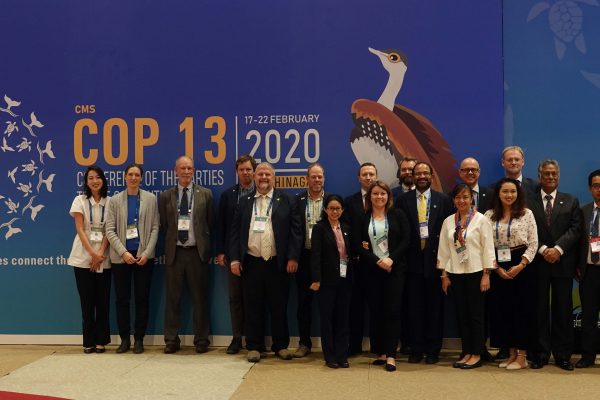
EAAFP engagement at CMS COP13 with the theme of “Migratory species connect the planet and together we welcome them home”
Continue readingConvention on the Conservation of Migratory Species of Wild Animals (CMS) is one of EAAFP’s intergovernmental organization Partners and has been collaborating with EAAFP closely since the early stage when EAAFP was established. EAAFP has worked with CMS on promoting World Migratory Bird Day and developing the Species Action Plans for Black-faced Spoonbill, Spoon-billed Sandpiper, […]
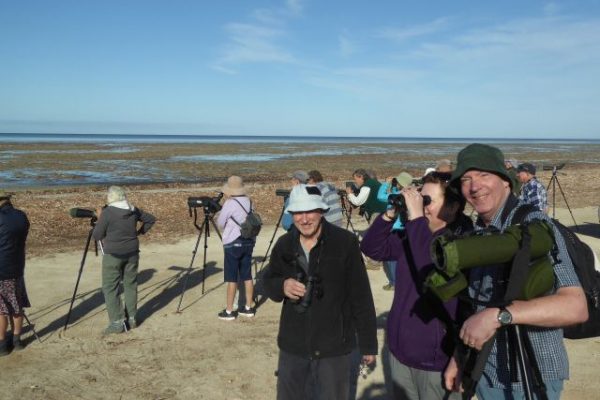
Thompson Beach attracts international birders – Friends of Adelaide International Bird Sanctuary (FAIBS) Event at Thompson Beach
Continue readingOn Sunday, 15th March, FAIBS enjoyed welcoming two ‘migratory humans’ to their bird viewing event at Thompson Beach in Australia. Richard and Frances Castle, from North Staffordshire, England, are having holiday in Australia and visiting internationally recognized birding places such as Thompson Beach as they travel around. Richard is a qualified bird bander with world-wide […]
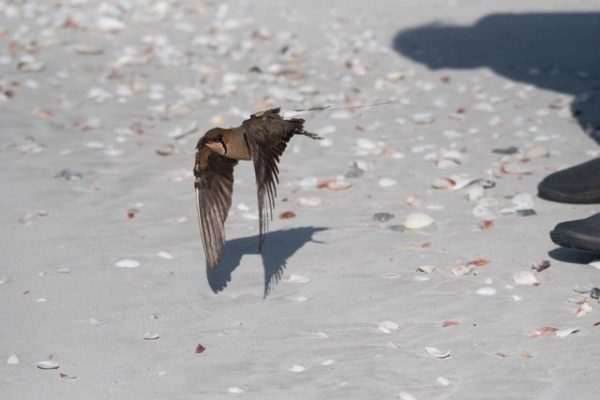
AWSG North-west Australia Satellite Tracking Project 2020 – Update #1
Continue readingThe Australasian Wader Studies Group (AWSG) has been using satellite transmitters for tracking the migration of shorebirds visiting North West Australia since 2013. It is exciting to track birds with satellite transmitters because up-to-date location data is received as the bird flies or rests after migration. This occurs almost in real time or at a […]
