International Biodiversity Day – 22 May 2025
As we listen to the songs of birds during their breeding season and the calls of shorebird flocks heading north to their nesting grounds, we are reminded that birds are not merely visitors—they are fellow inhabitants of our planet, sharing our spaces and enriching our lives.
Biodiversity is not simply the variety of life on Earth; it is the very foundation of our survival, well-being, and prosperity. From the food we eat and the air we breathe to our cultural identity and economic development, biodiversity underpins it all. Yet it is increasingly threatened by habitat loss, pollution, overexploitation, and climate change.
Migratory birds are a powerful symbol of our interconnected natural world. These species play vital roles in ecosystems across the globe—controlling pests, dispersing seeds, and supporting nutrient cycling. Their epic journeys span continents and oceans, linking breeding grounds, stopover sites, and non-breeding areas across regions and countries.
The continued presence of migratory birds at these sites is a strong indicator that ecosystems remain healthy, resilient, and connected. As sensitive responders to environmental change, they serve as vital indicators of ecological health, reflecting shifts in climate and habitat availability.
Protecting migratory birds, therefore, requires more than conserving individual species. It demands safeguarding genetic and habitat diversity, as well as preserving the vast networks of ecosystems and the ecological connectivity upon which these birds rely. This calls for collaborative, cross-border conservation efforts—an approach championed by the East Asian–Australasian Flyway Partnership (EAAFP). Through its work, 42 Partners, including 18 national governments and 24 non-governmental organisations, collaborate to shape a shared future for migratory waterbirds, their habitats, and the communities who live alongside and depend on them.
In partnership with the Convention on Biological Diversity (CBD), the EAAFP contributes to the global biodiversity agenda, advancing nature-positive outcomes and enhancing ecological connectivity across the Flyway.
At the heart of global conservation efforts lies the Kunming-Montreal Global Biodiversity Framework (KMGBF). Adopted under the CBD, the KMGBF sets out a bold and comprehensive roadmap to halt and reverse biodiversity loss by 2030. It is closely aligned with the 2030 Agenda for Sustainable Development and its 17 Sustainable Development Goals (SDGs).
Biodiversity is central to sustainable development. It supports food security, public health, clean water, climate resilience, and livelihoods. The KMGBF acknowledges that achieving its vision of “living in harmony with nature” will require transformative change—reforming the ways we manage agriculture, industry, energy systems, urban development, education, and more.
Today’s rapid environmental changes and escalating development pressures urge us to rethink how we plan for the future—honouring our shared responsibility to nature. Amidst differing perspectives from developers, conservationists, businesses, communities, and individuals, finding balance—envisioning a future where nature and birds thrive—means creating a world that benefits all life.
The successful implementation of the KMGBF and the SDGs depends on inclusive and collective action. Governments cannot achieve this alone. The active involvement of all sectors—Indigenous Peoples and local communities, businesses, scientists, women, youth, and civil society—is essential. Only through shared responsibility and coordinated efforts can we realise a nature-positive future that benefits both people and the planet.
As we mark International Biodiversity Day, let it be both a celebration and a call to action. Let us recognise the irreplaceable value of nature and reaffirm our commitment to protecting migratory waterbirds, their habitats, and the lives of the people connected to them. Through international cooperation, informed strategies, and inclusive governance, we can preserve our shared natural heritage—and honour the journey of our winged travellers—for the benefit of present and future generations.
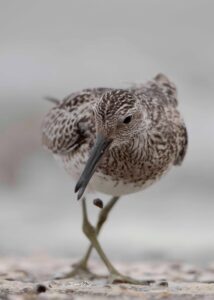
ⓒ Eugene Cheah
More information: https://www.cbd.int/biodiversity-day