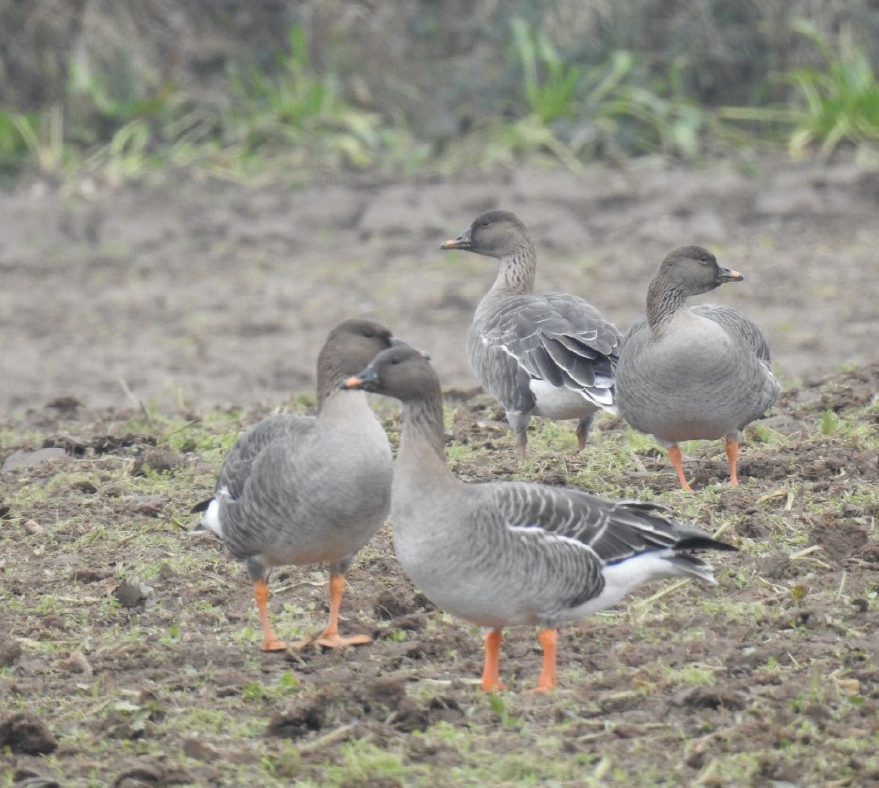
The Goose Specialist Group (GSG) has released Issue 31 of the Goose Bulletin in November 2025, presenting a diverse collection of scientific insights, project updates, and commemorative pieces from the international waterfowl research community. The latest issue highlights new findings from Europe and Asia, citizen-science initiatives, conservation challenges, and historical reflections on influential ornithologists.
The issue opens with Petr Musil’s short report on the 21st Goose Specialist Group Conference, offering a concise overview of key discussions, emerging research topics, and collaborative priorities for the coming years.
From France, Matthieu Guillemain provides a preview of the upcoming International Scientific Congress on Waterfowl, scheduled for March 2028. His article outlines the event’s scientific themes and emphasizes opportunities to strengthen partnerships across continents.
A central feature of this edition is the GSG Board’s guidance on good research practices, underscoring the importance of methodological rigor, ethical standards, and data transparency for goose specialists worldwide.
Among the most innovative contributions is the article by Takashi Shimada and colleagues, introducing the Swan Project, a public bird-migration tracking initiative powered by citizen science. The project demonstrates how community engagement and accessible technology can advance both scientific research and environmental awareness.
Another notable study comes from Ari Haapanen and team, who examine the dramatic population crash and subsequent recovery of the Lesser White-fronted Goose in relation to historical nuclear weapons testing. Their work sheds new light on the long-term ecological consequences of anthropogenic disturbances.
From India, Anwaruddin Choudhury reports on the status of Anser geese in Assam, offering fresh observations and conservation recommendations for this important region along the Central Asian Flyway.
In the Republic of Korea, Hyun-Ah Choi highlights a recent roundtable on citizen-science approaches for Swan Goose conservation in Paju City, emphasizing local engagement as a vital component of flyway-scale conservation strategies.
The issue also includes two reflective pieces by Johannes H. Mooij. The first is an obituary for renowned ornithologist Eugeniusz Nowak (1933–2024), honoring his lifelong contributions to avian science. The second revisits the legacy of Peter Simon Pallas (1741–1811), one of the most influential naturalists in the history of waterfowl research.
Rounding out the publication is a curated list of new waterfowl-related publications from 2024–2025, offering readers a comprehensive resource on the latest scientific literature.
With its broad geographic scope and rich thematic diversity, Goose Bulletin Issue 31 underscores the continued importance of international collaboration in understanding and conserving waterfowl populations across the globe.
Read: https://eaaflyway.org/wp-content/uploads/2025/12/Goose-Bulletin31-Swan-Goose-WS-part.pdf