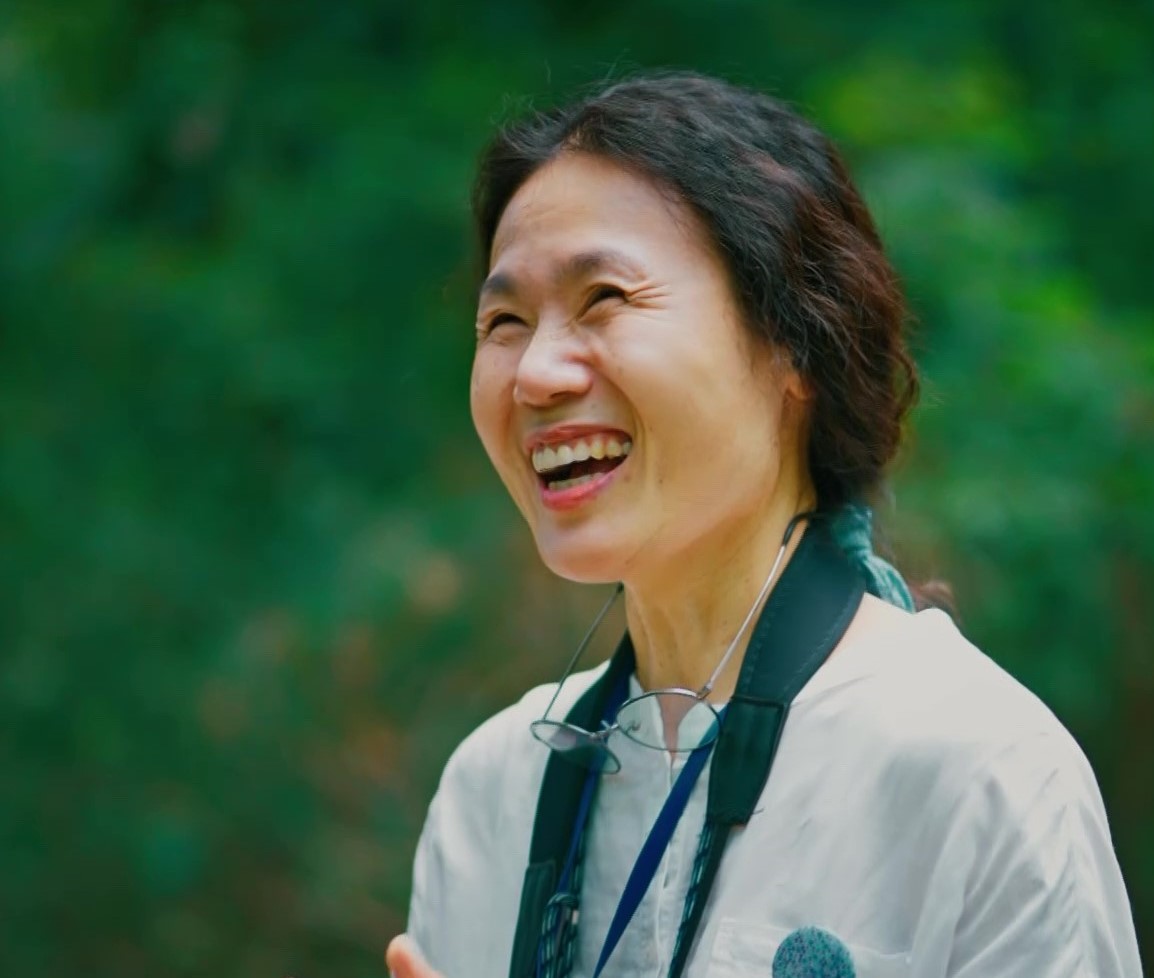
In this issue of Flyway Story, we invited Imja Park, who is the representative of the Birdwatching Bookstore and the leader of the Apartment Birdwatching Team.
“We walk because we love birds, and while walking, we naturally come across the environments and habitats where the birds live. This inevitably leads to an increased interest in those habitats and the surrounding environment.” — Ms. Imja Park
EAAFP: Hello, Donor Imja Park. Could you please introduce yourself?
Imja Park: Hello, I’m Imja Park, the owner of the Birdwatching Bookstore. I first encountered birds in 2015, and when I realized such magnificent creatures share our everyday lives, I became deeply fascinated by birdwatching. After six years, in 2021, I opened the Birdwatching Bookstore at the Gyeonggi Sangsang Campus in Suwon, where I run a bookstore offering birdwatching-related books all in one place. I also organize various birdwatching programs every month to help those who are starting birdwatching experience it easily.
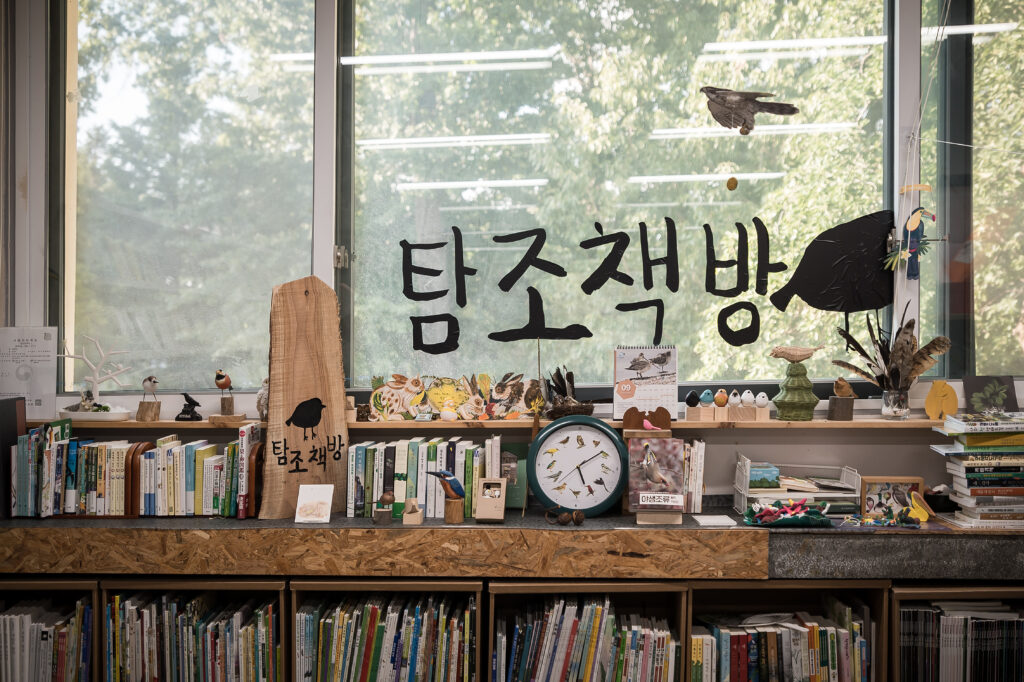 The Birdwatching Bookstore in Gyeonggi Sangsang Campus ©Imja Park
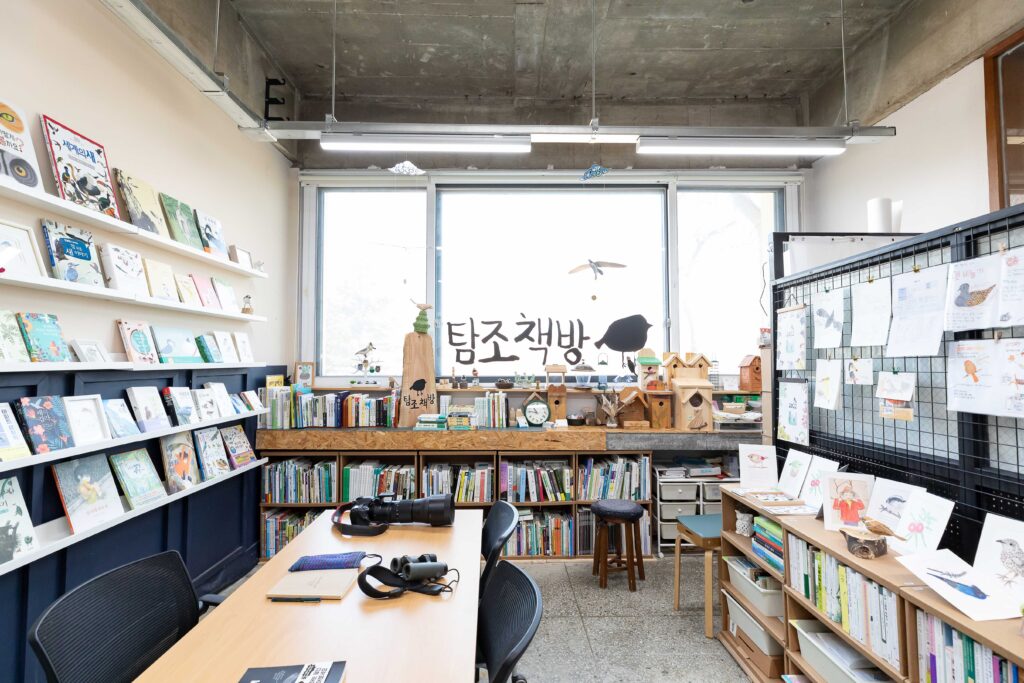 Inside the Birdwatching Bookstore ©Imja Park
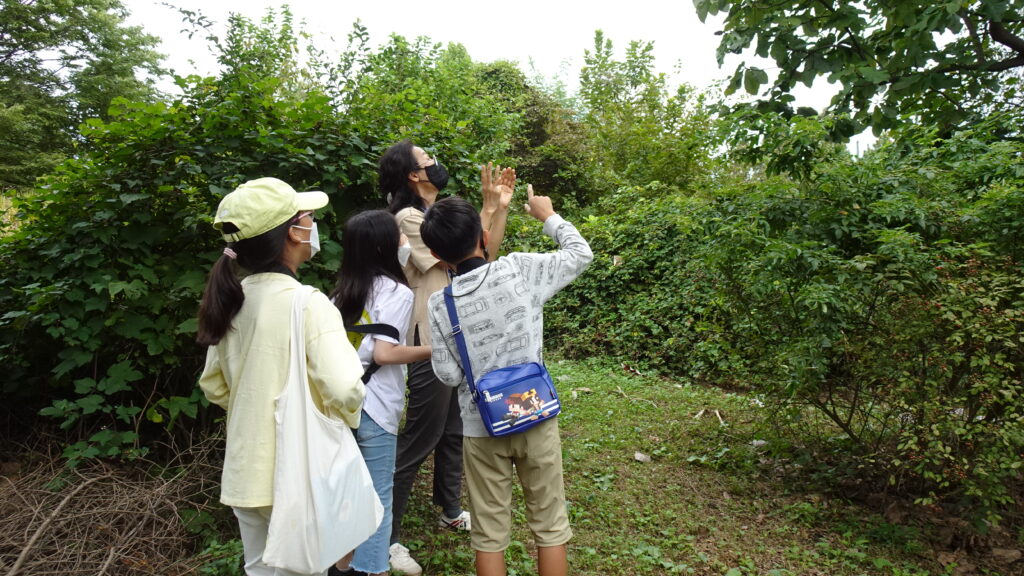 Birdwatching program organized by the Birdwatching Bookstore ©Imja Park
EAAFP: You first became aware of birds in 2015 and became fascinated with birdwatching. What bird was it? Why was it special?
Imja Park: It was a Brown-eared Bulbul. Before that, I had no interest in birds at all, so I didn’t even know they existed. But when I started birdwatching, the first bird I saw was a Brown-eared Bulbul. After that, I began noticing them everywhere in my neighborhood, hearing their calls constantly, and it was shocking. I was amazed not only by how many Brown-eared Bulbuls there were, but also by the fact that I had never recognized their presence despite hearing their distinctive calls all day long. It was a huge shock to realize I hadn’t noticed them before.
EAAFP: What inspired you to participate in the EAAFP World Migratory Bird Day Lucky Box event?
Imja Park: Last November, I attended the Asian Bird Fair and came across the EAAFP Secretariat booth. That’s when I signed up for regular sponsorship, and I was really happy to receive the wonderful Lucky Box as well.
EAAFP: What inspired you to become interested in the conservation of migratory waterbirds and their habitats?
Imja Park: Through my encounters with birds, I started visiting Incheon frequently. I witnessed the development process of an area where the Eurasian Oystercatcher used to breed, and seeing their habitat being lost due to human encroachment made me become interested in habitat conservation.
EAAFP: If you have any memorable birdwatching experiences, please feel free to share your thoughts and feelings about them.
Imja Park: In 2020, due to the challenges posed by COVID-19, I started observing and recording birds from my apartment. Now, I’ve been involved in the ‘Apartment Birdwatching Team’ project for three years, continuing to document the birds. In Suwon, I’ve chosen four areas where I regularly do birdwatching with others while also monitoring and recording the birds. Since I live in the inland area of Suwon, there aren’t many activities related to waterbirds, but at Ilwol Reservoir, next to the soon-to-be-created Suwon (Ilwol) Arboretum, I’ve been consistently observing and recording waterbirds for the past two years.
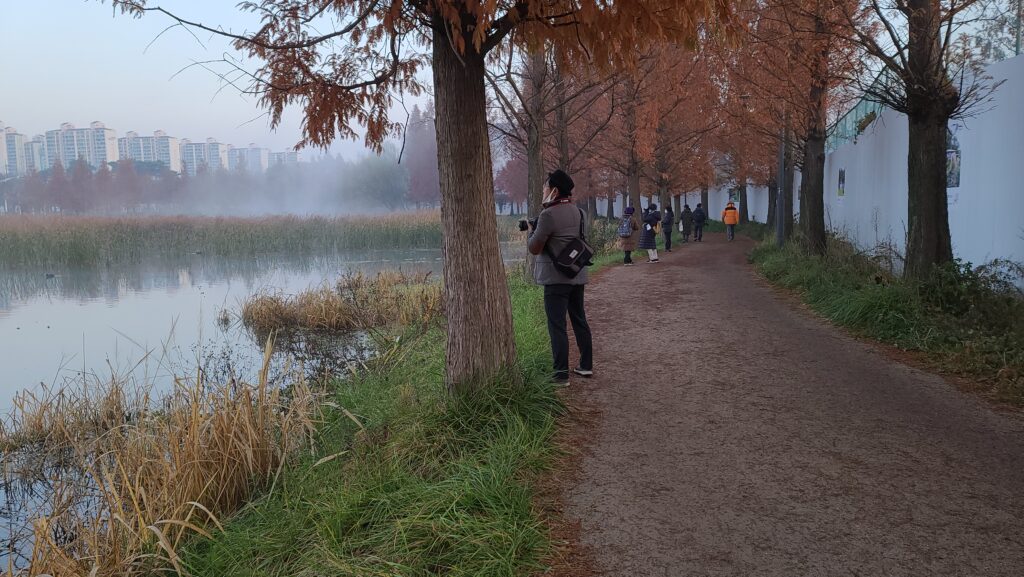 Birdwatching monitoring activity at Ilwol Reservoir ©Imja Park
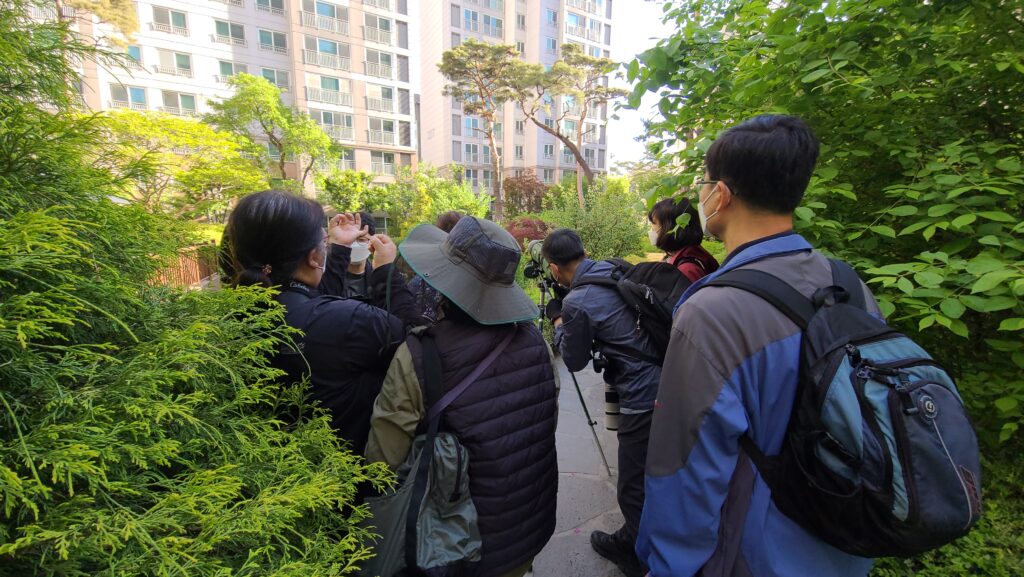 Birdwatching by the Apartment Birdwatching Team ©Imja Park
EAAFP: How can birdwatching activities lead to bird and habitat conservation?
Imja Park: A few days ago, I visited the monthly ‘Sura Mudflat’ event held in Saemangeum. If I hadn’t gone there and walked on that land, I might have thought that Saemangeum was already done for. But by simply seeing the birds and observing the area, I could feel that it’s still intact. Similarly, in Suwon, I organize monthly birdwatching walks under the name ‘Bird Walk’ at four locations, including reservoirs. Since we walk in these places every month, we quickly notice even small changes. We walk because we love birds, and while walking, we naturally come across the environments and habitats where the birds live. This inevitably leads to an increased interest in those habitats and the surrounding environment.
I started birdwatching in my apartment complex in January 2020, when the pandemic began. Initially, I had no interest in the apartment complex itself, but I started walking around it to see if I could spot any birds. After that, I couldn’t help but become interested in the apartment complex itself. Birdwatching is not just about watching birds; by continually observing the same places, I began to notice the environments around the birds. Ultimately, this led to an interest in the environment, and it naturally became an environmental movement. I believe that simply getting people interested in birdwatching is already the beginning of an environmental movement. At the bookstore, I focus on offering beginner birdwatching courses. By making it easy for anyone to learn how to use binoculars and how to birdwatch, people naturally start birdwatching in the areas near where they live.
EAAFP: What do you think is the biggest issue in the conservation of migratory waterbirds and their habitats?
Imja Park: I believe the biggest issue is the loss of foraging spaces for migratory waterbirds due to land reclamation, such as mudflat reclamation. The problem of waste in the oceans, like fishing nets, plastic, and other debris, is also very serious.
EAAFP: What are your plans to connect more people with birds?
Imja Park: I plan to continue with apartment birdwatching and urban birdwatching, helping people who have never tried birdwatching to start easily. I want to keep running the Birdwatching Bookstore to show that birdwatching is not difficult and that anyone can do it, making people realize how easy and enjoyable it is.
EAAFP: EAAFP is currently working on various fronts to promote the conservation of migratory waterbirds and their habitats, such as public awareness education programs, support for NGOs, and corporate champion programs. Among these, “public awareness” is essential for ensuring a future where migratory waterbirds and humans can coexist. What kind of information or opportunities do you think EAAFP should provide to increase public awareness? How can we teach the importance of environmental protection to future generations, especially children?
Imja Park: Recently, many family groups have been visiting the Birdwatching Bookstore. I’ve noticed that as children start birdwatching, their parents naturally become more interested in it as well. If we provide families with various birdwatching opportunities, especially in areas where habitat protection is needed, I believe that through those birdwatching experiences, they will naturally begin to think more about the environment. I support the activities of EAAFP!
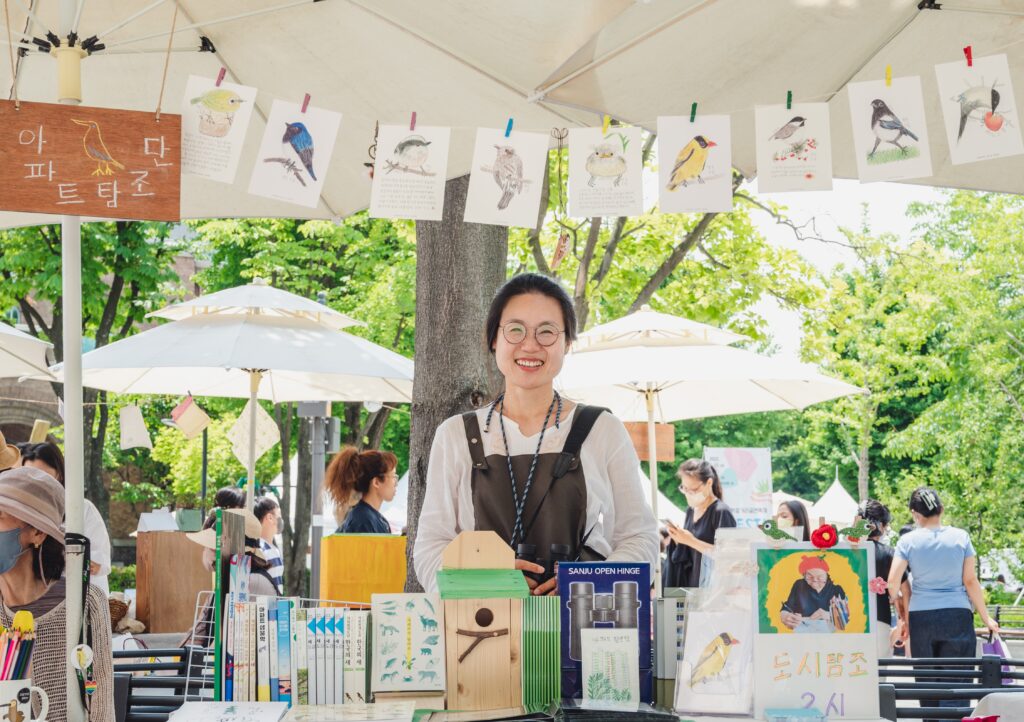 Booth activities by the Apartment Birdwatching Team ©Imja Park
Korean article: https://foundation.eaaflyway.net/eaafp-인터뷰-시리즈-_-박임자-후원자님/
Birdwatching Bookstore Instagram https://www.instagram.com/_bird_books/
Birdwatching Bookstore Blog https://blog.naver.com/freebelt
Naturing Mission <Apartment Birdwatching Team> https://www.naturing.net/m/3832/summary
Facebook Group <Apartment Birdwatching Team> https://www.facebook.com/groups/1803333173156369