


EAAFP Foundation 2021-2022 Small Grant Winter Project Reporting Workshop
On 26th May, the EAAFP Foundation organized the 2021-2022 Small Grant Winter Project Reporting Workshop online. The 2021-2022 Small Grant Programme was sponsored by the Korea South-East Power Co., Ltd. Yeongheung Power Division (KOEN) with support from Hanns Seidel Foundation (HSF). Following the first workshop last year in 2021, the Foundation have implemented its own Small Grant Programme to support the efforts of the civil society organizations in the Republic of Korea by providing small grant to local projects that aim to conserve migratory waterbirds and their habitats. 8 winter projects were selected and implemented from October 2021 to March 2022. The organizations reported the outcomes of their projects, shared their achievements and discussed improvements. In addition, a short introduction on the 2022-2023 Small Grant Programme was provided for recruitment later this year. The Foundation’s 2022 World Migratory Bird Day donation lucky box event was also presented to the participants. <Learn more about 2021-2022 Small Grant Programme> (in Korean) The 8 grantee NGOs included: 1) Ganghwa Citizen Network, 2) Tidal flat Ecological Education Hub Moolseal, 3) Cheorwon DMZ Crane Eco-tourism group, 4) Wetlands and Birds Korea, 5) Yeoncheon Geological Ecology Network, 6) DMZ Ecology Research Institution, 7) Global Future Environment Association, and 8) KFEM Incheon The representative of the KOEN, HSF, and staff members of the EAAFP Secretariat and the Foundation attended the workshop as well. To kick off the workshop, Mr. Doug Watkins, the Chief Executive of the EAAFP Secretariat and the Chairperson of the EAAFP Foundation gave a congratulatory remark. He expressed gratitude to KOEN and HSF for their financial supports to run the Small Grant Programme, and to 8 participating NGOs for their efforts to conserve the migratory waterbirds and their habitats. He concluded by expressing his wish to continue the cooperation between the EAAFP Foundation and the sponsoring organization and with grantee organizations. Dr. Bernhard Seliger, the Resident representative of Hanns Seidel Foundation Korea, gave his pre-recorded remark. He expressed pleasure for the first step in supporting the small grantees to strengthen communication and help manage the habitats of waterbirds in inner boarder areas of RO Korea. Lastly, the congratulatory speech from Mr. Sun Hyeon Jeong, a senior manager of Environment Technology Department at KOEN Yeongheung Power Division. He said, “We will keep supporting the EAAFP and small grantees to maintain the stabilized relations with EAAFP built over the past 5 years and to protect migratory waterbirds around the border”. Presentation from Ganghwa Citizen Network ©EAAFP Foundation The reporting was proceeded in two separated sessions. During the first session, the Ganghwa Citizen Network gave the first reporting presentation with the project title ‘2021 Crane School-Go on a crane trip’. The organization prepared the project due to a lack of recognition on cranes and emphasized the necessity of recording investigation of cranes and provision of safe environment habitats through the Ganghwa crane monitoring activity. Presentation from Cheorwon DMZ Crane Eco-tourism group ©EAAFP Foundation The second reporting was by Cheorwon DMZ Crane Eco-tourism group, with the project title ‘Feeding and Population Surveys of Cranes’. He analyzed the suitability of Cheorwon Basin (One of EAAFP Flyway Network Sites EAAF 027) as a place for wintering sites and suggested the need for a map with the number of crane populations and their wintering areas. Presentation from KFEM Incheon ©EAAFP Foundation The third reporting followed by KFEM Incheon with the project called ‘A Report on the Monitoring Results of Natural Monuments and Crane Wintering Site’. The project aimed to increase the awareness of conserving the crane’s habitats. With the explanation of the project, the presenter shared the photos at the site with citizen participants and two ecology experts. Presentation from Tidal flat Ecological Education Hub Moolseal ©EAAFP Foundation For the last presentation of the first reporting session, Tidal flat Ecological Education Hub Moolseal shared the outcome of the project, ‘Wintering with Cranes’. They investigated the current habitats of cranes through two monitoring sessions and insisted the importance of preparing resolutions for conserving crane groups in Ganghwa tidal flat. After the break, the participants watched <Bird Meets Arts> summary video produced with the Yeonsu Foundation for Arts and Culture, and the video of Black-faced Spoonbill migrating between Incheon and Hong Kong. Wetlands and Birds Korea ©EAAFP Foundation The second reporting session was proceeded with a presentation from Wetlands and Birds Korea. Through an ‘A Round-table Conference with Local Organizations from Migratory Waterbirds Flyway,’ they announced 2022 Wetland Day Joint Statement between Korea and Japan, and discussed the role for the registration of Korean tidal flats to UNESCO. Presentation from Global Future Environment Association ©EAAFP Foundation Second reporting of the 2nd session was proceeded by Global Future Environment Association, with the project title ‘Research on Ecological Services at Habitats for Migratory Waterbirds in Incheon Economic Free Zone(IFEZ) and Quality of the Habitats’. The project quantified the damage to tidal flats and wetlands located in the Incheon Economic Free Zone, which developed rapidly, to analyze the ecological value as a habitat for migratory waterbirds. Presentation from Yeoncheon Geological Ecology Network ©EAAFP Foundation The last reporting was provided by Yeoncheon Geological Ecology Network about the project, ‘Monitoring Winter Migratory Waterbirds and training for civic scientists in Chatancheon stream, Yeoncheon’. They implemented about 20 sessions of migratory waterbirds monitoring activity and expressed strong ambitions to increase the value of Yeoncheon Imjin-river ecosystem conservation sites through the continuous monitoring and expansion of civil participation activities. After the second reporting session, Ms. Yoon Lee, the External Relations Manager at EAAFP Secretariat introduced the 2022-2023 Small Grant Programme. The detailed information of the programme will be uploaded to EAAFP Foundation website in July, and after the application in August, the result of the selected projects will be notified in September. Lastly, EAAFP Foundation promoted the lucky box event to celebrate the World Migratory Bird Day and encouraged the participants to join the event for the migratory waterbirds and their habitats. The final report for the 2021-2022 Small Grant Programme will be uploaded to the EAAFP Foundation website. Group Photo at 2021-2022 Small Grant Winter Programme Reporting Workshop ©EAAFP Foundation About EAAFP Foundation in Korean (full version) and English summary. <About EAAFP Foundation> The EAAFP Foundation was established in 2019 to contribute to providing the Partnership with a mechanism to support sustainable financing and expand its engagement with various types of organizations for the conservation of migratory waterbirds and habitats in EAA Flyway. The Foundation office is based in Songdo, Incheon, Republic of Korea. For more information, visit EAAFP Foundation.
Continue reading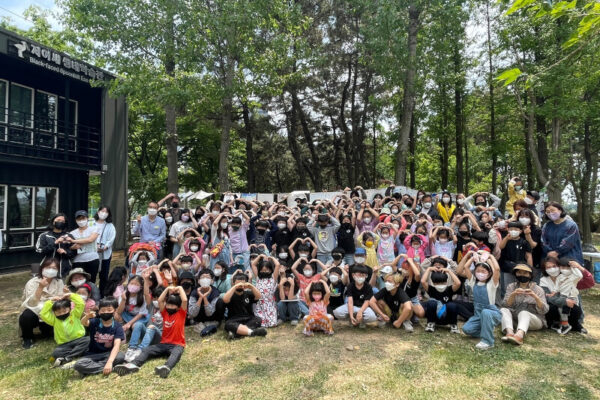
2022 Black-faced Spoonbill Birthday Party in Namdong Reservoir, Ro Korea
©EAAFP Secretariat In recent years, Black-faced Spoonbill (BFS) have come back to breed on the small artificial islets in Namdong Reservoir, Incheon, Ro Korea, thus becoming a flagship species for Incheon. To raise awareness to the general public about migratory waterbirds, especially the key species Black-faced Spoonbill, on 21st May 2022, the Incheon Black-faced Spoonbill Network hosted the 2022 Black-faced Spoonbill Birthday Party at the BFS Ecological Center, and over 250 people attended. The BFS birthday party is an annual event hosted by the Incheon BFS Network which commemorates the arrival and breeding of Black-faced Spoonbill in Namdong Reservoir, Incheon. Due to the lifted social distancing regulations, the BFS Birthday Party attracted around 250 children and parents interested in nature and the conservation of the Black-faced Spoonbill. The event organizers also took actions for “Practical volition for the Earth” and minimized the use of disposable goods. Various activities including the BFS art contest, birdwatching, writing postcards to politicians and the government, building birthday cakes from natural objects, and a birthday party for BFS were provided to eager young participants. The EAAFP Secretariat also participated in the event as an associated organization and ran a booth – led by Ms. Jisun Lee, the Foundation coordinator of the EAAFP secretariat, and two volunteers. The booth, which provided a modified version – akin to a treasure hunt – of the BFS Lolo’s Flying Journey game and distributed flyers about EAAFP and waterbirds that migrate via EAAF, was very popular among the participants. In the modified Lolo migration game, children had to spot 5 locations hidden around the event venue and answer questions about BFS at each point. The original game, titled “Lolo’s Flying Journey,” was developed by WWF Hong Kong and recently modified in collaboration with the EAAFP Secretariat under the Incheon-Hong Kong Sister Site Arrangement signed in 2019. Both children and parents listened attentively to the explanation by the staff and gained a better understanding of East Asian-Australasian Flyway and environmental conservation.Entries for the BFS Art Contest / ©EAAFP SecretariatEAAFP Booth / ©EAAFP SecretariatMr. Doug Watkins, Chief Executive of EAAFP, gave congratulatory remarks at the BFS Birthday Party, and highlighted the importance of BFS, BFS’s adaption to the newly constructed artificial habitat, and EAAFP’s work in the conservation of the endangered species. He shared his hope to work together with the local communities for the better management of the BFS habitats before the closing of the event. The event ended with an exuberant sing-along of a song dedicated to BFS nesting in Namdong reservoir. Congratulatory remarks from EAAFP Chief Executive Mr. Doug Watkins/ ©EAAFP Secretariat This is also the first time EAAFP Secretariat recruited local volunteers for conservation activities. The volunteers commented that “the ardent reactions from the children made me believe that we still have high hopes for the future, and volunteering for EAAFP was simply marvelous." To learn more about Black-faced Spoonbills, click here. For more on the EAAFP Volunteer Programme, click here. 지난 5월 21일, 인천 저어새네트워크 사무국은 저어새 생태학습관에서 ‘2022 저어새 생일잔치’를 개최해 250여명이 참석했다고 밝혔다. 2022 저어새 생일잔치 참가자 단체사진 / ©EAAFP 사무국 저어새 생일잔치는 인천 남동 유수지에서 저어새의 도래와 번식을 기념해 인천 저어새네트워크 사무국이 매년 주최하는 행사다. 이번 행사의 경우 사회적 거리두기 규제가 풀리면서 환경에 관심이 많은 어린이와 학부모 250여명이 몰릴 만큼 큰 인기를 끌었다. 행사 주최 측은 행사를 진행하는 동안 일회용품 사용을 최소화하는 등 “지구를 위한 실천적 의지”를 실행하기 위해 노력하였다. 본 행사는 특히 연령이 낮은 참가자들이 즐길 수 있는 저어새 그림 그리기 대회, 탐조, 정치인과 정부에 보내는 엽서 쓰기, 자연 속 재료로 생일 케이크 만들기, 저어새 생일잔치 등 다양한 활동으로 구성되었다. 또, 본 행사의 관련 단체로서 EAAFP 사무국의 이지선 재단 코디네이터와 자원봉사자 2명이 홍보 및 이벤트 부스를 운영하였다. 참가자들은 보물찾기와 비슷한 방식인 ‘저어새 롤로의 하늘을 날으는 여행 게임’과 동아시아-대양주 이동경로를 통해 이동하는 물새에 대한 교육자료에 큰 흥미를 보였다. 저어새 롤로의 비행 여정 게임을 풀기 위해서는 행사장 주변에 숨겨진 다섯 곳을 찾아내어 저어새에 관한 질문에 답해야 했다. 이 게임은 본래 ‘저어새 롤로의 하늘을 날으는 여행’이라는 이름의 WWF 홍콩이 개발한 게임이며, 2019년 체결된 인천-홍콩 자매 협약에 따라 EAFP 사무국과 함께 수정되었다. 어린이와 학부모 모두 부스 운영진의 설명을 경청하며 동아시아-대양주의 이동경로와 환경보전에 대한 이해를 높이는 시간을 가졌다.저어새 그림 그리기 대회 / ©EAAFP 사무국EAAFP 사무국 부스 게임 참여 모습 / ©EAAFP 사무국EAAFP의 더그 왓킨스 대표는 저어새 생일잔치에서 축사를 하면서 저어새와 인천 남동 유수지 내 인공 서식지에 적응하는 것의 중요성, 그리고 멸종 위기에 처한 종 보호에 대한 EAAFP의 노력을 강조하였다. 또한 보다 체계적인 서식지 관리를 위해 지역 사회의 관심과 동참을 희망하였다. 마지막으로 남동 유수지를 방문하는 저어새를 위한 노래를 따라 부르며 행사를 마무리하였다. EAAFP 더그 왓킨스 대표의 축사 / ©EAAFP 사무국 EAAFP 사무국이 철새 보존 활동을 위해 지역 자원봉사자들을 모집한 것은 이번이 처음이며, 자원봉사자들은 “아이들의 열렬한 반응은 미래 세대의 환경 보전에 대한 높은 기대와 희망을 가질 수 있도록 해주었으며, EAAFP와 함께한 자원봉사도 매우 인상깊었다”고 평했다. 저어새 및 주요 철새 종 더 알아보기 EAAFP 자원봉사 프로그램 더 알아보기 (국문 / 영문)
Continue reading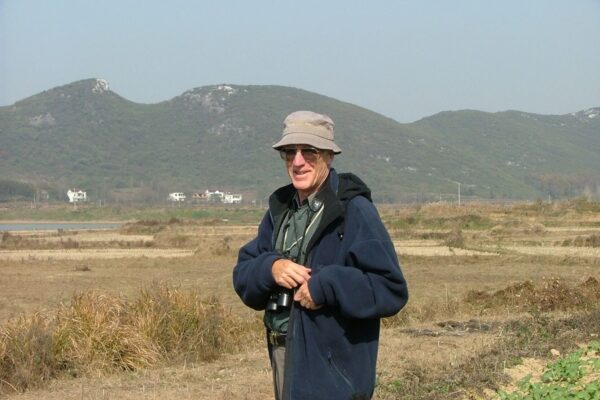
Mark Barter Travel Award and Australasian Shorebird Conference 2022
Following the announcement of the Australasian Shorebird Conference (ASC) organized by Australasian Wader Study Group and Queensland Wader Study Group, to be held virtually on 29-30 October 2022 (link), please mark the date and stay tuned for further information about the program, registration arrangements, and call for abstracts will be forthcoming in the near future. In line with the ASC, the Mark Barter Travel Award nomination has been launched. Mark Barter Travel Award The AWSG Committee will again be offering an Award to honour the late Mark Barter. Shorebird workers and others will be aware of the tremendous contribution that Mark made to the understanding and conservation of shorebirds in the East Asian- Australasian Flyway over many years. In view of Mark’s substantial contributions through monitoring, training and education focused on the Yellow Sea region, this Award seeks to build on Mark’s work by encouraging the further experience and development of young people who have demonstrated an interest in this work. Scope of Award The recipient of this Award will be sponsored to participate in the 2022 Australasian Shorebird Conference (ASC) which will be held online 29th – 30th September. The Award will cover the cost of registration for the recipient. Selection Criteria As the Award is focused on the Yellow Sea region, applications are sought from interested people from China, the Republic of Korea and the Democratic People’s Republic of Korea. Applicants should have a demonstrated interest in shorebirds and supporting their conservation through a scientific approach. The successful applicant is strongly encouraged to give an oral or poster presentation to the ASC. Applications Applications with supporting information should be forwarded to awsgconference@gmail.com by 1 August 2022. At least two referees should be nominated in the application. Mark Barter. Photo courtesy: Australasian Wader Study Group
Continue reading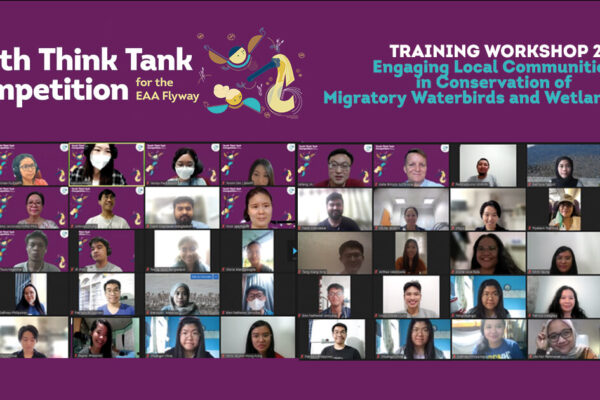
Youth Think Tank Competition for EAA Flyway – 2nd Training workshop
On 28th - 29th May, the Youth Think Tank Competition in the East Asian-Australasian Flyway (EAAF) engaged youth participants with a webinar and in-depth training workshop on Engaging Local Communities in Conservation of Migratory Waterbirds and Wetlands. One in a series of workshops that aims to build capacity for young conservationists on wetland and migratory waterbirds conservation in the flyway across various disciplines, the 2-day virtual workshop was organized by the EAAF Partnership Secretariat with the help of the youth organizing team. More than 100 youth actively participated in the discussions and workshops. Day 1 The workshop opened on 28th May 2022 with a webinar, “Understanding Nature-based Solutions and Local Community Engagement in Conservation of Migratory Waterbirds and Wetlands.” The 1-hour webinar focused on presentations from speakers, Ms. Kathryn Bimson, Programme Officer for IUCN Regional Asia Office, and Mr. Jiefeng Jin, Conservation Officer for the International Crane Foundation. The first presentation, given by Ms. Kathryn Bimson, was an introductory presentation on Nature-based solutions and was followed by an introductory presentation on Engaging local community in conservation by Mr. Jiefeng Jin. Both presentations helped participants ease their way into the topic and the in-depth training workshop, “Engaging Local Communities in Conservation of Migratory Waterbirds and Wetlands” that came afterwards. [PPT Materials] Introduction to Nature-based Solutions (link) / Introduction to Engaging Local Community in Conservation (link) The in-depth workshop was led by Ms. Mercy Kariuki, Programme Officer (Local Engagement and Empowerment Programme) from BirdLife International and focused on “Engaging Local Communities in Conservation of Migratory Waterbirds and Wetlands”. She emphasized the significance of Free, Prior and Informed Consent (FPIC) in the process of conservation and how the work is increasingly adopting a human rights-based approach. To delve further into the topic, the presentation was followed by a case study by Mr. George Ndung’u Muigai, Founder of the Cranes Conservation Volunteers, on the conservation of Cranes in Kenya. During his presentation, Mr. Muigai shared on-the-ground experiences engaging with the community and exchanged practical advice with the youth participants. [PPT Materials] Engaging Local Communities in Conservation of Migratory Waterbirds and Wetlands (link) / Conservation of Cranes in Kenya (link) The breakout session, participants discussed the positive and negative relations between conservation and people, so that they could learn to think in different perspectives – from local communities to conservation. The participants shared actual experiences from their respective regions and project implementations. Day 2 The in-depth workshop continued on 29th May with a short summary presentation from Ms. Mercy Kariuki before delving into a case study from Amy M. Lecciones, Executive Director of the Society for the Conservation of Philippine Wetlands, Inc who tackled Empowering Communities for Managing Agricultural Wetlands. In her presentation, Amy shared the case in Paligui Wetlands (a part of the greater key biodiversity area of Candaba Wetlands) of how local farmers were trained to be local eco-tour guides. Amy enumerated some key activities for community engagement and social challenges with the proposed conservation measures taken in Paligui. (PPT Materials) Following next was a case on Hong Kong Fishpond Conservation Scheme presented by Mr. Johnson Chung of The Hong Kong Bird Watching Society. Mr. Johnson shared how local fishermen helped to enhance the biodiversity of fishponds within the Ramsar Site and being an important player in the conservation project. Johnson shared different ways to motivate the local communities as well as the general public to support the management agreements. The outputs were beyond conserving migratory birds but also benefitted local fishermen while maintaining traditions and cultures in Hong Kong. (PPT Materials) The last case study was presented by Professor Wataru Kitamura of Tokyo City University on the Little Tern project. He shared how the once-disappeared population of Little Tern was brought back to the urban areas in Tokyo Bay area. The project demonstrated the success and need for a strong scientific base, and how it can be developed into a good citizen science programme to engage the locals and general public garner their support. It was also an innovative solution to create habitats for the birds with the use of the rooftops of building in the middle of the city. (PPT Materials) After that, the participants broke out into groups to practice stakeholder analysis of the different case studies that were presented. Youth participants shared their perspectives on identifying stakeholders and ideas on engaging them with participatory conservation objectives. [Webinar] Understanding Nature-based Solution and Local Community Engagement in Conservation of Migratory Waterbirds and Wetlands[In depth Workshop] Engaging Local Communities in Conservation of Migratory Waterbirds and Wetlands: Session 1[In depth Workshop] Engaging Local Communities in Conservation of Migratory Waterbirds and Wetlands: Session 2 Evaluation: All 20 participants had an increase in learning for the topic of nature-based solutions. In the pre-workshop survey, half of the participants responded that they had some familiarity with the topic. In the post-workshop survey, however, 90% responded they were now familiar or ‘ready to go pro’ with nature-based solutions. All participants were satisfied and found what they learned during the workshop useful in their volunteer/work. Participants rated these three components with the highest scores: 1) trainers and speakers of the workshop (4.5/5); 2) case study presentations (4.5/5); 3) contents of the workshop (4.5/5). The most valuable learnings/ takeaways for the participants were: 1) Free, Prior and Informed Consent, 2) Stakeholder mapping and analysis and 3) Nature-based Solutions.Takeaways: Participants wrote that most valuable learnings/ takeaways for the workshop was: 1) Free, Prior and Informed Consent, 2) Stakeholder mapping and analysis and 3) Nature-based Solutions. In the words of the Flyway youth: “What really stayed in my head and in my notes also is the quote "Recognizing diversity and engaging stakeholders helps in building legitimacy, developing innovative solutions, enhancing transparency, and most importantly, in upholding social equity." “It is evident that we are currently experiencing biodiversity loss. Hence, it is a must to take action. However, there are various factors that we need to consider first. For example, the effects of the conservation programs that we want to implement on the local communities and vice versa. As conservationists, we should understand the social contexts. A way for us to plan everything is to create a stakeholder analysis. It is a process for us to be able to map and identify the target people before the project begins. Acknowledgment The Youth Think Tank Competition for the EAA Flyway Organizing Team acknowledges the great contribution from the speakers and trainers: Mercy Kariuki, George Ndung’u Muigai, Amy M. Lecciones, Johnson Chung, and Wataru Kitamura, as well the youth organizing team: Frances Alvares, Jord Earving Gadingan, Oscar Yu, Thura Soe Min Htike, Yeonju Park, Yuji Lim and Yoomi Sim. The webinar was moderated by Ms. Yoon Kyung Lee, External Relations Manager of the EAAFP Secretariat. The in-depth workshops were co-moderated by Ms. Yuji Lim, Ms. Yeonju Park, Ms. Yoomi Sim from the EAAFP Secretariat and Mr. Thura Soe Min Htike from Myanmar. Ms. Vivian Fu, Communication Officer of the EAAFP Secretariat led the coordination of the workshop. To learn more about the speakers and trainers click here. For more on the Youth Think Tank Competition click here.
Continue reading
YSFAC X EAAFP PROJECT 2022 Bird Meets Arts 2nd Education Program
On 11th June, the second public event of the education…
Continue reading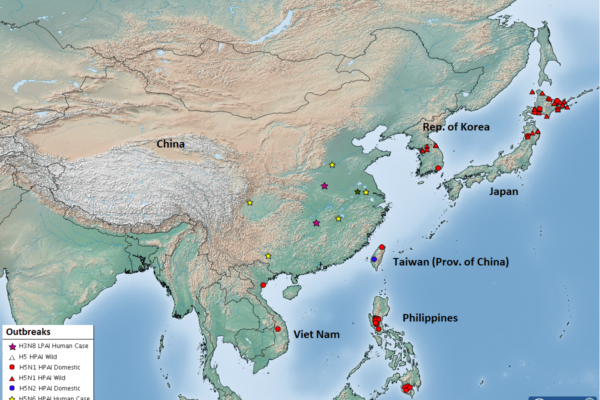
Updates of worldwide Avian Influenza situation by FAO/EMPRES-AH (Mar 2022 – Jun 2022)
FAO/EMPRES-AH is constantly monitoring the avian influenza situation worldwide and compiles information from multiple national and international sources as well as peer-reviewed scientific articles. Close collaboration with country and…
Continue reading
WWF-Hong Kong celebrates World Migratory Bird Day with Earth Hour Concert
In celebration of the World Migratory Bird Day on 14 May, WWF-Hong Kong hosted an online concert featuring popular Hong Kong artists to raise awareness of migratory birds and wetland conservation. This year’s focus of the World Migratory Bird Day is “Light Pollution” to address this growing threat to migratory birds. The theme is aligned with Earth Hour’s concept, each year, people across the world join hands to switch off their non-essential lights for one hour for our nature. The online concert is an extension of Hong Kong’s Earth Hour event under the theme “Habits Protect Habitats”, calling for public support to change our habits and take action now to create positive impacts on our planet. Photo Credit: © WWF-Hong Kong The concert started with an introduction to World Migratory Bird Day and highlighted the importance of wetland conservation. 12 celebrities performed 18 songs and participated in mini-games that related to conservation and sustainable living. The event has received a positive impact, more than 3,000 people joined and supported the concert. Besides, an Earth Hour MV “Dear future self in 10 years” was also released featuring Earth Hour ambassadors and kids, with beautiful nature scenes of Mai Po and soundbites advocating for nature conservation and changing our habits. Meanwhile, WWF-Hong Kong has also collaborated with East Asian – Australasian Flyway Partnership (EAAFP) and launched an updated Education Pack “Lolo’s Flying Journey” about Black-faced Spoonbill. Our education team has been using this tool virtually through engaging Zoom sessions to educate Hong Kong students, despite the COVID restrictions during the past three months. These activities have received positive feedback from students and teachers. The online learning and teaching materials developed by WWF-Hong Kong can be found here. Both Earth Hour and World Migratory Bird Day are not just about an hour or a day, it’s about committing every day to safeguard our nature and change the way we live. COVID has shown how connected our world is now but also how fragile it can be. Forests are fragmenting, rivers and streams no longer flow as they use to and wetlands are disappearing. We need to reflect on what we have done to nature and how we can fix it. There’s no time to waste and we have to act now to change our habits, even from the most simple things like “dim the lights”, together, it’s still possible to turn the tide and create a nature-positive world. Photo Credit: © William Yeung / WWF-Hong Kong Article prepared by Karen Zhang from WWF-Hong Kong.
Continue reading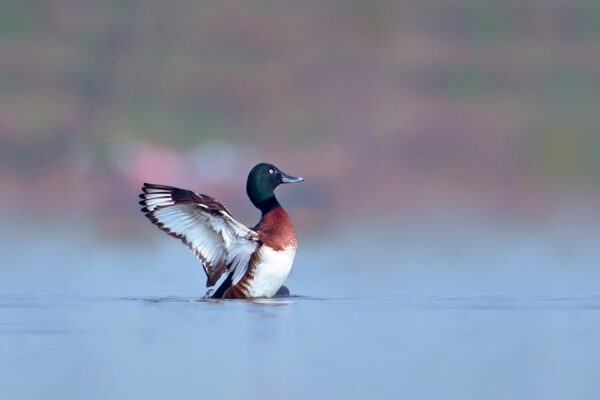
New paper sheds light on distribution and conservation challenges for Baer’s Pochard
Baer's Pochard ©Luo Jianhong An important new paper, led by Beijing Forestry University, was published in April 2022 about changes in the distribution of Baer's Pochard (Aythya baeri), a critically endangered duck in the EAAF. The paper, entitled "Shifted to the South, Shifted to the North, but No Expansion: Potential Suitable Habitat Distribution Shift and Conservation Gap of the Critically Endangered Baer’s Pochard (Aythya baeri)" reflects seven years of surveys across its historical range. The results show:The southernmost breeding site is about 1400 km south of its current IUCN breeding range; The northern-most wintering site is 800 km north of the IUCN wintering range; Six newly discovered sites in Hebei, Henan, Shandong, Jiangxi and Hubei provinces in China are confirmed to be used all year round; Most sites (81.8%) are not located in protected areas (PAs), and the majority of the suitable habitats (90%) are not protected by the current PA network.Fig. 1. Updated Distribution Map of Baer’s Pochard based on this study. The findings reveal substantial changes to the distribution of Baer’s Pochard and that there are many distribution overlaps throughout its annual migration circle (e.g., many historical stopover sites become breeding habitats). Moreover, most of the habitats overlap with urban developed areas and are outside the current PA network. The authors suggest that the existing PA network may be less effective for the conservation of this critically endangered species under predicted global climate change, and other effective area-based conservation measures should be part of the conservation strategy. More importantly, as the distribution of Baer’s Pochard covers at least 15 countries, closely coordinated cross-border cooperation will be critical for its future survival. Access the full paper here. Article prepared by Terry Townshend of Baer's Pochard Task Force.
Continue reading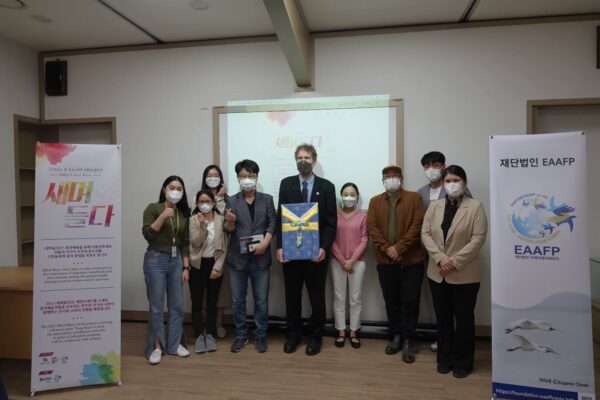
First joint public lecture of 2022
to promote migratory waterbirds and Art in Incheon On 18th May, the first public lecture of the education program of 2022 <Bird Meets Arts> proceeded successfully. Launched in 2021, the <Bird Meets Arts> has been…
Continue reading
Thailand is preparing to propose Bangpu Nature Education Center as Flyway Network Site
Office of Natural Resources and Environmental Policy and…
Continue reading
