

Internationally protected areas – May 2016 e-Newsletter
Spike Millington, Chief Executive The Arctic Migratory Bird Initiative of the Conservation of Arctic Flora and Fauna (CAFF) recognizes that to save Arctic breeding migratory birds, actions are required outside of the Arctic. For designated priority species, actions are proposed primarily at staging areas, identifying intertidal mudflats in the Yellow Sea as a key area. Similarly, […]
Continue reading
Higashiyoka-higata, Saga, Japan – the 124th Flyway Network Site
Tomoko Ichikawa, Communication Officer Higashiyoka-higata (Higashiyoka tidal flat) in Saga Prefecture, Japan became the 124th Flyway Network Site on 5 May 2016. This 218 hectare mudflat is located on the north shore of the Ariake Sea, which has the largest remaining area of tidal flats in Japan. It regularly supports 1% of the flyway population […]
Continue reading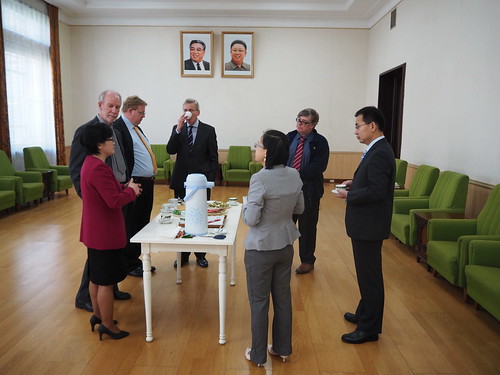
World Migratory Bird Day: protecting migratory birds in DPRK – National Workshop conducted
Felix Glenk, Hanns Seidel Foundation Korea Migratory birds don’t know borders. Worldwide, huge migratory bird movements take place each year in the spring and autumn season on what are called flyways—some of them connect Europe and Africa and some span across eastern Asia and the western Pacific. Faced with many threats such as hunting, egg […]
Continue reading인천시, 저어새•황새 등 철새 탐조•연구 거점 마련
다른 언어로 읽기: 한갑수 기자, 파이낸셜뉴스 인천이 저어새와 황새 등 천연기념물 철새 탐조와 생태교육장으로 육성된다. 인천시는 세계적 멸종위기종인 저어새의 서식지를 정비하고 황새복원사업을 유치하는 등 조류의 보호관리•관광자원화 하는 작업에 나선다고 10일 밝혔다. 인천에는 송도와 강화, 영종 등 모두 8개 도래지에 총 233여종의 철새가 찾아오고 있으며, 이중 우선 보호종인 저어새, 검은머리갈매기, 노랑부리백로와 멸종위기종Ⅰ•Ⅱ급 33종, 천연기념물 28종이 있다. 인천에 […]
Continue readingIncheon gains a stronghold in birdwatching and research on migratory birds
Read in other languages: The Financial News/Kap-Soo Han Translated by the EAAFP Secretariat Incheon will be promoted as a place of education for observing and research of migratory birds that are designated as natural monuments, such as Black-faced Spoonbill and Oriental Stork. Incheon declared on February 10th that it will start ecotourism business and management, […]
Continue reading인천 남동유수지•강화갯벌서 저어새 모니터링 시작
다른 언어로 읽기: 한갑수 기자, 파이낸셜뉴스 인천시는 세계적 멸종 위기종인 저어새 보호를 위해 오는 4월부터 ‘저어새 모니터링’을 실시해 저어새의 번식과정과 개체수 변화 등을 기록할 계획이라고 3월 31일 밝혔다. 천연기념물 제205호인 저어새는 전 세계적으로 3000여마리만 남은 멸종 위기종으로 이중 80% 정도가 인천의 무인도 섬과 남동유수지 주변과 강화도 갯벌 등지에 서식하는 것으로 알려져 있다. 저어새는 여름 철새로 […]
Continue readingIncheon starts Black-faced Spoonbill monitoring at Namdong Reservoir and Ganghwa Tidal flat
Read in other languages: By Kapsoo Han, The financial news Translated by the EAAFP Secretariat Incheon city announced that on March 31, 2016, as part of Black-faced Spoonbill (a.k.a. BFS) conservation efforts, it will launch a monitoring program to study the change in numbers and the breeding of BFS. BFS is a globally Endangered species and […]
Continue readingWorld Migratory Bird Day 2016 – National Celebration and Korean Site Managers Workshop in Suncheon, Republic of Korea
Miyoung Choi, Finance Officer, EAAFP Secretariat The World Migratory Bird Day 2016 national celebration and the Korean Site Managers Workshop were held at the Suncheon Bay Wetland Center in Suncheon, the Republic of Korea (RoK), 13-14 May 2016. Over 200 participants from central and local governments, national institutes, NGOs and international organizations including EAAFP and […]
Continue readingHistoric Cobourg Peninsula is a model of wise use and wetland conservation, 40 years after its designation as a Wetland of International Importance
Department of the Environment, Australia In May 1974, Australia listed the Cobourg Peninsula as the world’s first Wetland of International Importance under the Ramsar Convention, bringing international recognition to this remote and unspoiled area. During the 40 years since its designation, the unique values and the ecological character of the site have been maintained, through its […]
Continue readingEconomic valuation of ecosystem services provided by wetlands
Kaori Tsujita, Ministry of the Environment, Japan Ecosystem services are the benefits that people receive from nature and we depend on the services to produce our food, regulate our water supplies and climate, and protect us from extreme weather. We also benefit in less obvious ways such as from spiritual experience and recreation enjoyment. Despite […]
Continue reading
