


Ministry of Environment of Korea Celebrated International Day of Biological Diversity and World Migratory Bird Day 2020
On 22 May 2020, a celebration for International Day of Biological Diversity and World Migratory Bird Day 2020 was held in Nakdong National Institute of Biological Resources (NNIBR), Sangju City, Republic of Korea, hosted by Ministry of Environment of Korea. With the theme “Our Solutions are in Nature”, the event emphasized biodiversity for conserving the […]
Continue reading
Webinar series: Green Climate Fund IEU Virtual Talk and World Environment Day talk
GCF IEU Virtual Talk On 28 May 2020 at 16:00 (KST), Mr. Doug Watkins, Chief Executive of EAAFP, together with Dr Bernhard Seliger, the Resident Representative of Hanns Seidel Foundation (HSF) in Korea (EAAFP Partner) were invited to present on the Virtual Talk organized by Green Climate Foundation (GCF) Independent Evaluation Unit (IEU). The topic […]
Continue reading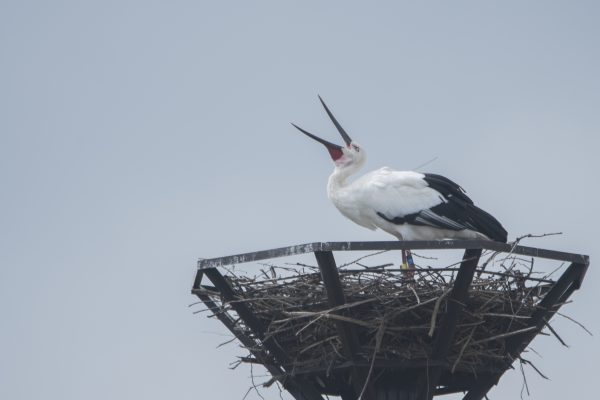
Oriental Stork breeding in eastern Japan, after more than a century
On 7 June 2020, two Oriental Stork chicks were confirmed on an artificial nest tower at Watarase-yusuichi, a Ramsar Site at Tochigi Prefecture in eastern Japan. This is the first case of Oriental Stork hatching in the wild in eastern Japan for more than a century. The four-year old father stork was a released bird […]
Continue reading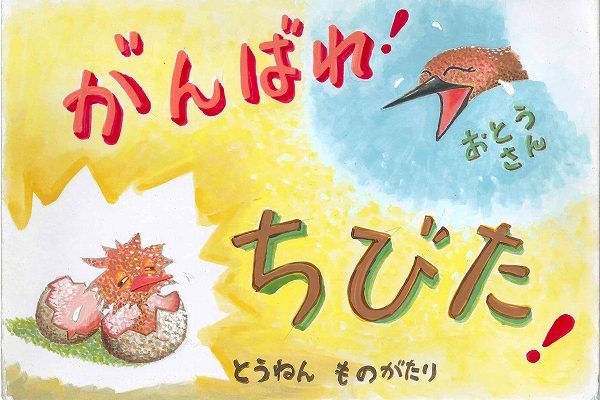
Hand-made original “Kamishibai (story telling slide show)” download free
Yatsu Higata Nature Observation Center of Narashino City [EAAF059] Kamishibai “Gambare Chibita! (Hang in there, Chibita, a Red-necked Stint)” is now available to download and play for children at home and in the visitor centres. “Gambare Chibita” is a story of a juvenile Red-necked Stint called Chibita (which means “small boy”), that visits Yatsu-higata Tidal […]
Continue reading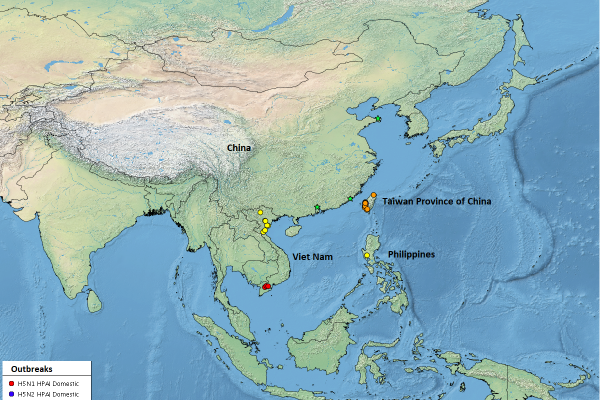
Updates of worldwide avian influenza situation by FAO/EMPRES-AH (Mar- Jun 2020)
FAO/EMPRES-AH is constantly monitoring the avian influenza situation worldwide and compiles information from multiple national and international sources as well as peer-reviewed scientific articles. Close collaboration with country and regional offices, the implementation of avian influenza field surveillance projects, and networks of expertise like OIE/FAO’s OFFLU (www.offlu.net) provide access to timely information on outbreaks, surveillance […]
Continue reading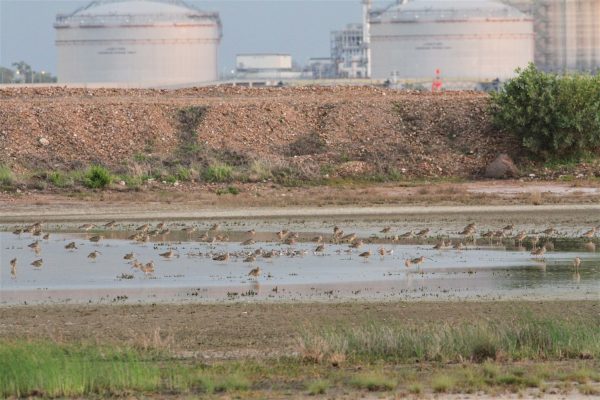
Working coastal wetlands used widely by EAAF shorebirds
It is well-known that extensive loss and degradation of wetlands has occurred worldwide and is a major contributor to the decline of shorebirds in the EAAF. Artificial (i.e. human-made) wetlands such as aquaculture ponds, saltworks and rice paddies occur widely throughout the EAAF and have replaced natural wetlands in many cases. Interestingly, shorebirds have been […]
Continue reading
Literature list (January-June, 2020)
The EAAFP Science Unit is highlighting some key journal publications in the flyway. The abstract of each journal article is placed following the literature list below. 1) Biology & ecology Recent changes in the number of spoon-billed sandpipers Calidris pygmaea wintering on the Upper Gulf of Mottama in Myanmar Aung, Pyae-Phyo, Moses, Saw, Clark, Nigel […]
Continue reading
WWF Asian Flyways Initiative Grant 2020 are announced on World Environment Day
On the occasion of World Environment Day, WWF-Hong Kong is pleased to announce the successful award of WWF Asian Flyways Initiative (AFI) Grant to the Koshi Tappu Wildlife Reserve, Nepal and to two shorebird sites in Indonesia. The Grant under the Asian Waterbird Conservation Fund (AWCF) support WWF’s work to build the capacity of wetland stakeholders throughout […]
Continue reading
A hotspot map of seabird bycatch in gillnet fisheries developed in Japan
In March 2020, BirdLife International and Wild Bird Society of Japan have published a nationwide-scale hotspot map of seabird bycatch in gillnet fisheries in collaboration with a seabird scientist from the University of Tokyo. The map suggested four areas, including Eastern and Northwestern Hokkaido, as hotspots for seabird bycatch in gillnet fisheries. Bycatch in fisheries […]
Continue reading
Revealing migration patterns of five goose species in the East Asian-Australasian Flyway
Among the nine global flyways, the East Asian-Australasian Flyway (EAAF) is the most threatened one. Over 15% of the migratory waterbirds are threatened. In particular to some geese species in which the populations showed drastic decline in the past 50 years. To get more ecological information about the geese on EAAF, which would then strengthen […]
Continue reading
